How to Measure a Fish: Total Length, Fork Length, Standard Length and more
Learn the different ways to measure a fish — total length, fork length, standard length, girth, and more. Know which method your regulations require.
Why the Way You Measure Matters
You caught a nice fish. You hold it up, eyeball it, and call it 22 inches. But 22 inches measured how? From where to where?
If you're fishing for fun, it might not matter much.
But the moment regulations, tournaments, or personal records are involved, the measurement method changes everything.
Different states, federal agencies, and tournament organizations require different measurement standards. A redfish that's legal under one method might be short under another. Knowing how to measure correctly keeps you legal, keeps your records accurate, and keeps you from losing a fish at the weigh-in because you measured wrong.
Total Length (TL)
Total length is the most common measurement used by recreational anglers and most U.S. state wildlife agencies. It's the one you probably already use without thinking about it.
How to measure: Place the fish on a flat surface with its mouth closed. Measure from the tip of the snout to the very end of the tail fin. If the fish has a forked tail, pinch the tail lobes together so they extend to their maximum length, then measure to that farthest point.
Key details: - The mouth must be closed — an open mouth adds length and gives an inaccurate reading - Pinch forked tails closed to get the longest possible point - Lay the fish flat, don't hold it at an angle - This is the default method in most states unless regulations say otherwise
Used by: Most U.S. state fish and wildlife agencies, most bass tournaments, most freshwater regulations.
Fork Length (FL)
Fork length is measured to the center of the tail fork rather than the tip. It's the standard for many saltwater species, especially those with deeply forked tails where pinching the lobes together would be impractical or inconsistent.
How to measure: Measure from the tip of the snout (mouth closed) to the center of the fork in the tail — the innermost point where the tail splits.
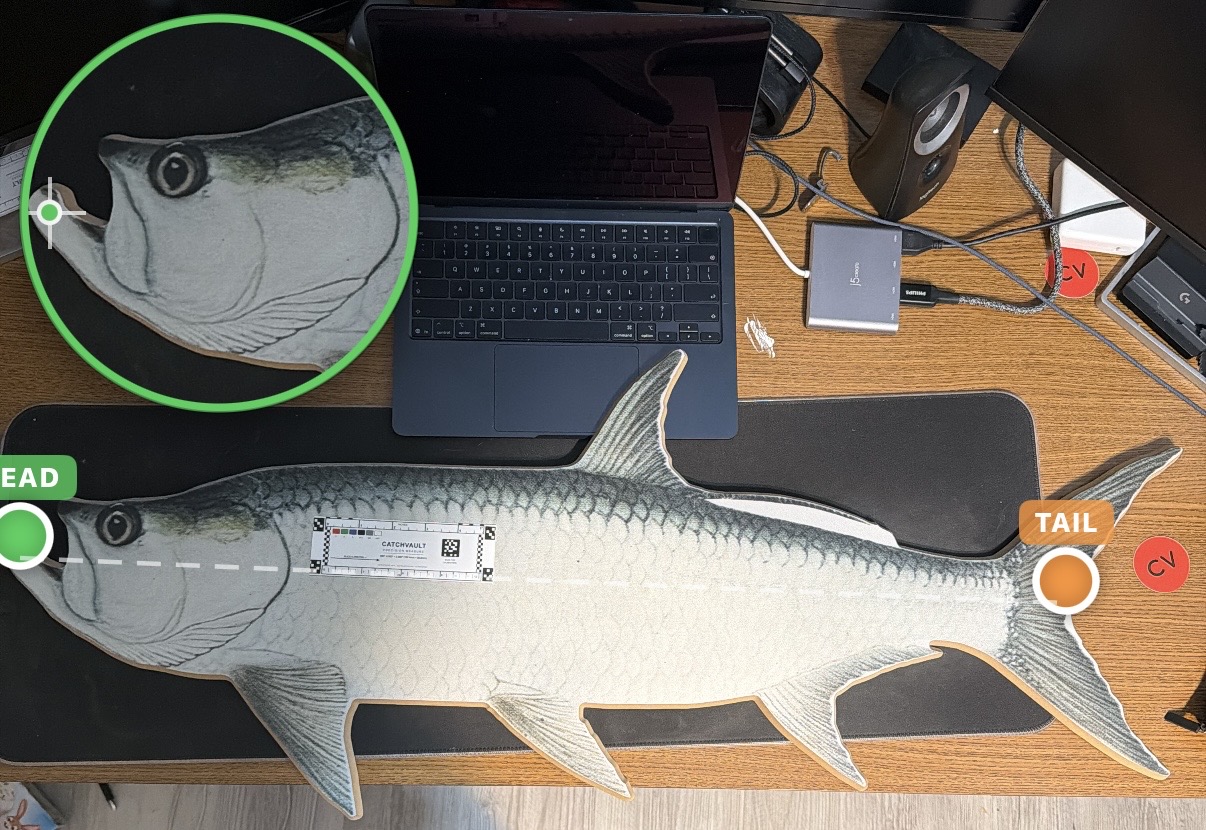
Key details: - Easier to measure consistently on species with deeply forked tails - Eliminates variability caused by damaged or frayed tail fins - The measurement will always be shorter than total length on the same fish - Common for tuna, mackerel, tarpon, etc
Used by: NOAA, many federal saltwater regulations, Gulf and Atlantic state agencies for certain species, IGFA for some records.
Standard Length (SL)
Standard length is primarily a scientific measurement. You won't see it in fishing regulations, but if you read fisheries research papers or biology studies, this is what they're using.
How to measure: Measure from the tip of the snout to the base of the caudal fin — the point where the tail fin connects to the body. This is the rear edge of the last vertebra, which shows up as a crease or fold where the tail begins.
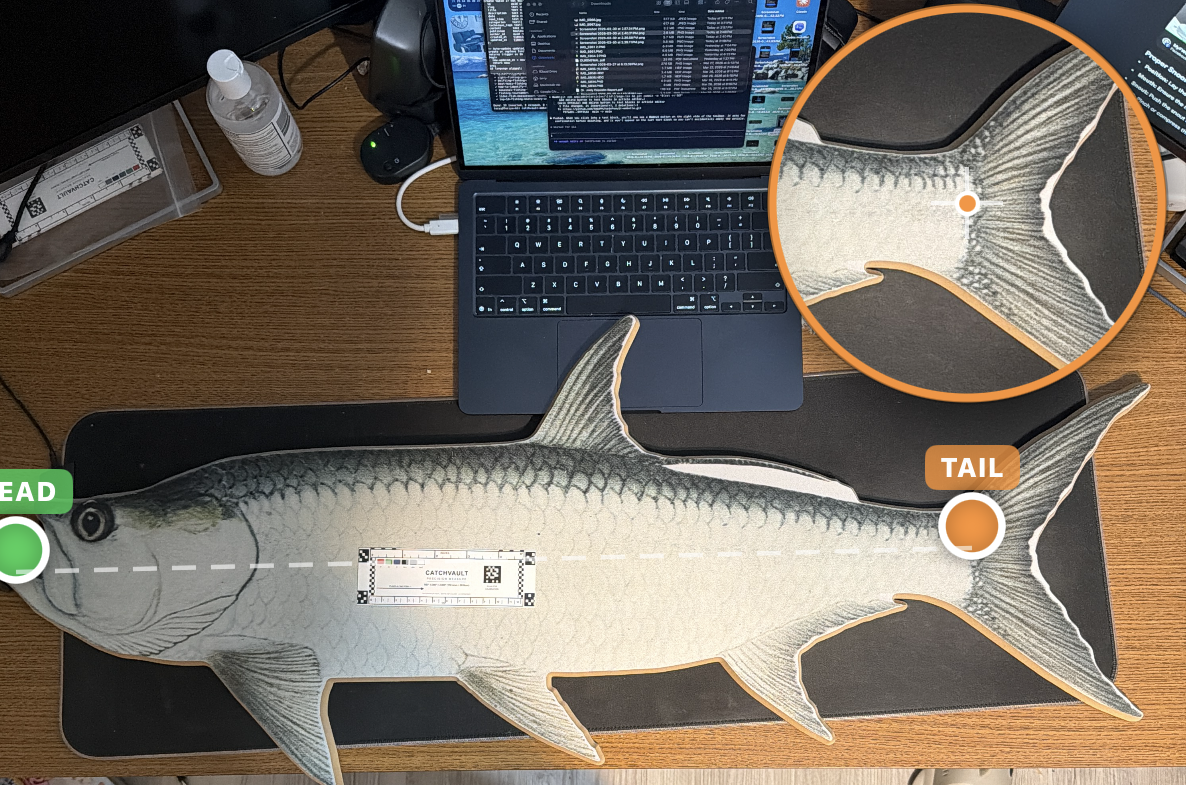
Key details: - Excludes the tail fin entirely - More consistent for scientific comparison because tail fins vary in shape and can be damaged - Rarely used in recreational fishing or regulations - Significantly shorter than total length — don't confuse the two
Used by: Fisheries biologists, ichthyologists, scientific research papers.
Girth Measurement
Girth isn't a length measurement, but it's one of the most useful numbers you can take — especially for catch-and-release anglers who want to estimate weight without a scale.
How to measure: Wrap a flexible tape measure around the fish at its widest point, usually just in front of the dorsal fin. Record the circumference in inches.
Weight estimation formula: - For bass and most freshwater fish: (length x girth x girth) / 800 - For trout: (length x girth x girth) / 900 - For pike and musky: (length x girth x girth) / 900 - These are estimates, not exact, but they get you close
Key details: - A flexible fabric tape measure works best — keep one in your tackle bag - Girth varies significantly by season and food availability, so two fish of the same length can have very different weights - Measuring girth adds handling time, so be quick if you're releasing the fish
Used by: Catch-and-release anglers for weight estimation, some replica mount services to build accurate reproductions.
Lower Jaw Fork Length (LJFL)
This is a specialized measurement used almost exclusively for billfish — marlin, sailfish, and swordfish. Because billfish have a long upper jaw (the bill), measuring from the tip of the bill would be inconsistent and impractical.
How to measure: Measure from the tip of the lower jaw to the fork of the tail.
Key details: - Ignores the bill entirely - The lower jaw provides a consistent, identifiable starting point - Required for IGFA billfish records - Used in most offshore billfish tournaments
Used by: IGFA for billfish records, offshore tournament circuits, NOAA for billfish regulations.
Curved Fork Length (CFL)
Curved fork length follows the natural contour of the fish's body rather than measuring in a straight line. It's used primarily for tuna and other large, round-bodied pelagic species where a straight-line measurement doesn't capture the true size.
How to measure: Lay a flexible tape measure along the body of the fish, following its curve from the tip of the upper jaw to the fork of the tail. The tape should follow the contour of the body, not hang in a straight line from point to point.
Key details: - Always longer than a straight fork length on the same fish - Accounts for the round body shape of tuna and similar species - Requires a flexible tape measure — a rigid ruler won't work - Used in international tuna management and some commercial fishing regulations
Used by: ICCAT (International Commission for the Conservation of Atlantic Tunas), some regional fisheries management organizations, commercial tuna regulations.
Tools for Measuring Fish
Bump boards are the gold standard for quick, accurate measurements. Place the fish against the back wall and read the length. They're common on tournament boats and at weigh stations. Brands like Ketch make durable, fish-friendly boards.
Flexible tape measures are cheap, lightweight, and essential for girth measurements. Keep one in your tackle bag at all times. The soft fabric ones marketed for sewing work great and don't cost more than a dollar.
Ruler markings on your rod or kayak give you a rough reference without any extra gear. Stick adhesive ruler tape along your rod blank or kayak gunwale for instant estimates.
CatchVault is the newest option. CatchVault utilizes the LiDAR sensors which can measure a fish in seconds without touching it. CatchVault combines LiDAR with AI to give you a fast, consistent measurement that's automatically saved with your catch log.
Tips for Accurate Measurements
- •Always measure on a flat, hard surface when possible — soft nets or grass can add or subtract length
- • Keep the fish's mouth closed and its body straight
- • Wet the measuring surface first so the fish slides into position easily and the slime coat is protected
- • Measure quickly and get the fish back in the water — accuracy matters, but so does the fish's survival
- • Take a photo with the fish on the ruler or bump board so you have a visual record
- • When in doubt about which method your state requires, check your regulations booklet — it's usually spelled out in
- • the definitions section
Know Your Regulations
Different states and even different species within the same state can require different measurement methods. Here's how to check:
- •State regulations: Look in the front of your state fishing regulations booklet under "definitions" or "how to
- • measure." Most states include a diagram.
- •Federal saltwater regulations: NOAA Fisheries publishes measurement standards for federally managed species.
- • Fork length is common for offshore species.
- •Tournament rules: Always read the tournament rules carefully. Some tournaments measure total length, others use
- • fork length, and some have specific board or device requirements.
- •IGFA records: The International Game Fish Association has detailed measurement requirements for world record
- • submissions. Check their website before you fish if a record is on the line.
The difference between total length and fork length on a fish with a deeply forked tail can be over an inch. That inch can mean the difference between a legal fish and a citation, or between a new personal best and a near miss. Measure right, measure consistently, and know which method counts.
Ready to Fish Smarter?
Download CatchVault free on iOS, log catches, identify species with AI, and measure fish with LiDAR.