Water Type
Saltwater
Also known as
black rockfish, bonaeci arara, marbled rockfish
IUCN status
Near ThreatenedAbout the Black Grouper
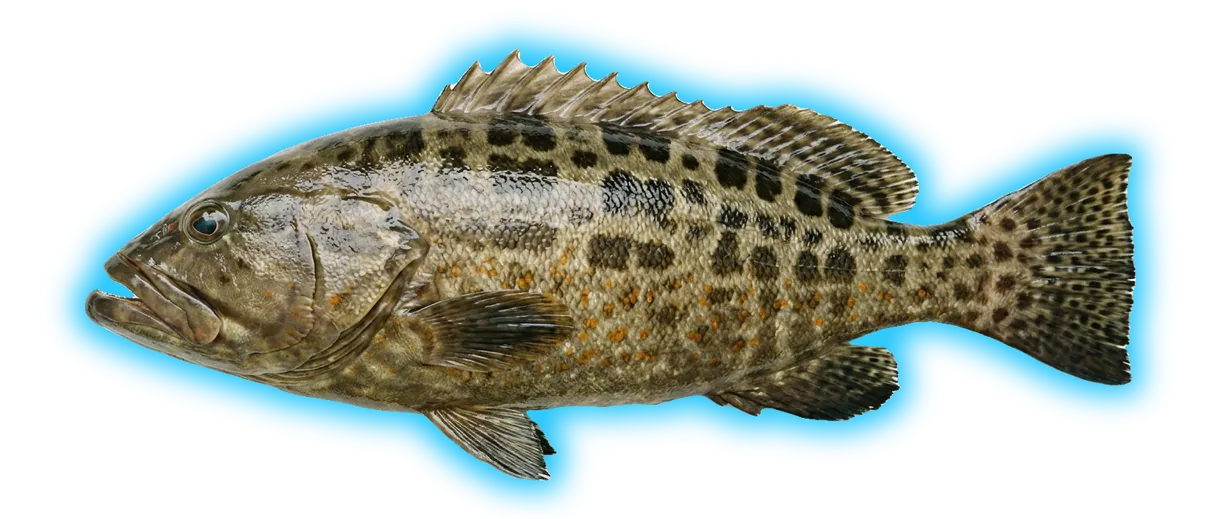
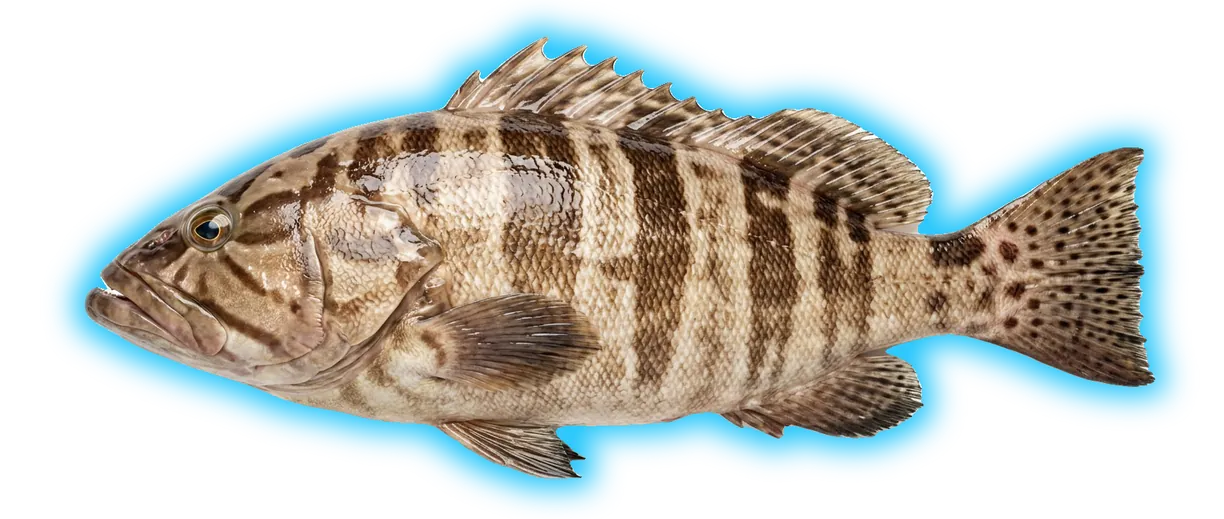
The Black Grouper is a stout, powerful fish with a distinctive olive or greyish body covered in irregular, dark blotches and spots that often form chain-like patterns. Its fins are typically darker than its body, and it has a slightly concave tail fin. A key identification feature for anglers is the relatively straight profile of its preopercle (the bone before the gill cover), which helps distinguish it from similar species like the Gag Grouper. Its impressive size and powerful build make it an unmistakable adversary on the line.
Source: FishBase & iNaturalist
Black Grouper Size & Bag Limits by State
Black Grouper rules in 6 states.
| State | Size limit | Daily bag | Season |
|---|---|---|---|
| AlabamaStatewide saltwaterYear-round | 24" min | 4 | Year-round |
| FloridaAtlantic Ocean and Tidal TributariesMay 1 – Dec 31 | 24" min | 1 | May 1 – Dec 31 |
| Florida Keys (Monroe County)May 1 – Dec 31 | 24" min | 1 | May 1 – Dec 31 |
| Gulf of Mexico and Tidal TributariesYear-round | 24" min | 4 | Year-round |
| LouisianaStatewide saltwaterYear-round | 24" min | 4 | Year-round |
| MississippiStatewide saltwaterYear-round | 24" min | 4 | Year-round |
| South CarolinaStatewide saltwaterYear-round | 24" min | 1 | Year-round |
| TexasStatewide saltwaterYear-round | 24" min | 4 | Year-round |
Statewide rules, or each area where a state sets limits by region. Many lakes and rivers have their own limits; pick a state or open its regulations page for water-specific rules. Always confirm with the state wildlife agency before keeping a fish.
Rules for a specific state
Pick a state to see its Black Grouper rules, including lakes and rivers with their own limits.
Select a state
Always confirm with the official state agency before keeping a fish.
Best bait and lures for Black Grouper
For targeting Black Grouper, live baits such as pinfish, pilchards, grunts, and small jacks are highly effective, fished on stout tackle with heavy fluorocarbon leaders and large circle hooks. Dead bait like squid or cut fish can also work. Artificials, including large bucktail jigs, vertical jigs, and deep-diving plugs retrieved over structure, can entice strikes. Be prepared for a powerful fight and try to turn their head quickly to prevent them from breaking you off in the rocks.
Is Black Grouper good to eat?
★★★★★
Widely considered one of the finest eating fish, Black Grouper boasts firm, white, flaky meat with a mild and delicious flavor. It holds up exceptionally well to various cooking methods, from grilling and baking to frying.
Black Grouper habitat
These formidable bottom dwellers prefer rocky reefs, ledges, wrecks, and other hard-bottom structures in depths ranging from nearshore shallows to over 300 feet. Juveniles are often found in seagrass beds, while adults primarily inhabit deeper, more complex environments. They are commonly found around areas with strong currents that bring food.
Where Black Grouper are found
The Black Grouper's range extends throughout the western Atlantic, from Bermuda and Florida down through the Gulf of Mexico and Caribbean Sea, reaching as far south as Brazil. They are particularly abundant around the coasts of Florida, the Bahamas, and the Yucatán Peninsula.
Black Grouper behavior
Black Groupers are ambush predators, often lurking in crevices or near structure, waiting for prey to pass by. Their diet consists primarily of smaller reef fish, octopus, and crustaceans. They are known for their powerful initial runs and their tendency to 'hole up' once hooked, making them a challenging catch. While generally solitary, they may aggregate in specific areas, especially during spawning periods.
Biggest Black Grouper
No catches logged yet for Black Grouper.
Be the first, download CatchVault and log your catch!
Tips & Tactics
Almaco Jack vs Amberjack: Greater, Lesser & Rudderfish ID
Almaco jack vs greater amberjack vs lesser amberjack vs banded rudderfish: eye stripe, fin lobes, spine counts, and why a wrong ID can break size limits.
Steelhead vs Rainbow Trout: Same Fish, Different Legal Rules
Steelhead and rainbow trout are the same species. How state laws define steelhead by length and water, the adipose fin rule, and how to tell them apart.
Channel vs Blue vs White vs Flathead Catfish: ID Guide
Tell channel, blue, white and flathead catfish apart by anal fin, tail and jaw, plus hardhead vs gafftop. Why the ID matters for limits and invasives.
Related Species
Think You Can Top the Leaderboard?
CatchVault is available on iPhone and Android. Download the app, log your Black Grouper catch, and see where you rank.