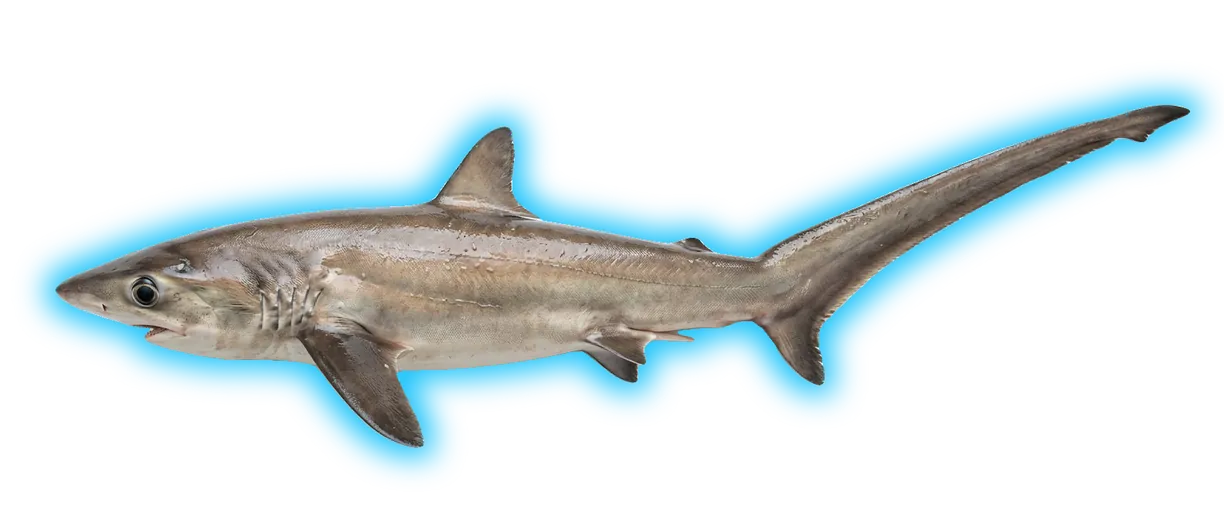
Bigeye Thresher Shark
Alopias superciliosus
Also known as
Deepwater Thresher, Whip-tailed Thresher
IUCN status
VulnerableAbout the Bigeye Thresher Shark
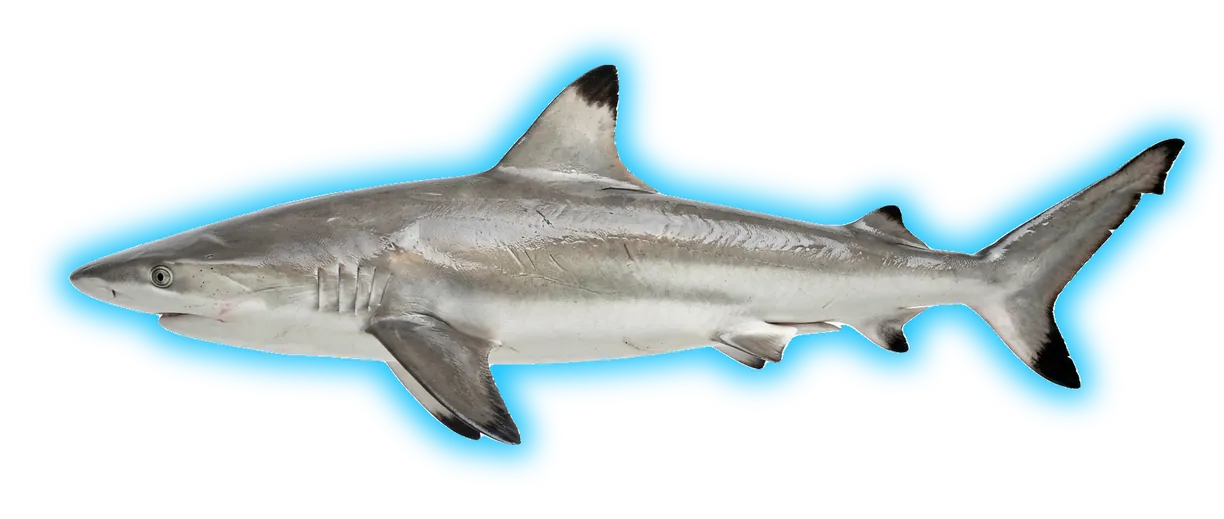
The Bigeye Thresher is easily recognized by its exceptionally large eyes, designed for low-light hunting, which are set in unique keyhole-shaped sockets allowing them to rotate upwards. Like its thresher relatives, nearly half of its total body length is comprised of the incredibly long, whip-like upper lobe of its caudal (tail) fin. Its body is stout, typically dark purplish-brown to gray dorsally, fading to white on its underside, providing camouflage in the open ocean. A pair of distinct deep grooves on the top of its head further aids in identification.
Source: FishBase & iNaturalist
Habitat
This pelagic shark prefers deeper waters offshore, typically found over continental and insular shelves and slopes, though it can venture closer to the surface during cooler, darker periods. It inhabits both temperate and tropical oceans globally, often preferring temperatures between 16-25°C. Juveniles may be found in shallower, coastal areas.
Distribution
The Bigeye Thresher roams widely across all temperate and tropical oceans worldwide, from the Atlantic to the Pacific and Indian Ocean basins. It is truly a cosmopolitan species, though often preferring warmer waters.
Behaviour
A formidable nocturnal predator, the Bigeye Thresher utilizes its enormous eyes to hunt cephalopods and schooling fish in mesopelagic depths. Its extraordinarily long tail is not just for show; it's a specialized weapon, used to stun prey with powerful whip-like strikes before consumption. While usually found at depths during the day, it undertakes diel vertical migrations, rising to shallower waters at night to feed. Anglers often encounter them as powerful, acrobatic fighters, capable of impressive aerial displays once hooked.
Edibility
★★★★★
The meat of the Bigeye Thresher is firm, white, and flaky, possessing a mild, swordfish-like flavor. It holds up well to grilling, baking, or frying, making it a desirable catch for the table.
Lure suggestion
Targeting Bigeye Threshers typically involves deep-water angling techniques. Large, natural baits such as mackerel, squid, or bonito rigged on heavy-duty circle hooks with steel leaders are highly effective, often fished on the drift or from a slow-trolling vessel. Look for them around seamounts, canyons, and ledges where baitfish congregate, deploying baits at varying depths, particularly during dawn and dusk or at night.
Bigeye Thresher Shark Regulations
Select a state to see size limits, bag limits, and seasons for Bigeye Thresher Shark.
Select a state
Always confirm with the official state agency before keeping a fish.
Biggest Bigeye Thresher Shark
No catches logged yet for Bigeye Thresher Shark.
Be the first, download CatchVault and log your catch!
Tips & Tactics
Summer Flounder from the New Jersey Surf: A Complete Guide
How to catch summer flounder (fluke) from the New Jersey beach — when and where to go, the best rigs, baits, and retrieves, and the gear that gets it done.
My Review of the Hobie Fleet: What's Best for Saltwater Kayak Fishing
A hands-on review of every Hobie MirageDrive fishing kayak and which model makes the most sense for inshore and open-water saltwater fishing.
How to Jig Giant Plastic Eels for 40"+ Striped Bass
The complete guide to fishing oversized soft plastic eels for trophy striped bass — gear, technique, locations, and timing.
Related Species
Think You Can Top the Leaderboard?
CatchVault is available on iOS. Download the app, log your Bigeye Thresher Shark catch, and see where you rank.