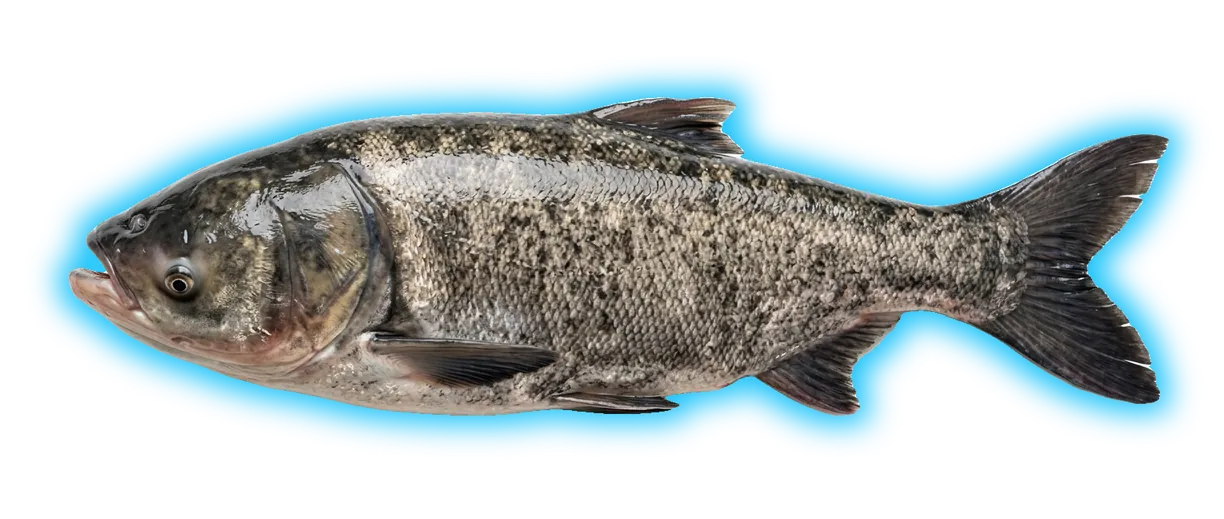
Bighead Carp
Also known as
Bighead, Asian Carp, Chinese Bream
IUCN status
Least ConcernAbout the Bighead Carp
The Bighead Carp is easily identified by its disproportionately large head, which accounts for up to one-quarter of its body length, and its distinctively low-set eyes, positioned below the mouth line. Its body is deep and somewhat compressed, typically silver-gray with irregular dark blotches, and covered in very small scales. A prominent keel runs along its belly from the pectoral fins to the vent, giving it a somewhat angular profile.
Source: FishBase & iNaturalist
Habitat
These large cyprinids thrive in a variety of freshwater environments, including large rivers, lakes, and reservoirs, often preferring areas with slow-moving water and abundant plankton. They are highly adaptable and can tolerate a wide range of water quality conditions, including turbid waters, making them successful colonizers.
Distribution
Native to the large rivers and lakes of East Asia, from Siberia down to Vietnam, Bighead Carp have been widely introduced across the globe. They are now established and often considered invasive in many parts of North America, Europe, and other continents, where they dominate aquatic ecosystems.
Behaviour
Bighead Carp are primarily filter feeders, consuming vast quantities of microscopic zooplankton and phytoplankton from the water column, along with some detritus. They feed continuously, using specialized gill rakers to strain food particles, and can be found cruising near the surface or in mid-water. Unlike some other carp species, they do not typically bottom feed or root in the substrate.
Edibility
★★★★★
Many anglers find Bighead Carp to be excellent table fare, offering firm, white, flaky meat with a mild, non-fishy flavor. While they can be bony, careful filleting techniques make them suitable for baking, frying, or smoking. They are a popular food fish in many cultures.
Lure suggestion
Catching Bighead Carp on traditional hook and line can be challenging due to their filter-feeding nature, as they rarely strike lures or conventional baits. Anglers often employ chumming with finely ground grains or specialized dough baits that create a plankton-like cloud in the water, which the carp will filter. Bowfishing is a highly effective and popular method for targeting these large fish in areas where legal.
Bighead Carp Regulations
Select a state to see size limits, bag limits, and seasons for Bighead Carp.
Select a state
Always confirm with the official state agency before keeping a fish.
Biggest Bighead Carp
No catches logged yet for Bighead Carp.
Be the first, download CatchVault and log your catch!
Tips & Tactics
Summer Flounder from the New Jersey Surf: A Complete Guide
How to catch summer flounder (fluke) from the New Jersey beach — when and where to go, the best rigs, baits, and retrieves, and the gear that gets it done.
My Review of the Hobie Fleet: What's Best for Saltwater Kayak Fishing
A hands-on review of every Hobie MirageDrive fishing kayak and which model makes the most sense for inshore and open-water saltwater fishing.
How to Jig Giant Plastic Eels for 40"+ Striped Bass
The complete guide to fishing oversized soft plastic eels for trophy striped bass — gear, technique, locations, and timing.
Related Species
Where to Catch Bighead Carp
States where Bighead Carp is found, based on CatchVault's waterbody commonality data.
Think You Can Top the Leaderboard?
CatchVault is available on iOS. Download the app, log your Bighead Carp catch, and see where you rank.