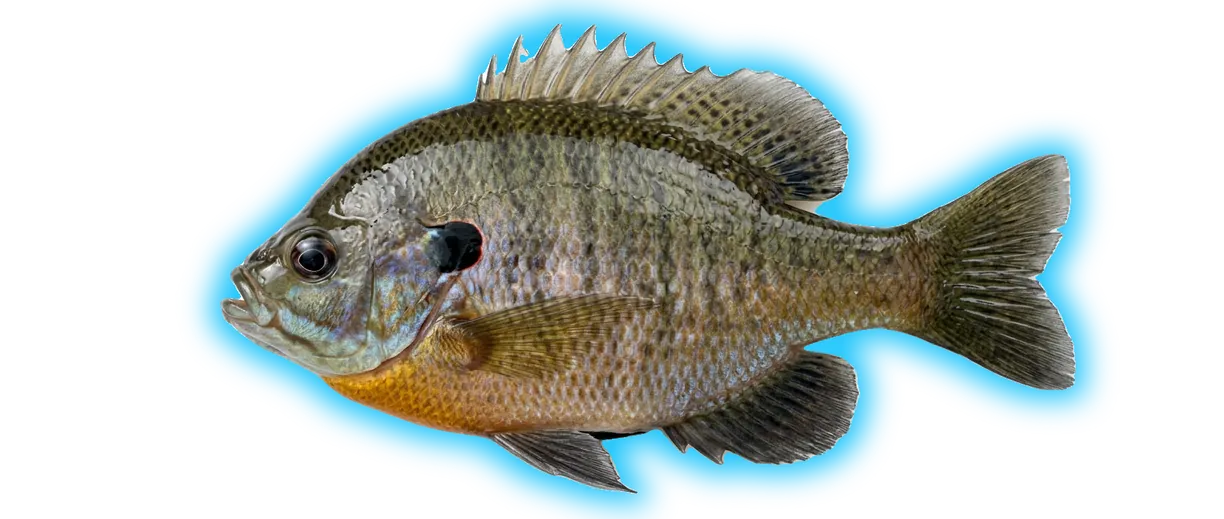
Bluegill
Lepomis macrochirus
Water Type
Freshwater
World Record
15" · 4 lbs 12 oz
Also known as
bream, brim, copper nose
IUCN status
Least ConcernAbout the Bluegill
The bluegill is easily recognized by its distinctive dark spot on the gill flap and a vertical barring pattern on its sides, which can vary in intensity. Their bodies are typically deep-bodied and compressed, often sporting vibrant shades of olive, blue, and orange, especially during spawning. Males can develop a brighter, almost iridescent blue on their gill plates and operculum. They rarely exceed 10-12 inches, making them a popular panfish for anglers of all ages.
Source: FishBase & iNaturalist
Techniques
Habitat
Native to North America, bluegill thrive in freshwater environments including streams, rivers, lakes, and ponds. They prefer clear, vegetated waters, congregating around submerged structures like fallen trees, weed beds, docks, and brush piles. Anglers often find them in both deep holes and shallow, sun-warmed areas, especially when spawning.
Distribution
Their native range covers much of North America, primarily found east of the Rocky Mountains. They have also been widely introduced across the continent and beyond, making them one of the most widespread panfish.
Behaviour
Bluegill are opportunistic and often schooling feeders, primarily preying on aquatic insects, small crustaceans, and larvae, but they will also consume small fish and plant matter. They are active throughout the day, especially around dawn and dusk, and their feeding activity increases with water temperature. During spawning season, males become very territorial, fanning out nests in shallow areas and aggressively guarding eggs and fry.
Edibility
★★★★★
Bluegill are highly prized for their mild, flaky white meat and are considered excellent table fare by many anglers. They are delicious fried, baked, or grilled, making them a favorite for a fresh fish fry.
Lure suggestion
For anglers, bluegill are readily caught using small live baits such as worms, crickets, or grubs, often fished under a bobber. They also respond well to tiny artificial lures, including micro jigs, small spinners, and fly-fishing patterns like poppers and wet flies. Light tackle is recommended for maximum sport, typically ultra-light spinning gear or a fly rod, often with 2-4 pound test line.
Bluegill Regulations
Select a state to see size limits, bag limits, and seasons for Bluegill.
Select a state
Always confirm with the official state agency before keeping a fish.
Recent Catches
Biggest Bluegill
Tips & Tactics
Jig Fishing: Techniques, Tips, and Best Practices
Master jig fishing for bass, walleye, and more. Covers football jigs, flipping jigs, swim jigs, and finesse jigs.
Live Bait Fishing: The Ultimate Guide
Everything about live bait fishing — minnows, worms, shrimp, crickets, and how to rig them for different species.
Fly Fishing Techniques: A Beginner to Advanced Guide
Learn fly fishing from the basics to advanced techniques — casting, nymphing, streamer fishing, and dry fly presentation.
Related Species
Where to Catch Bluegill
States where Bluegill is found, based on CatchVault's waterbody commonality data.
Think You Can Top the Leaderboard?
CatchVault is available on iOS. Download the app, log your Bluegill catch, and see where you rank.