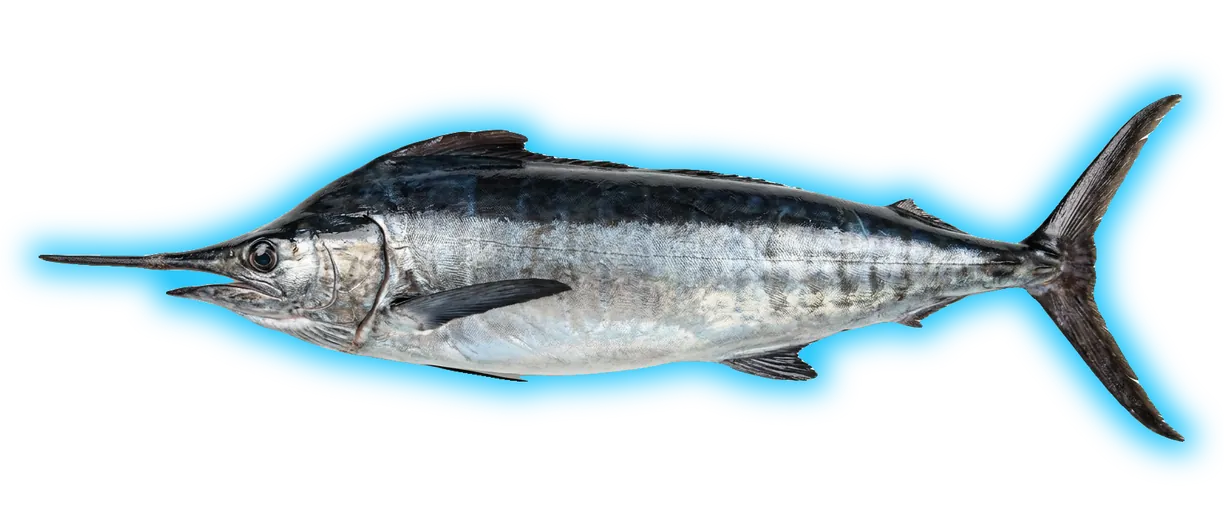
Also known as
Black Pacific Marlin, Giant Black Marlin, Marlin Negro
About the Black Marlin
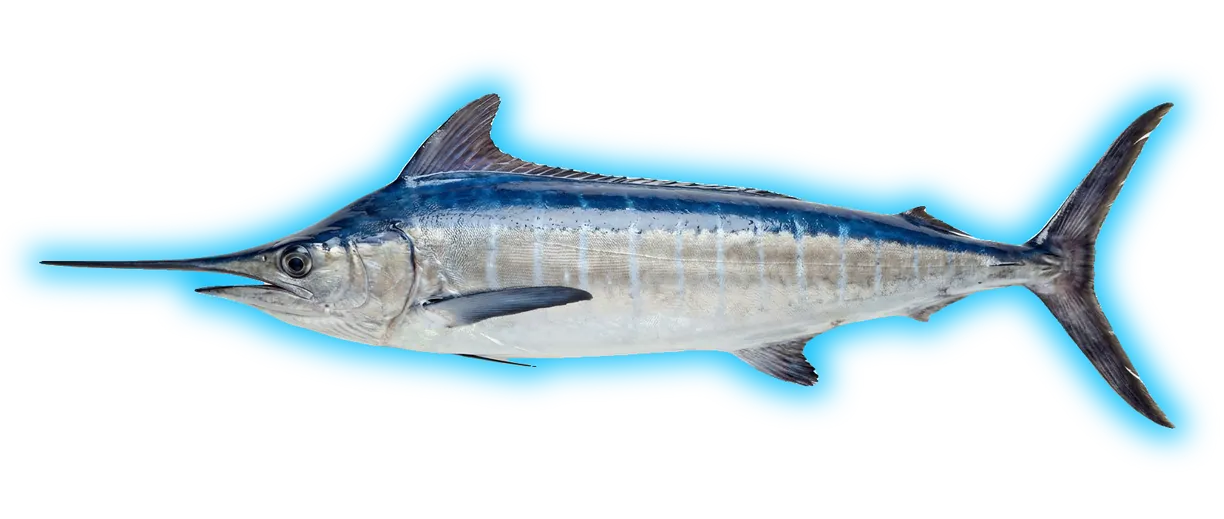
The Black Marlin is a truly colossal game fish, boasting a robust, powerful body that can reach up to 15 feet in length and weigh over 1,600 pounds. Easily identifiable by its dark, almost black dorsal side and silver belly, its most distinctive feature for anglers is its rigid pectoral fins, which cannot be folded flat against its body unlike other marlins. This torpedo-shaped predator is also one of the fastest fish in the ocean, capable of blistering runs at speeds exceeding 80 mph.
Source: FishBase & iNaturalist
Black Marlin Size & Bag Limits by State
Black Marlin rules in 1 state.
| State | Size limit | Daily bag | Season |
|---|---|---|---|
| CaliforniaStatewide saltwaterYear-round | None | 1 | Year-round |
Statewide rules, or each area where a state sets limits by region. Many lakes and rivers have their own limits; pick a state or open its regulations page for water-specific rules. Always confirm with the state wildlife agency before keeping a fish.
Rules for a specific state
Pick a state to see its Black Marlin rules, including lakes and rivers with their own limits.
Select a state
Always confirm with the official state agency before keeping a fish.
Best bait and lures for Black Marlin
For Black Marlin, heavy tackle is essential. Trolling large dead baits like skipjack tuna, mackerel, or wahoo, rigged for swimming, is highly effective, especially when paired with skirted lures. Large artificial lures, typically 12-16 inches, in dark colors or vibrant patterns, are also successful, particularly when trolled at speeds of 6-10 knots. Circle hooks are recommended for live baiting to minimize harm during catch and release.
Is Black Marlin good to eat?
★★★★★
Black Marlin meat is firm, white to pinkish, and has a mild flavor, making it excellent table fare when caught. It is suitable for grilling, smoking, or baking, though many sport fishermen practice catch and release to conserve these magnificent creatures.
Black Marlin habitat
These magnificent billfish inhabit the warm, pelagic waters of tropical and subtropical oceans. Anglers typically find them offshore, often congregating around seamounts, continental shelves, current lines, and areas with abundant baitfish, particularly where deeper water meets shallower structure.
Where Black Marlin are found
The Black Marlin is found predominantly in the Indian and Pacific Oceans, ranging across their tropical and subtropical zones. Their expansive territory stretches from the eastern coast of Africa all the way to the western Americas, including popular fishing grounds like Australia's Great Barrier Reef.
Black Marlin behavior
An apex predator, the Black Marlin preys on a variety of schooling fish such as tuna, mackerel, and scad, as well as squid. They are highly migratory, following baitfish concentrations and warm water currents across vast distances. When hooked, they are renowned for their explosive power, delivering blistering runs, acrobatic leaps, and stubborn deep dives, making them one of the most sought-after challenges for big game anglers.
Biggest Black Marlin
No catches logged yet for Black Marlin.
Be the first, download CatchVault and log your catch!
Tips & Tactics
Almaco Jack vs Amberjack: Greater, Lesser & Rudderfish ID
Almaco jack vs greater amberjack vs lesser amberjack vs banded rudderfish: eye stripe, fin lobes, spine counts, and why a wrong ID can break size limits.
Steelhead vs Rainbow Trout: Same Fish, Different Legal Rules
Steelhead and rainbow trout are the same species. How state laws define steelhead by length and water, the adipose fin rule, and how to tell them apart.
Channel vs Blue vs White vs Flathead Catfish: ID Guide
Tell channel, blue, white and flathead catfish apart by anal fin, tail and jaw, plus hardhead vs gafftop. Why the ID matters for limits and invasives.
Related Species
Think You Can Top the Leaderboard?
CatchVault is available on iPhone and Android. Download the app, log your Black Marlin catch, and see where you rank.