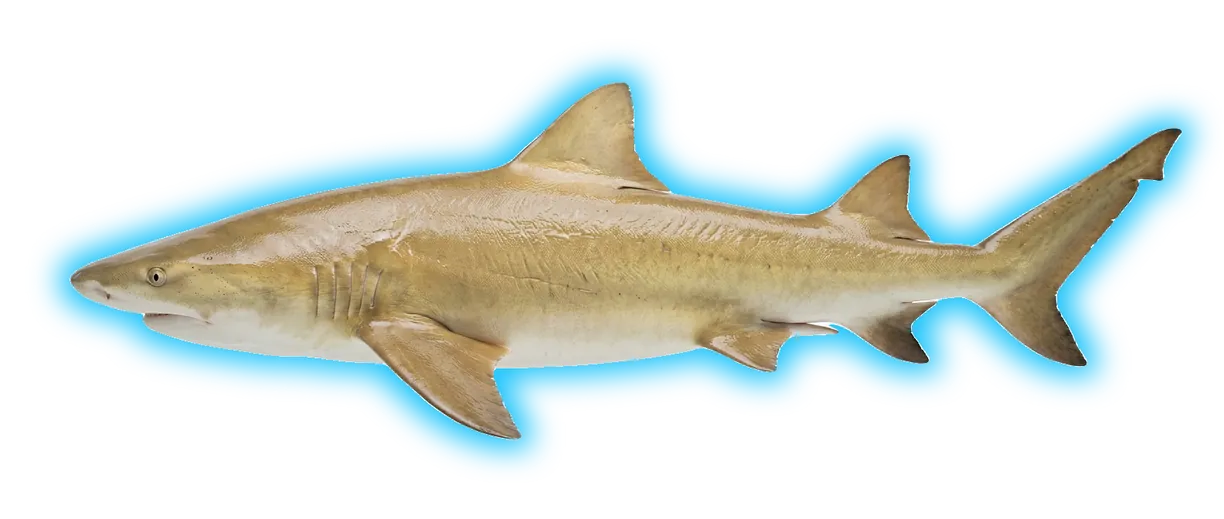
Lemon Shark
Also known as
null
About the Lemon Shark
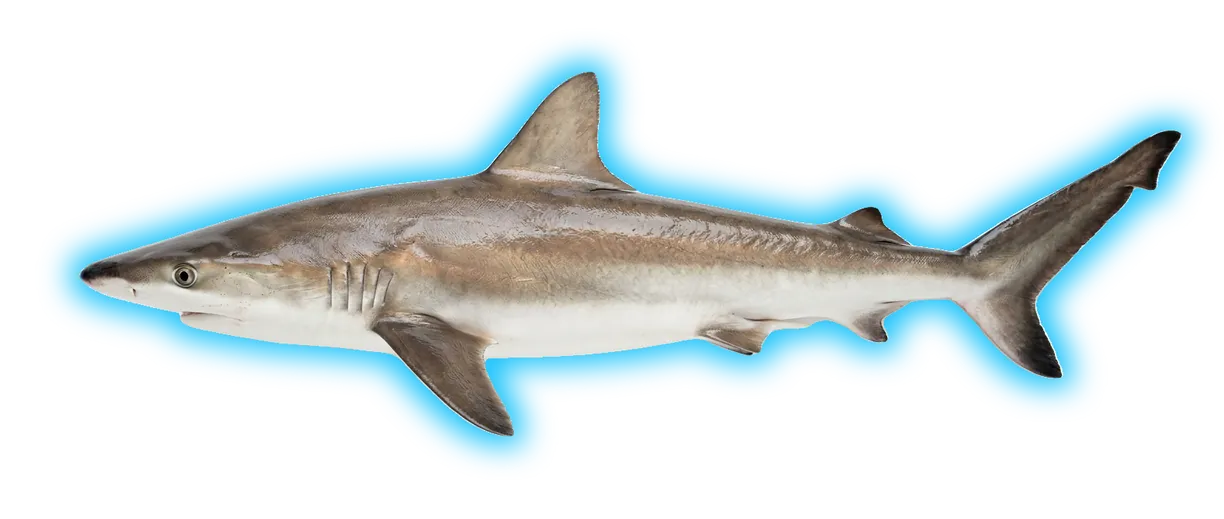
The Lemon Shark is a large, slow-moving, and bulky shark, recognized by its distinctive appearance. It features a short, blunt snout, giving its head a somewhat flat profile. A key identifying trait is its two dorsal fins, which are of nearly equal size, unlike many other shark species. Its coloration is typically a uniform yellowish-brown or gray, allowing it to blend seamlessly into its sandy or muddy surroundings.
Source: FishBase & iNaturalist
Habitat
These sharks are predominantly found in shallow coastal waters, often frequenting bays, estuaries, mangrove forests, and sandy flats. They are well-adapted to these environments, frequently seen cruising over soft bottoms near shorelines. Juveniles especially rely on these protected areas for nurseries.
Distribution
The Lemon Shark is found in the tropical and subtropical waters of the Americas, ranging along the Atlantic coast from New Jersey to southern Brazil, and in the eastern Pacific from Baja California to Ecuador. They are common throughout the Caribbean and Gulf of Mexico.
Behaviour
Lemon sharks are active, opportunistic predators, primarily feeding on bony fish, stingrays, and crustaceans. They are often most active during twilight hours and at night, patrolling shallow waters for prey. Known for their social tendencies, they can sometimes be observed in loose aggregations. While generally slow-moving, they are capable of bursts of speed when hunting.
Edibility
★★★★★
The flesh of the Lemon Shark is considered fair table fare by some, though it can have a strong, ammoniated flavor if not properly bled and handled. It is often consumed as steaks or fillets, but like many larger sharks, it can accumulate mercury and should be eaten in moderation.
Lure suggestion
For anglers targeting Lemon Sharks, heavy tackle is essential, including stout rods, reels with strong drags, and at least 80-100 lb braided line. Large cut baits, such as mullet, mackerel, or bonito, fished on the bottom or under a float, are highly effective. A wire leader of at least 150 lb test is crucial to prevent bite-offs from their abrasive skin and sharp teeth, typically rigged with a large circle hook (12/0 or larger).
Lemon Shark Regulations
Select a state to see size limits, bag limits, and seasons for Lemon Shark.
Select a state
Always confirm with the official state agency before keeping a fish.
Biggest Lemon Shark
No catches logged yet for Lemon Shark.
Be the first, download CatchVault and log your catch!
Tips & Tactics
Summer Flounder from the New Jersey Surf: A Complete Guide
How to catch summer flounder (fluke) from the New Jersey beach — when and where to go, the best rigs, baits, and retrieves, and the gear that gets it done.
My Review of the Hobie Fleet: What's Best for Saltwater Kayak Fishing
A hands-on review of every Hobie MirageDrive fishing kayak and which model makes the most sense for inshore and open-water saltwater fishing.
How to Jig Giant Plastic Eels for 40"+ Striped Bass
The complete guide to fishing oversized soft plastic eels for trophy striped bass — gear, technique, locations, and timing.
Related Species
Think You Can Top the Leaderboard?
CatchVault is available on iOS. Download the app, log your Lemon Shark catch, and see where you rank.