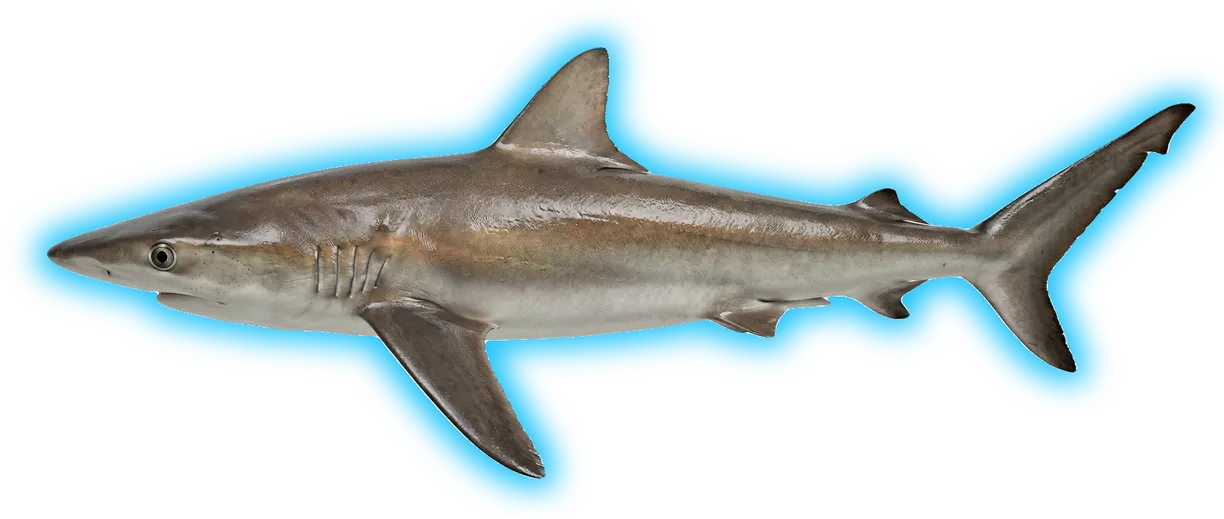
Silky Shark
Carcharhinus falciformis
Also known as
blackspot shark, grey whaler shark, olive shark, ridgeback shark
IUCN status
Critically EndangeredAbout the Silky Shark
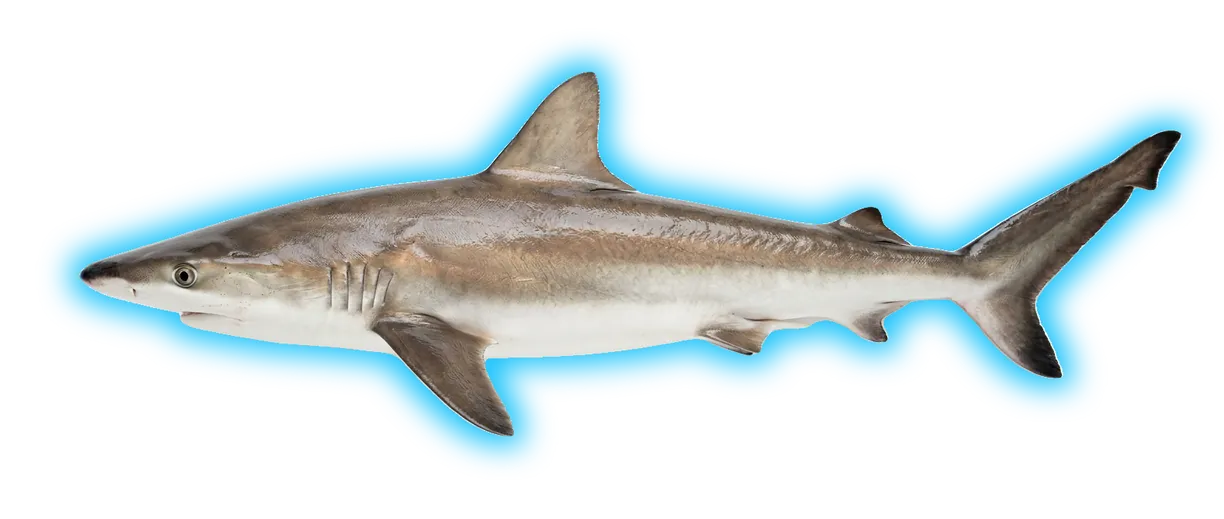
The Silky Shark is a sleek, streamlined pelagic predator, distinguished by its relatively small second dorsal fin and the smooth, 'silky' texture of its skin. Its body is typically dark grey or bronze dorsally, fading to white on its belly, with no prominent markings. Its pectoral fins are long and pointed, and its fins often have dusky tips, which can help in identification. The first dorsal fin originates behind the free rear tips of the pectoral fins, a key identification feature. This active shark can grow quite large, making it a formidable opponent on the line.
Source: FishBase & iNaturalist
Habitat
As one of the most abundant sharks in the pelagic zone, the Silky Shark roams the open ocean, rarely venturing into shallow coastal waters. It prefers tropical and subtropical waters globally, often found near the edges of continental shelves and around oceanic islands. These sharks are highly mobile, often associated with schools of tuna and other pelagic fish.
Distribution
This species has a widespread global distribution, inhabiting tropical and subtropical waters across the Atlantic, Pacific, and Indian Oceans. They are known for their highly mobile and migratory nature, following warm currents and prey concentrations.
Behaviour
Silky Sharks are opportunistic and voracious predators, primarily feeding on pelagic bony fishes like tuna, mackerel, and sardines, but also squid and crustaceans. They are highly active swimmers, often observed cruising in the upper water column. Their migratory patterns often coincide with the movements of their prey, making them a seasonal target in many areas. They are known to form large aggregations, especially around productive fishing grounds.
Edibility
★★★★★
While the meat is considered edible, often marketed as 'flounder' or 'rock salmon', Silky Shark is not widely sought after for its table quality due to concerns regarding sustainability and potential mercury accumulation. The flesh is typically firm and white.
Lure suggestion
Targeting Silky Sharks requires heavy-duty offshore tackle, including 80-130 lb class rods paired with large capacity reels. Natural baits such as whole or cut tuna, bonito, mackerel, or squid are highly effective, presented on large circle hooks (16/0-20/0) with heavy wire leaders (300-500 lb). Chumming with oily fish offshore is crucial for attracting these pelagic sharks to the boat. Present baits either free-lined or suspended beneath a balloon.
Silky Shark Regulations
Select a state to see size limits, bag limits, and seasons for Silky Shark.
Select a state
Always confirm with the official state agency before keeping a fish.
Biggest Silky Shark
No catches logged yet for Silky Shark.
Be the first, download CatchVault and log your catch!
Tips & Tactics
Summer Flounder from the New Jersey Surf: A Complete Guide
How to catch summer flounder (fluke) from the New Jersey beach — when and where to go, the best rigs, baits, and retrieves, and the gear that gets it done.
My Review of the Hobie Fleet: What's Best for Saltwater Kayak Fishing
A hands-on review of every Hobie MirageDrive fishing kayak and which model makes the most sense for inshore and open-water saltwater fishing.
How to Jig Giant Plastic Eels for 40"+ Striped Bass
The complete guide to fishing oversized soft plastic eels for trophy striped bass — gear, technique, locations, and timing.
Related Species
Think You Can Top the Leaderboard?
CatchVault is available on iOS. Download the app, log your Silky Shark catch, and see where you rank.