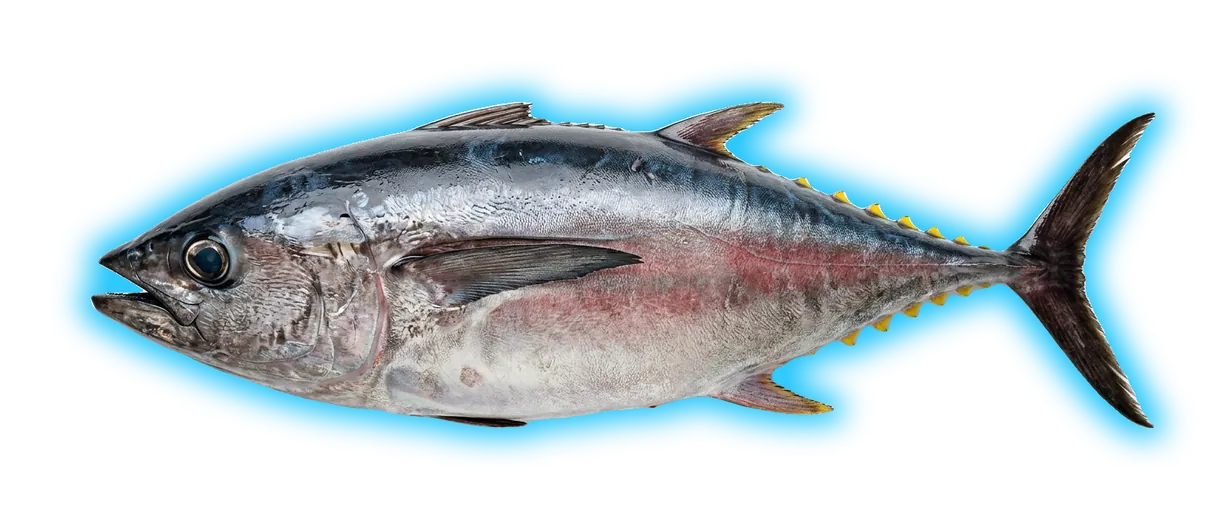
Bigeye Tuna
Thunnus obesus
Also known as
Ahi, Patudo
IUCN status
VulnerableAbout the Bigeye Tuna
The Bigeye Tuna is a formidable, robust-bodied fish distinguished by its notably large eyes, a feature that gives it its common name. Its back is a dark metallic blue to black, transitioning to a silvery-white on the belly, often with iridescent streaks along the sides. They possess prominent yellow finlets with black borders, and their pectoral fins are typically longer than those of other tuna species, extending past the second dorsal fin. This powerful, sleek build is indicative of its speed and predatory lifestyle.
Source: FishBase & iNaturalist
Habitat
This pelagic, oceanic species prefers the open waters of tropical and temperate seas, often found in deeper thermocline layers. Bigeye Tuna frequently congregate around seamounts, submarine canyons, and other underwater structures where baitfish schools aggregate, typically at depths of 100 to 500 meters.
Distribution
Bigeye Tuna are widely distributed across the Atlantic, Pacific, and Indian Oceans, absent only from the Mediterranean Sea. They are most commonly found in warmer, equatorial waters.
Behaviour
Bigeye Tuna are opportunistic predators, known for their deep-water feeding habits, especially during low-light conditions at dawn, dusk, or throughout the night. Their diet primarily consists of squid, crustaceans, and a variety of small to medium-sized fish. These highly migratory fish often form schools, sometimes mixing with other tuna species like Yellowfin, or associating with marine mammals and whale sharks.
Edibility
★★★★★
Renowned for its rich, firm, and succulent red flesh, Bigeye Tuna is considered a premium delicacy. It is highly prized for sashimi and sushi, but also excels when seared, grilled, or broiled, offering a luxurious and buttery flavor.
Lure suggestion
Successful angling for Bigeye Tuna often involves trolling large artificial lures such as chuggers, jet heads, or realistic squid imitations, especially at dawn, dusk, or during the night. Deep dropping live or dead bait, including squid, mackerel, or small skipjack tuna, is also highly effective when fish are holding at specific depths. Kite fishing with live bait can also entice strikes from these deep-dwelling giants.
Bigeye Tuna Regulations
Select a state to see size limits, bag limits, and seasons for Bigeye Tuna.
Select a state
Always confirm with the official state agency before keeping a fish.
Biggest Bigeye Tuna
No catches logged yet for Bigeye Tuna.
Be the first, download CatchVault and log your catch!
Tips & Tactics
Summer Flounder from the New Jersey Surf: A Complete Guide
How to catch summer flounder (fluke) from the New Jersey beach — when and where to go, the best rigs, baits, and retrieves, and the gear that gets it done.
My Review of the Hobie Fleet: What's Best for Saltwater Kayak Fishing
A hands-on review of every Hobie MirageDrive fishing kayak and which model makes the most sense for inshore and open-water saltwater fishing.
How to Jig Giant Plastic Eels for 40"+ Striped Bass
The complete guide to fishing oversized soft plastic eels for trophy striped bass — gear, technique, locations, and timing.
Related Species
Think You Can Top the Leaderboard?
CatchVault is available on iOS. Download the app, log your Bigeye Tuna catch, and see where you rank.