Also known as
Inland Bull Trout, Coastal Bull Trout, River Bull Trout
IUCN status
VulnerableAbout the Bull Trout
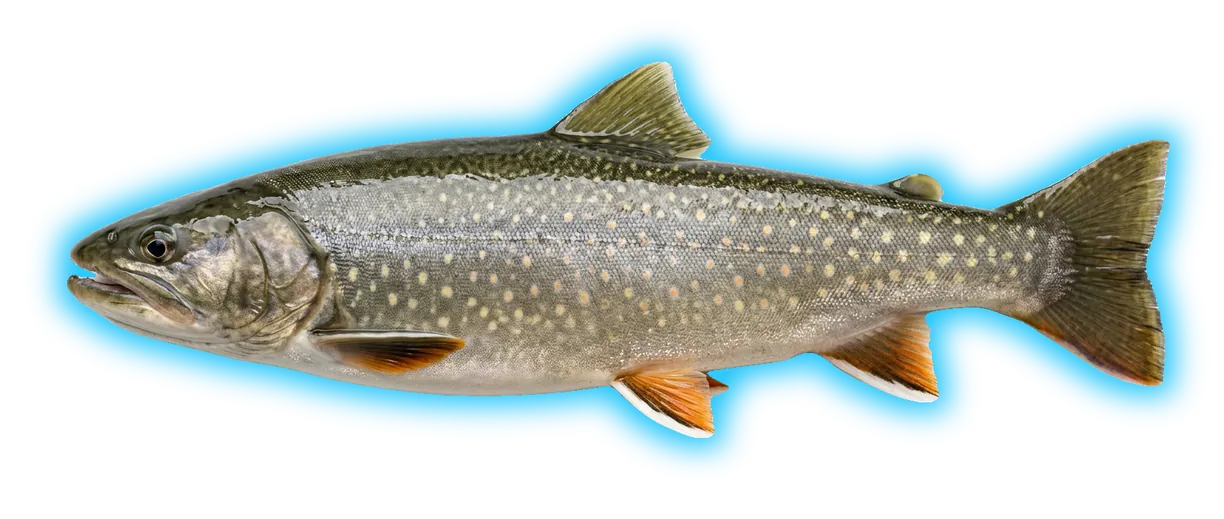
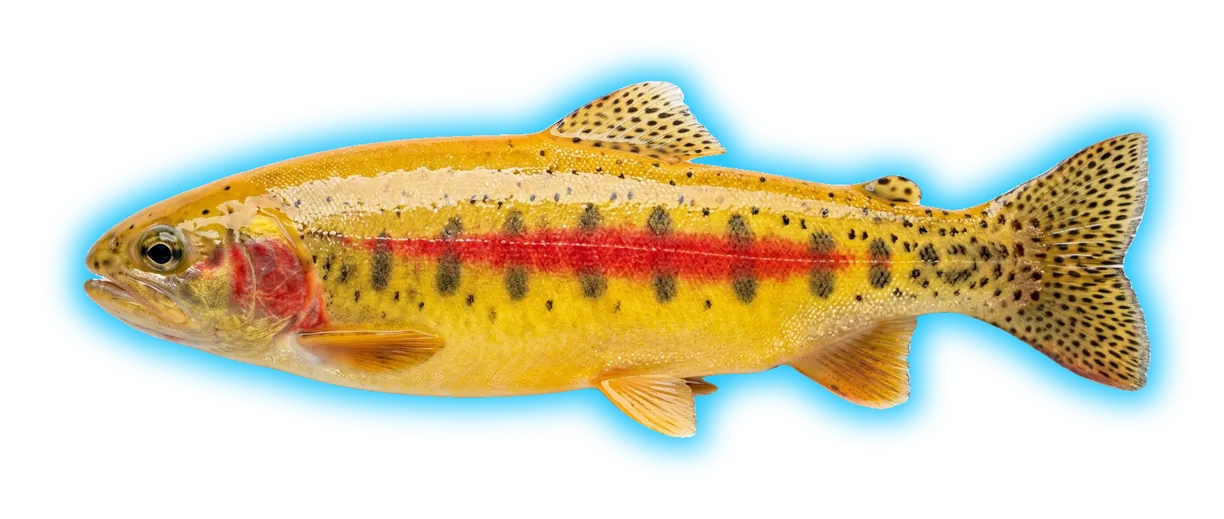
The Bull Trout is a distinctive char, recognized by its olive green, blue-gray, or brown body adorned with light spots of yellow, orange, or red. Unlike some other char, it lacks dark vermiculations on its back and dorsal fin. Its head is notably large with a mouth extending past the eye, a clear predatory feature. During spawning season, the flanks and belly of mature individuals can take on vibrant reddish or orange hues, adding to their striking appearance.
Source: FishBase & iNaturalist
Bull Trout Size & Bag Limits by State
Bull Trout rules in 5 states.
| State | Size limit | Daily bag | Season |
|---|---|---|---|
| IdahoBull Trout Closed WatersYear-round | None | Catch & release | Year-round |
| MontanaHUNGRY HORSE RESERVOIR — Dam to Crossover Boat RampMay 16 – Aug 15, Jan 1 – May 15, Aug 16 – Dec 31 | None | — | May 16 – Aug 15, Jan 1 – May 15, Aug 16 – Dec 31 |
| KOOTENAI RIVER — Libby Dam to Idaho BorderYear-round | None | Catch & release | Year-round |
| LAKE KOOCANUSAYear-round | None | Catch & release | Year-round |
| Bull Trout Closed WatersYear-round · Closed | None | 0 | Year-round · Closed |
| South Fork Flathead River — headwaters and tributaries from the confluence of Youngs and Danaher Creeks downstream to Crossover Boat RampJul 1 – Jul 31 | None | Catch & release | Jul 1 – Jul 31 |
| South Fork Flathead River TributariesYear-round · Closed | None | — | Year-round · Closed |
| NevadaYear-round | None | Catch & release | Year-round |
| OregonClackamas River — Mainstem and tributaries (except Oak Grove Fork) above Faraday Diversion (Cazadero) Dam, excluding North Fork Reservoir and Faraday LakeYear-round · Closed | None | — | Year-round · Closed |
| Deer Creek (Wallowa Co.) — Above Big Sheep Cr. to Confluence of North and South ForksAlways open | None | Catch & release | Always open |
| Deer Creek (Wallowa Co.) — Mouth to Big Sheep CrAlways open | None | Catch & release | Always open |
| Lake Billy Chinook — Balance of reservoirAlways open | 24" min | 1 | Always open |
| Lake Billy Chinook — Metolius ArmAlways open | 24" min | 1 | Always open |
| Metolius River — Above Allingham Campground Bridge (NF-1217)Always open | None | Catch & release | Always open |
| Metolius River — Bridge 99/Lower Bridge (NF-1270) to Allingham Campground Bridge (NF-1217)Always open | None | Catch & release | Always open |
| Metolius River — Cable car crossing near mouth to Bridge 99/Lower Bridge (NF-1270)Always open | None | Catch & release | Always open |
| Odell LakeAlways open | None | Catch & release | Always open |
| Bull Trout Closed WatersYear-round · Closed | None | 0 | Year-round · Closed |
| Snake River ZoneYear-round · Closed | None | — | Year-round · Closed |
| WashingtonYear-round · Closed | None | 0 | Year-round · Closed |
— means the state sets no daily bag number for this species.
Statewide rules, or each area where a state sets limits by region. Many lakes and rivers have their own limits; pick a state or open its regulations page for water-specific rules. Always confirm with the state wildlife agency before keeping a fish.
Rules for a specific state
Pick a state to see its Bull Trout rules, including lakes and rivers with their own limits.
Select a state
Always confirm with the official state agency before keeping a fish.
Best bait and lures for Bull Trout
Targeting Bull Trout effectively requires lures that mimic their preferred prey fish. Large spoons and spinners, particularly in silver, gold, or brass finishes, are highly effective. Streamers, especially those imitating sculpins or baitfish, fished on sink-tip lines or with split shot, can be deadly. In larger lakes and rivers, trolling larger plugs or bucktail flies that dive to their preferred depths often yields success. Present your offerings with a retrieve that suggests an injured or fleeing baitfish.
Bull Trout habitat
This cold-water species thrives in pristine, cold, and highly oxygenated aquatic environments across northwestern North America. They are found in a variety of complex habitats including large rivers, their tributary streams, and deep, clear lakes. Bull Trout often migrate significant distances between these different habitats throughout their life cycle.
Where Bull Trout are found
Native to the northwestern regions of North America, the Bull Trout's geographic range spans from the upper Columbia River basin in the United States, north through British Columbia, and into parts of Alberta, Canada. Their presence extends west to various coastal drainages along the Pacific Northwest.
Bull Trout behavior
As apex predators, Bull Trout are primarily piscivorous, preying heavily on other fish species, including juvenile salmonids, sculpins, and minnows. They also supplement their diet with insects, amphibians, and small mammals when available. Many populations exhibit extensive migratory behavior, moving between spawning streams, rearing habitats, and larger foraging waters, often in pursuit of optimal water temperatures and food sources. Spawning typically occurs in late summer or early autumn in cold, clean gravel beds.
Biggest Bull Trout
No catches logged yet for Bull Trout.
Be the first, download CatchVault and log your catch!
Tips & Tactics
Summer Flounder from the New Jersey Surf: A Complete Guide
How to catch summer flounder (fluke) from the New Jersey beach — when and where to go, the best rigs, baits, and retrieves, and the gear that gets it done.
How to Jig Giant Plastic Eels for 40"+ Striped Bass
The complete guide to fishing oversized soft plastic eels for trophy striped bass — gear, technique, locations, and timing.
My Review of the Hobie Fleet: What's Best for Saltwater Kayak Fishing
A hands-on review of every Hobie MirageDrive fishing kayak and which model makes the most sense for inshore and open-water saltwater fishing.
Related Species
Where to Catch Bull Trout
States where Bull Trout is found, based on CatchVault's waterbody commonality data.
Think You Can Top the Leaderboard?
CatchVault is available on iPhone and Android. Download the app, log your Bull Trout catch, and see where you rank.