Brook Trout
Salvelinus fontinalis
Water Type
Freshwater
Also known as
eastern brook trout, speckled trout, brook charr, squaretail
About the Brook Trout
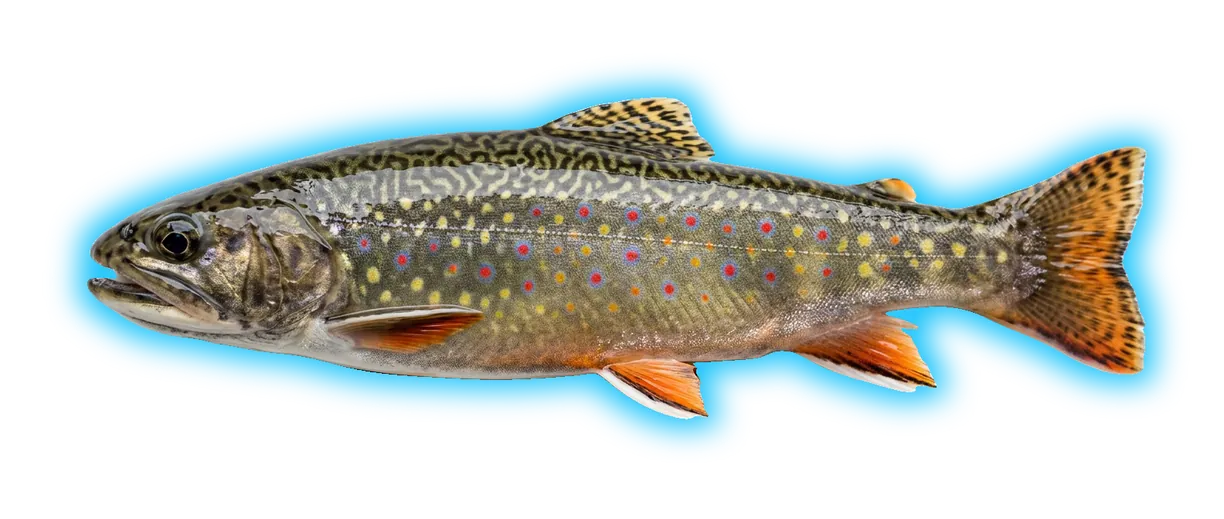
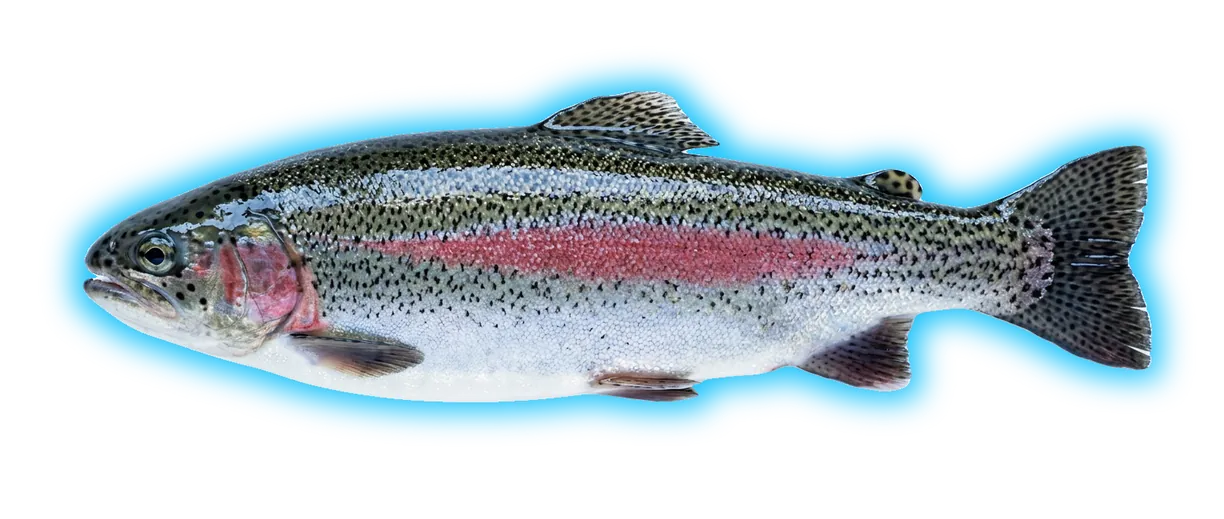
Brook trout are exceptionally beautiful fish, easily identified by their striking coloration. Their olive to dark green backs are adorned with distinctive worm-like patterns, transitioning to lighter flanks speckled with pale yellow spots and vibrant red spots, often encircled by blue halos. The lower fins, including the pelvic, pectoral, and anal, are typically orange or reddish with a prominent white leading edge, followed by a black stripe, a key identifying feature. Their streamlined, torpedo-shaped body is well-suited for swift currents and cold water environments.
Source: FishBase & iNaturalist
Habitat
These cold-water specialists thrive in pristine, oxygen-rich environments such as clear mountain streams, rivers, and high-altitude lakes. They prefer areas with ample cover, including submerged logs, undercut banks, large rocks, and dense overhanging vegetation, which provide shelter and ambush points for prey.
Distribution
Native to Eastern North America, spanning parts of the United States and Canada, the brook trout has also been widely introduced beyond its natural range to other regions of North America and other continents. A notable potamodromous population, known as 'coaster trout,' inhabits Lake Superior.
Behaviour
Brook trout are opportunistic feeders, primarily preying on aquatic and terrestrial insects, small fish, and crustaceans. They typically ambush their prey, often holding position in current seams or near cover, darting out to strike. Their activity levels are highest during cooler periods of the day and year, becoming less active as water temperatures rise in summer. Spawning occurs in the fall, with females constructing redds in gravel beds within cold, clean water.
Edibility
★★★★★
Brook trout are highly prized as table fare, offering delicate, flaky white to pinkish meat with a mild, fresh, and delicious flavor. They are excellent when pan-fried whole or as fillets, making for a superb culinary experience for any angler.
Lure suggestion
For fly anglers, small dry flies (e.g., Parachute Adams, Elk Hair Caddis), nymphs, and small streamers are incredibly effective. Spin fishermen should consider ultralight spinning gear with small spinners (e.g., Mepps Aglia, Rooster Tail), small spoons, or tiny jigs tipped with soft plastic grubs. Natural baits such as garden worms, crickets, or minnows, fished on a light line with a small hook and minimal weight, can also yield excellent results.
Brook Trout Regulations
Select a state to see size limits, bag limits, and seasons for Brook Trout.
Select a state
Always confirm with the official state agency before keeping a fish.
Recent Catches
Biggest Brook Trout
Tips & Tactics
Summer Flounder from the New Jersey Surf: A Complete Guide
How to catch summer flounder (fluke) from the New Jersey beach — when and where to go, the best rigs, baits, and retrieves, and the gear that gets it done.
My Review of the Hobie Fleet: What's Best for Saltwater Kayak Fishing
A hands-on review of every Hobie MirageDrive fishing kayak and which model makes the most sense for inshore and open-water saltwater fishing.
How to Jig Giant Plastic Eels for 40"+ Striped Bass
The complete guide to fishing oversized soft plastic eels for trophy striped bass — gear, technique, locations, and timing.
Related Species
Where to Catch Brook Trout
States where Brook Trout is found, based on CatchVault's waterbody commonality data.
Think You Can Top the Leaderboard?
CatchVault is available on iOS. Download the app, log your Brook Trout catch, and see where you rank.