Also known as
American Bullfrog, Jumbo Frog, Giant Frog
About the Bullfrog
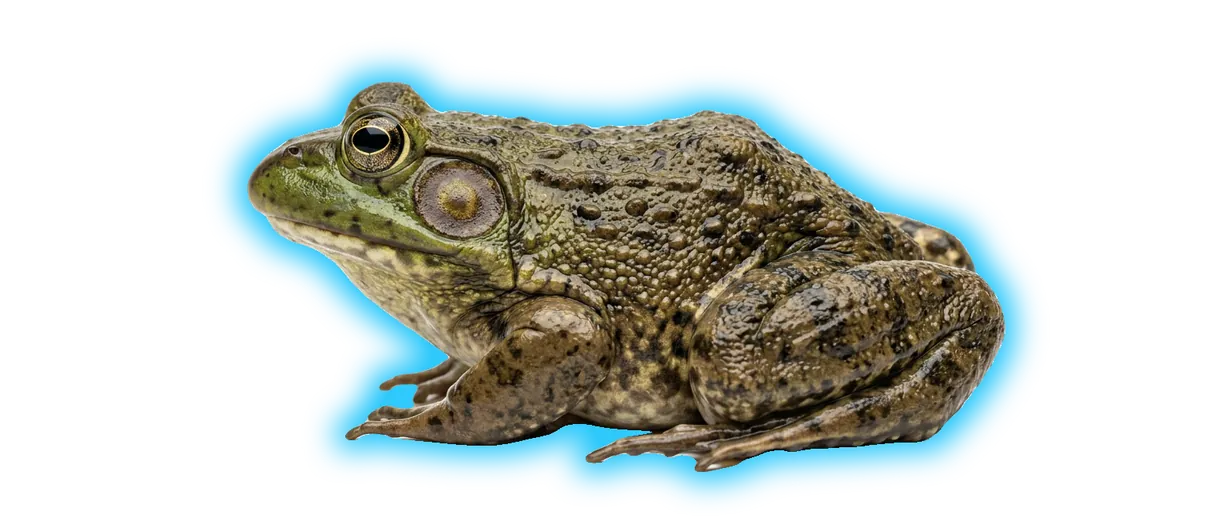
The Bullfrog is a formidable amphibian known for its large size and robust build. Typically sporting an olive green back and sides, it's often adorned with irregular brownish blotches, while its belly is a contrasting whitish, speckled with yellow or grey. A distinctive feature is its often bright green upper lip, and mature males exhibit a striking yellow throat. These impressive frogs can reach considerable sizes, making them a substantial target for those seeking a unique catch.
Source: FishBase & iNaturalist
Bullfrog Size & Bag Limits by State
Bullfrog rules in 13 states.
| State | Size limit | Daily bag | Season |
|---|---|---|---|
| ArkansasJun 1 – Dec 31 · Jun 1 (noon) - Dec 31 (midnight) | None | 18 | Jun 1 – Dec 31 · Jun 1 (noon) - Dec 31 (midnight) |
| CaliforniaYear-round | None | No limit | Year-round |
| ColoradoYear-round | None | No limit | Year-round |
| IdahoYear-round | None | No limit | Year-round |
| IllinoisJun 15 – Oct 15 | None | 8 | Jun 15 – Oct 15 |
| IowaYear-round | None | 12 | Year-round |
| KansasJul 1 – Oct 31 | None | 8 | Jul 1 – Oct 31 |
| KentuckyMay 15 – Oct 31 · May 15 (noon) – Oct 31 | None | 15 | May 15 – Oct 31 · May 15 (noon) – Oct 31 |
| NebraskaYear-round | None | 8 | Year-round |
| NevadaYear-round | None | No limit | Year-round |
| North DakotaYear-round | None | 50 | Year-round |
| OregonYear-round | None | No limit | Year-round |
| WashingtonYear-round | None | No limit | Year-round |
Statewide rules, or each area where a state sets limits by region. Many lakes and rivers have their own limits; pick a state or open its regulations page for water-specific rules. Always confirm with the state wildlife agency before keeping a fish.
Rules for a specific state
Pick a state to see its Bullfrog rules, including lakes and rivers with their own limits.
Select a state
Always confirm with the official state agency before keeping a fish.
Best bait and lures for Bullfrog
For anglers, Bullfrogs can be targeted with small hooks baited with live worms, crickets, or even strips of red cloth, cast near their hiding spots. They are also commonly caught by 'frogging' at night using a bright light to temporarily stun them, then netting or gigging. A surface lure resembling a frog or large insect can also provoke a strike.
Is Bullfrog good to eat?
★★★★★
The hind legs of the Bullfrog are renowned as an excellent delicacy, often compared to chicken in taste and texture. They are firm, white, and lean, perfect for frying, grilling, or stewing, providing a surprisingly generous portion of meat.
Bullfrog habitat
Look for Bullfrogs in large, permanent freshwater bodies, including slow-moving rivers, ponds, lakes, and swamps. They prefer areas with abundant emergent vegetation like lily pads or reeds, offering both cover and ideal ambush points, often close to the water's edge.
Where Bullfrog are found
Native to eastern North America, from Canada through the United States, the Bullfrog has been widely introduced and established itself in many parts of the western US, Mexico, and other countries, often becoming an invasive species.
Bullfrog behavior
Bullfrogs are opportunistic ambush predators, primarily active from dusk to dawn but also seen during the day, feeding on nearly anything they can swallow—insects, crayfish, other frogs, small snakes, and even ducklings. They are largely sedentary, preferring to sit and wait for prey to come within striking distance. During colder months, they burrow into the mud at the bottom of their aquatic habitats to hibernate.
Biggest Bullfrog
No catches logged yet for Bullfrog.
Be the first, download CatchVault and log your catch!
Tips & Tactics
Steelhead vs Rainbow Trout: Same Fish, Different Legal Rules
Steelhead and rainbow trout are the same species. How state laws define steelhead by length and water, the adipose fin rule, and how to tell them apart.
Channel vs Blue vs White vs Flathead Catfish: ID Guide
Tell channel, blue, white and flathead catfish apart by anal fin, tail and jaw, plus hardhead vs gafftop. Why the ID matters for limits and invasives.
Alewife vs Blueback Herring: River Herring & Shad ID Guide
How to tell alewife from blueback herring, and both from American, hickory and gizzard shad, plus why river herring harvest is closed in many states.
Think You Can Top the Leaderboard?
CatchVault is available on iPhone and Android. Download the app, log your Bullfrog catch, and see where you rank.