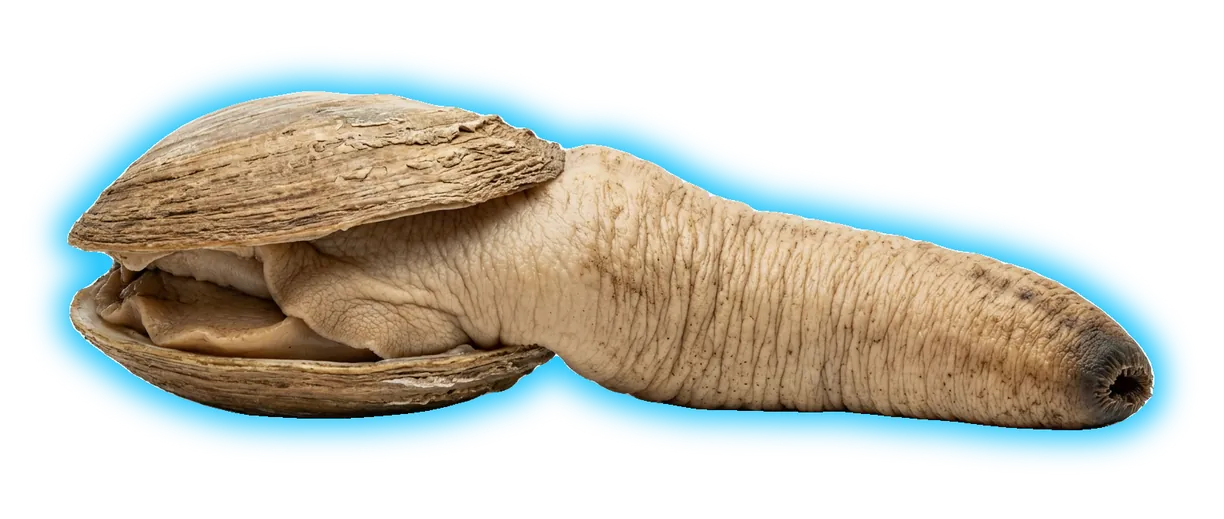
Geoduck
Also known as
Elephant Trunk Clam, King Clam, Gooeyduck
About the Geoduck
These colossal burrowing clams are instantly recognizable by their extraordinarily long, wrinkled siphons, which can extend up to three feet from their shells. While the shell itself is oblong and relatively small, typically measuring 6-8 inches, it's the massive, fleshy 'neck' that protrudes from the substrate that gives the geoduck its distinctive and somewhat comical appearance. The shell is off-white to yellowish, often covered in mud or algae, providing camouflage.
Source: FishBase & iNaturalist
Habitat
Geoducks burrow deep into soft, muddy, or sandy substrates in marine environments, typically found in intertidal zones down to depths of over 300 feet. They prefer stable, protected areas in bays and estuaries, where they can remain undisturbed for decades.
Distribution
While the specific distribution for this unknown Geoduck species is not provided, related geoduck species are famously found along the Pacific coast of North America, ranging from Alaska down to Baja California, and also in parts of Asia.
Behaviour
Geoducks are filter feeders, using their long siphons to draw in seawater and filter out plankton and other microscopic organisms, expelling waste through a separate opening. Once settled, they are largely sessile, remaining in the same burrow for their entire lifespan, which can exceed 160 years. They do not exhibit significant seasonal movement or migration, relying instead on the steady flow of nutrients in their chosen habitat.
Edibility
★★★★★
Highly prized as a culinary delicacy, geoduck meat offers a surprisingly sweet, mild, and ocean-fresh flavor. Its firm, crunchy texture, particularly in the siphon, makes it a unique and sought-after ingredient, often enjoyed raw as sashimi or briefly blanched.
Lure suggestion
Geoducks are not typically caught with traditional fishing lures or baits due to their deep-burrowing, sessile nature. Harvesting them usually involves specialized techniques such as manual digging in intertidal zones during low tide, often with the aid of a 'stomach pump' or water jet to loosen the surrounding sediment. This is a highly specialized and regulated activity, not a conventional angling pursuit.
Geoduck Regulations
Select a state to see size limits, bag limits, and seasons for Geoduck.
Select a state
Always confirm with the official state agency before keeping a fish.
Biggest Geoduck
No catches logged yet for Geoduck.
Be the first, download CatchVault and log your catch!
Tips & Tactics
Summer Flounder from the New Jersey Surf: A Complete Guide
How to catch summer flounder (fluke) from the New Jersey beach — when and where to go, the best rigs, baits, and retrieves, and the gear that gets it done.
My Review of the Hobie Fleet: What's Best for Saltwater Kayak Fishing
A hands-on review of every Hobie MirageDrive fishing kayak and which model makes the most sense for inshore and open-water saltwater fishing.
How to Jig Giant Plastic Eels for 40"+ Striped Bass
The complete guide to fishing oversized soft plastic eels for trophy striped bass — gear, technique, locations, and timing.
Related Species
Think You Can Top the Leaderboard?
CatchVault is available on iOS. Download the app, log your Geoduck catch, and see where you rank.