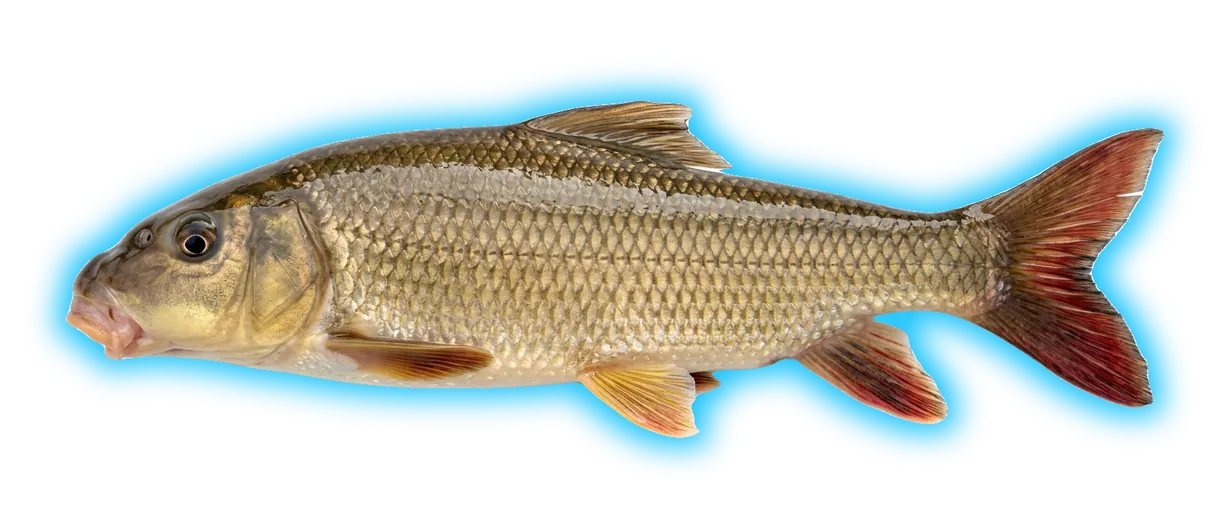
Redhorse
Also known as
Jumprock, River Sucker, Redhorse Sucker
About the Redhorse
Redhorses are distinctive members of the sucker family, known for their elongated, somewhat cylindrical bodies and prominent, fleshy, downward-facing mouths adapted for bottom feeding. Their scales are typically large, and many species display attractive reddish or orange fins, especially the caudal (tail) fin, which gives them their common name. They possess a single dorsal fin, often positioned midway along their back, contributing to their streamlined appearance.
Source: FishBase & iNaturalist
Habitat
These bottom-dwelling fish prefer clean, flowing waters found in rivers, large streams, and sometimes lakes, often over gravel, sand, or rocky substrates. They are frequently found in moderate currents, seeking out areas with good oxygenation and abundant invertebrate life.
Distribution
Redhorses are widely distributed across North America, inhabiting various river systems from the Great Lakes region and eastern seaboard west to the Mississippi River basin and beyond. Their range extends across much of the continental United States and into parts of Canada.
Behaviour
Primarily bottom feeders, Redhorses use their specialized mouths to suction up aquatic insects, larvae, small crustaceans, mollusks, and detritus from the substrate. They are generally active during the day, often foraging in schools. During spawning season, typically in spring, many species undertake upstream migrations to reproduce over gravel beds in shallow, flowing water.
Edibility
★★★★★
While often overlooked, Redhorses offer surprisingly tasty white, flaky flesh, especially when prepared properly. Their primary challenge for consumption is the presence of numerous small 'y-bones,' which require careful filleting or a preference for methods like smoking or pickling to soften them.
Lure suggestion
Redhorses are not typically caught on artificial lures, but they are eager biters on natural baits fished on the bottom. The most effective offerings include nightcrawlers, earthworms, pieces of crawfish, corn, or even dough balls, presented on a simple bottom rig with a sinker and a small, sharp hook (sizes 6-10). Drifting baits through deeper runs or anchoring near current breaks in rivers and large streams are prime strategies for success.
Redhorse Regulations
Select a state to see size limits, bag limits, and seasons for Redhorse.
Select a state
Always confirm with the official state agency before keeping a fish.
Biggest Redhorse
No catches logged yet for Redhorse.
Be the first, download CatchVault and log your catch!
Tips & Tactics
Summer Flounder from the New Jersey Surf: A Complete Guide
How to catch summer flounder (fluke) from the New Jersey beach — when and where to go, the best rigs, baits, and retrieves, and the gear that gets it done.
My Review of the Hobie Fleet: What's Best for Saltwater Kayak Fishing
A hands-on review of every Hobie MirageDrive fishing kayak and which model makes the most sense for inshore and open-water saltwater fishing.
How to Jig Giant Plastic Eels for 40"+ Striped Bass
The complete guide to fishing oversized soft plastic eels for trophy striped bass — gear, technique, locations, and timing.
Related Species
Where to Catch Redhorse
States where Redhorse is found, based on CatchVault's waterbody commonality data.
Think You Can Top the Leaderboard?
CatchVault is available on iOS. Download the app, log your Redhorse catch, and see where you rank.