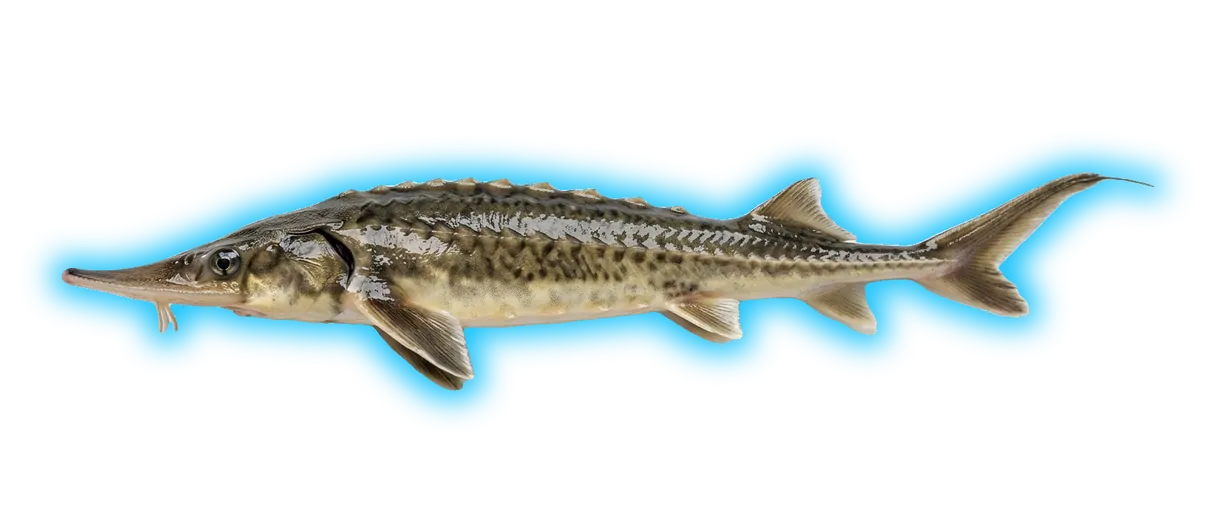
Shovelnose Sturgeon
Size & bag limits by stateAlso known as
Sand Sturgeon, Switchtail, Hackleback
IUCN status
Least ConcernAbout the Shovelnose Sturgeon
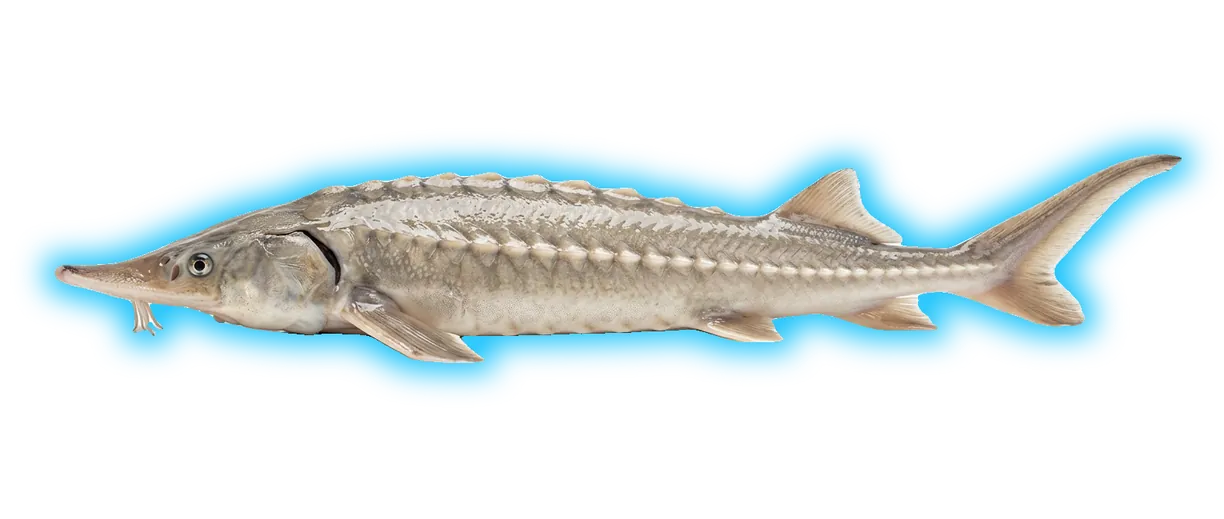
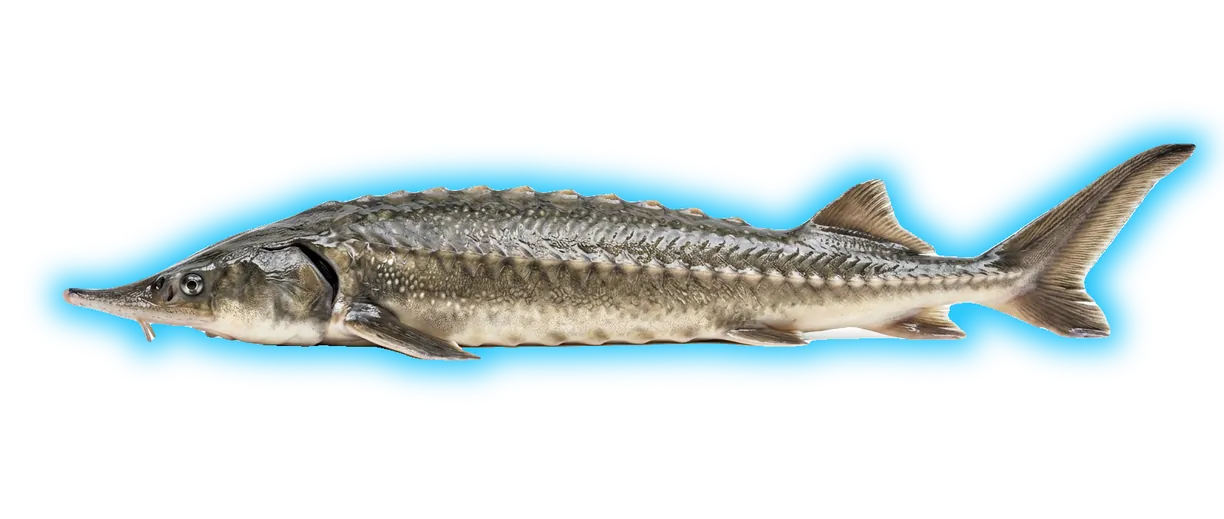
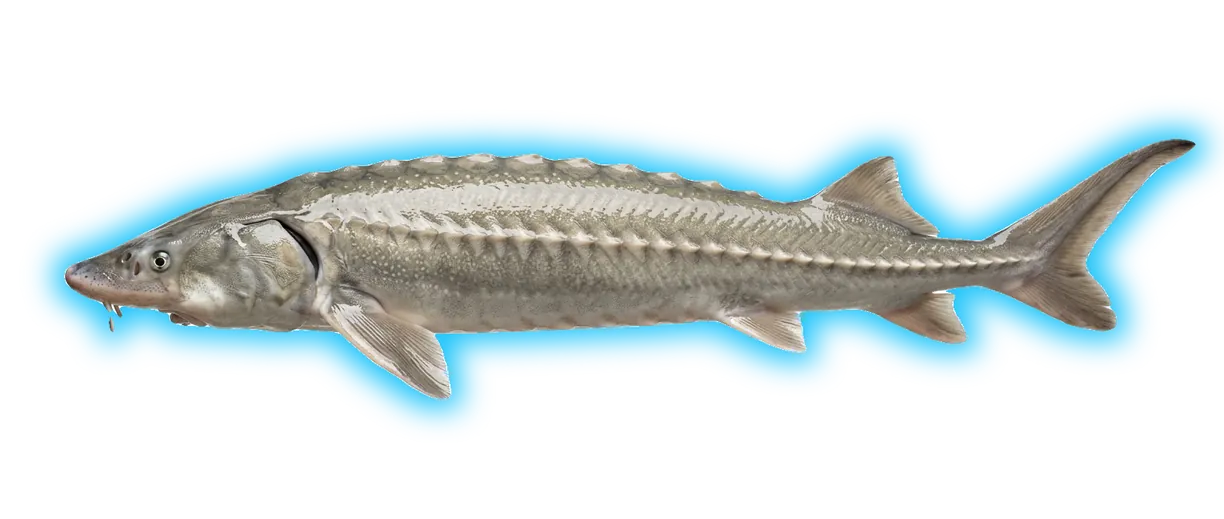
The Shovelnose Sturgeon is easily identified by its distinctive flattened, shovel-like snout and a long, slender body covered in five rows of bony plates, called scutes, rather than scales. Its coloration typically ranges from light brown to olive on its back, fading to a lighter, sometimes yellowish-white belly. Unique to this species are the four long barbels located in a straight line across the underside of its snout, which are used for sensory detection. Unlike other sturgeon species, its caudal fin is often deeply forked with a filament on the upper lobe.
Source: FishBase & iNaturalist
Shovelnose Sturgeon Size & Bag Limits by State
Shovelnose Sturgeon rules in 18 states.
| State | Size limit | Daily bag | Season |
|---|---|---|---|
| AlabamaYear-round · Year-round closed | None | 0 | Year-round · Year-round closed |
| ArkansasYear-round | 21" min | No limit | Year-round |
| IndianaYear-round | 25" min | No limit | Year-round |
| IowaYear-round | None | No limit | Year-round |
| KansasYear-round | None | No limit | Year-round |
| KentuckyYear-round | None | 2 | Year-round |
| LouisianaYear-round · Year-round closed | None | Catch & release | Year-round · Year-round closed |
| MinnesotaJun 16 – Apr 14 · Catch-and-release only Jun 16 – Apr 14 (closed Apr 15 – Jun 15) | None | Catch & release | Jun 16 – Apr 14 · Catch-and-release only Jun 16 – Apr 14 (closed Apr 15 – Jun 15) |
| MississippiYear-round · Year-round closed | None | 0 | Year-round · Year-round closed |
| MissouriYear-round | 30" max | 10 | Year-round |
| MontanaBighorn LakeYear-round | None | 2 | Year-round |
| Central Fishing DistrictYear-round | 40" max | 5 | Year-round |
| Eastern Fishing DistrictYear-round | 40" max | 5 | Year-round |
| Fort Peck Reservation Boundary Waters (Big Muddy Creek, Missouri River, Milk River)Year-round | None | 5 | Year-round |
| Western Fishing DistrictYear-round · Catch and release | None | Catch & release | Year-round · Catch and release |
| NebraskaYear-round | None | 10 | Year-round |
| North DakotaYear-round · Closed | None | 0 | Year-round · Closed |
| South DakotaYear-round · Closed | None | 0 | Year-round · Closed |
| TennesseeYear-round · Year-round closed | None | Catch & release | Year-round · Year-round closed |
| West VirginiaYear-round · Year-round closed | None | Catch & release | Year-round · Year-round closed |
| WisconsinYear-round · Year-round closed | None | 0 | Year-round · Year-round closed |
| WyomingYear-round | None | 2 | Year-round |
Statewide rules, or each area where a state sets limits by region. Many lakes and rivers have their own limits; pick a state or open its regulations page for water-specific rules. Always confirm with the state wildlife agency before keeping a fish.
Rules for a specific state
Pick a state to see its Shovelnose Sturgeon rules, including lakes and rivers with their own limits.
Select a state
Always confirm with the official state agency before keeping a fish.
Best bait and lures for Shovelnose Sturgeon
Anglers targeting Shovelnose Sturgeon should employ bottom-fishing techniques using heavy tackle to combat strong currents. Effective baits include nightcrawlers, cut bait (like shad or minnows), and small pieces of clam or shrimp fished directly on the bottom with a sinker. A Carolina rig or a three-way swivel rig with a pyramid or flat sinker is often successful.
Is Shovelnose Sturgeon good to eat?
★★★★★
Known for its firm, mild-flavored white meat that is excellent fried, smoked, or grilled. Its roe is highly prized, often marketed as 'Hackleback caviar' and considered a delicacy.
Shovelnose Sturgeon habitat
This bottom-dwelling fish prefers the turbid waters of large, swift rivers, typically inhabiting channels with moderate to strong currents over sandy or gravelly substrates. They are often found in deeper runs and scour holes, avoiding stagnant or heavily vegetated areas.
Where Shovelnose Sturgeon are found
Primarily found throughout the Mississippi River basin, its range extends from Montana in the upper Missouri River system down to the Gulf of Mexico. They are also present in major tributaries of the Mississippi.
Shovelnose Sturgeon behavior
Shovelnose Sturgeon are primarily nocturnal bottom feeders, using their sensitive barbels to locate aquatic insects, insect larvae, crustaceans, and small fish buried in the riverbed. While generally sedentary, they can undertake significant seasonal migrations, often moving upstream to spawn in spring. Their streamlined bodies allow them to navigate strong currents efficiently, making them a strong fighting fish on the line.
Biggest Shovelnose Sturgeon
No catches logged yet for Shovelnose Sturgeon.
Be the first, download CatchVault and log your catch!
Tips & Tactics
Steelhead vs Rainbow Trout: Same Fish, Different Legal Rules
Steelhead and rainbow trout are the same species. How state laws define steelhead by length and water, the adipose fin rule, and how to tell them apart.
Channel vs Blue vs White vs Flathead Catfish: ID Guide
Tell channel, blue, white and flathead catfish apart by anal fin, tail and jaw, plus hardhead vs gafftop. Why the ID matters for limits and invasives.
Alewife vs Blueback Herring: River Herring & Shad ID Guide
How to tell alewife from blueback herring, and both from American, hickory and gizzard shad, plus why river herring harvest is closed in many states.
Related Species
Where to Catch Shovelnose Sturgeon
States where Shovelnose Sturgeon is found, based on CatchVault's waterbody commonality data.
Think You Can Top the Leaderboard?
CatchVault is available on iPhone and Android. Download the app, log your Shovelnose Sturgeon catch, and see where you rank.