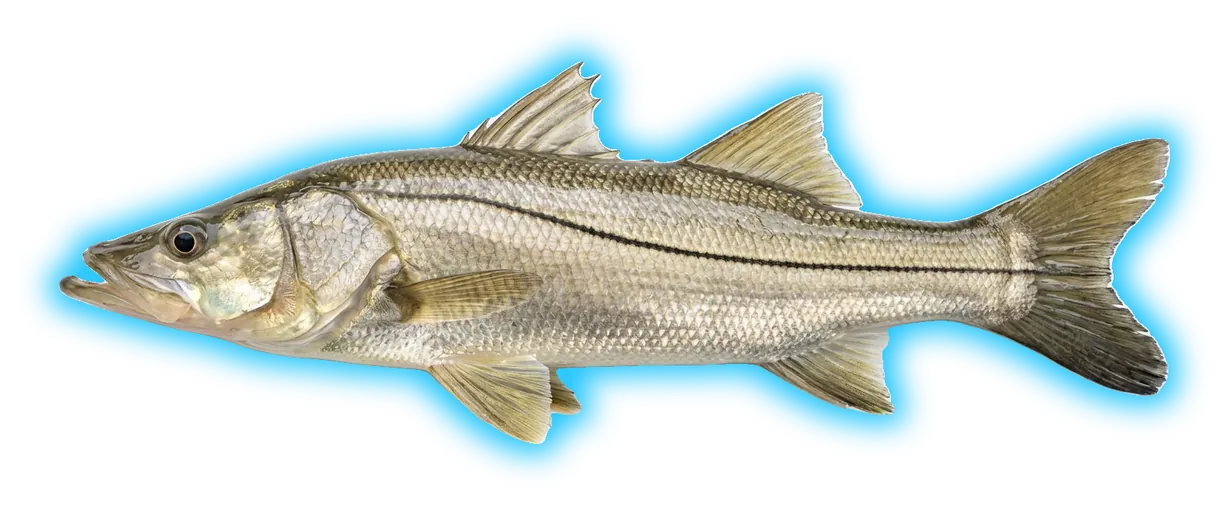
Snook
Also known as
Linesider, Robalo
About the Snook
Snook are instantly recognizable by their prominent, jet-black lateral line, which runs from gill plate to tail, giving them their 'linesider' moniker. Their sleek, elongated body tapers to a powerful tail, built for explosive strikes. They possess a large, upturned mouth and often display a silvery-gold coloration, with fins that can range from yellowish to dusky.
Source: FishBase & iNaturalist
Snook Size & Bag Limits by State
Select a state to see size limits, bag limits, and seasons for Snook.
Select a state
Always confirm with the official state agency before keeping a fish.
Best bait and lures for Snook
When targeting Snook, a variety of lures can be highly effective. Topwater plugs are thrilling, especially during low light, while soft plastic jerkbaits or paddle tails rigged weedless are excellent for working around structure. Bucktail jigs and lipped swimming plugs also tempt strikes, but live bait such as pilchards, shrimp, or mullet freelined or under a popping cork is often irresistible.
Is Snook good to eat?
★★★★★
Renowned for their delicate, flaky white meat and mild flavor, Snook are considered one of the finest eating fish caught in coastal waters. Many anglers prefer to skin them due to a sometimes 'soapy' taste imparted by the skin, hence the occasional nickname 'soapfish'.
Snook habitat
These prized gamefish thrive in a variety of coastal environments, from the tangled roots of mangrove estuaries and brackish rivers to the surf zones and inshore flats. They are structure-oriented, often found ambushing prey around docks, bridges, seawalls, and submerged snags, where they can use cover to their advantage.
Where Snook are found
Snook are primarily found in tropical and subtropical waters, with a strong presence along Florida's Atlantic and Gulf coasts, throughout the Caribbean, and extending into the Gulf of Mexico. Some species also inhabit Pacific waters from Baja California southwards.
Snook behavior
Snook are opportunistic and aggressive predators, primarily feeding on live baitfish like mullet, pilchards, and sardines, as well as shrimp and crabs. They are ambush hunters, often positioning themselves strategically in current or near structure to dart out and engulf unsuspecting prey. Highly sensitive to cold water, they will migrate to warmer, deeper areas during winter months, making them a seasonal target in many regions.
Biggest Snook
No catches logged yet for Snook.
Be the first, download CatchVault and log your catch!
Tips & Tactics
Summer Flounder from the New Jersey Surf: A Complete Guide
How to catch summer flounder (fluke) from the New Jersey beach — when and where to go, the best rigs, baits, and retrieves, and the gear that gets it done.
How to Jig Giant Plastic Eels for 40"+ Striped Bass
The complete guide to fishing oversized soft plastic eels for trophy striped bass — gear, technique, locations, and timing.
My Review of the Hobie Fleet: What's Best for Saltwater Kayak Fishing
A hands-on review of every Hobie MirageDrive fishing kayak and which model makes the most sense for inshore and open-water saltwater fishing.
Related Species
Where to Catch Snook
States where Snook is found, based on CatchVault's waterbody commonality data.
Think You Can Top the Leaderboard?
CatchVault is available on iPhone and Android. Download the app, log your Snook catch, and see where you rank.