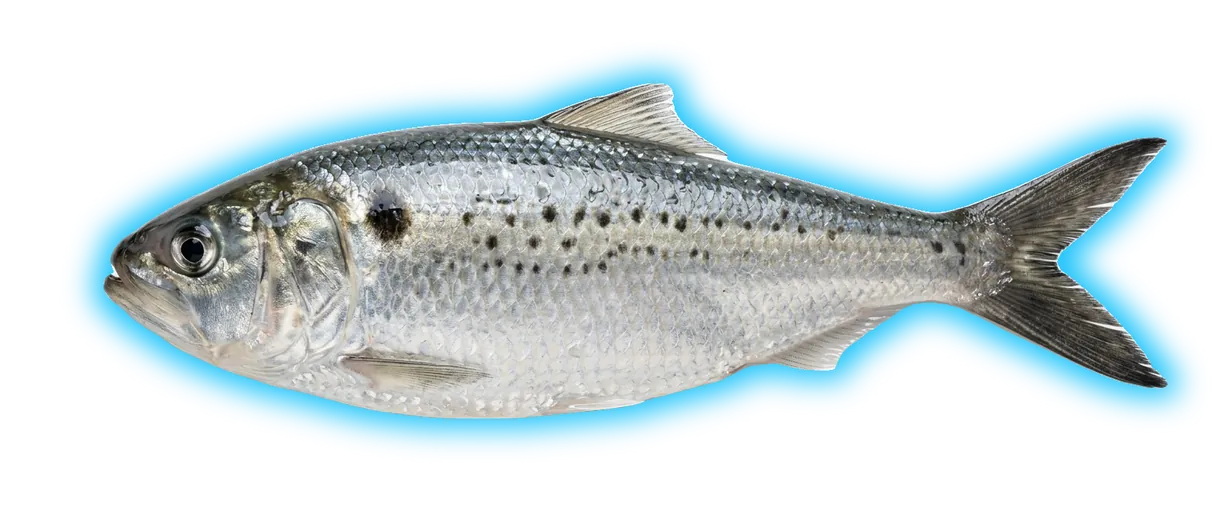
Atlantic Menhaden
Brevoortia tyrannus
Also known as
Bunker, Pogie, Mossbunker, Fatback
IUCN status
Least ConcernAbout the Atlantic Menhaden
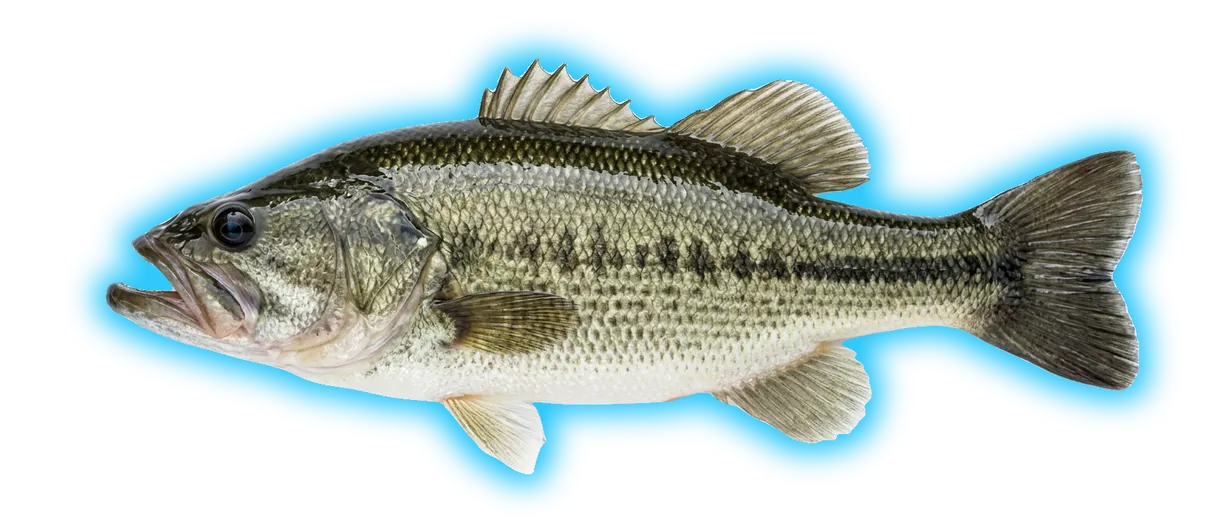
The Atlantic Menhaden is a deep-bodied, highly oily fish, distinguished by its metallic silver sides, often with a greenish or bluish tint on the back. A prominent dark spot is typically found behind the gill plate, sometimes followed by a series of smaller spots along its flanks. They possess a large head and a deeply forked tail, with fine, easily shed scales that give them a somewhat rough texture.
Source: FishBase & iNaturalist
Habitat
These highly migratory fish inhabit coastal waters, frequently forming vast, dense schools in bays, estuaries, and nearshore ocean environments. They prefer brackish to saline waters, often found over muddy or sandy bottoms where their primary food source, plankton, is abundant.
Distribution
The Atlantic Menhaden's range spans the western Atlantic Ocean, from the coastal waters of Nova Scotia, Canada, southward along the entire eastern seaboard of the United States, reaching central Florida.
Behaviour
Atlantic Menhaden are classic filter feeders, constantly swimming with their mouths open to strain phytoplankton and zooplankton from the water using specialized gill rakers. They are a keystone forage species, forming immense, tightly packed schools that move seasonally along the coast. This schooling behavior is a primary defense mechanism against numerous predators, making them a critical link in the food chain for many sportfish.
Edibility
Not typically considered table fare for human consumption due to their oily, strongly flavored, and bony flesh. However, their high oil content and abundance make them an invaluable food source for nearly all major predatory fish species in the Atlantic, including Striped Bass, Bluefish, and Tuna.
Lure suggestion
Anglers generally do not target menhaden with traditional lures as they are filter feeders and do not strike artificial baits. Instead, they are highly sought after as a premier baitfish. The most effective methods for catching them involve using large cast nets or specialized snagging rigs (weighted treble hooks) thrown into dense schools visible on the surface. Live menhaden are superb for slow-trolling or free-lining for large gamefish, while cut chunks or ground chum are incredibly effective for attracting and catching a wide array of predators.
Atlantic Menhaden Regulations
Select a state to see size limits, bag limits, and seasons for Atlantic Menhaden.
Select a state
Always confirm with the official state agency before keeping a fish.
Biggest Atlantic Menhaden
No catches logged yet for Atlantic Menhaden.
Be the first, download CatchVault and log your catch!
Tips & Tactics
Summer Flounder from the New Jersey Surf: A Complete Guide
How to catch summer flounder (fluke) from the New Jersey beach — when and where to go, the best rigs, baits, and retrieves, and the gear that gets it done.
My Review of the Hobie Fleet: What's Best for Saltwater Kayak Fishing
A hands-on review of every Hobie MirageDrive fishing kayak and which model makes the most sense for inshore and open-water saltwater fishing.
How to Jig Giant Plastic Eels for 40"+ Striped Bass
The complete guide to fishing oversized soft plastic eels for trophy striped bass — gear, technique, locations, and timing.
Related Species
Where to Catch Atlantic Menhaden
States where Atlantic Menhaden is found, based on CatchVault's waterbody commonality data.
Think You Can Top the Leaderboard?
CatchVault is available on iOS. Download the app, log your Atlantic Menhaden catch, and see where you rank.