Also known as
California Lobster, Red Rock Lobster, Baja Bug
IUCN status
Least ConcernAbout the California Spiny Lobster
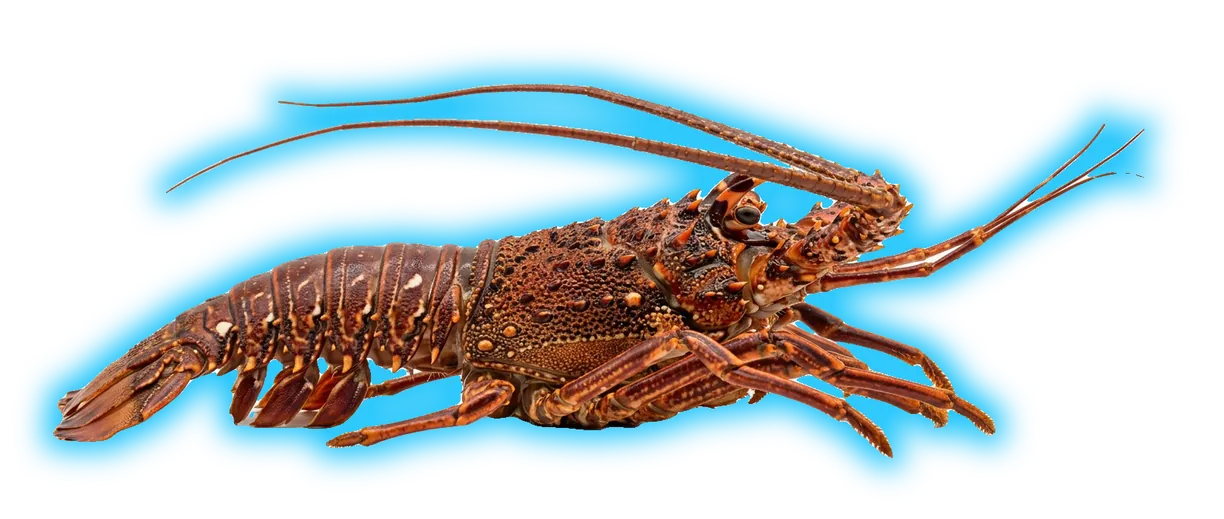
These impressive crustaceans are easily identified by their striking reddish-brown coloration, often adorned with subtle stripes along their robust legs. Unlike their East Coast relatives, California Spiny Lobsters lack large claws, instead sporting two prominent, spiny antennae that can be quite long. A key identifier is the distinctive interrupted grooves running across their tail sections, making them unmistakable in their rocky habitats. They typically grow to about 30 cm (12 in) in length, though larger specimens are encountered by divers.
Source: FishBase & iNaturalist
California Spiny Lobster Size & Bag Limits by State
California Spiny Lobster rules in 1 state.
| State | Size limit | Daily bag | Season |
|---|---|---|---|
| CaliforniaStatewide saltwaterOct 2 – Mar 17 · Oct 2, 2026 – Mar 17, 2027; Mar 18 – Oct 1: Closed | None | 7 | Oct 2 – Mar 17 · Oct 2, 2026 – Mar 17, 2027; Mar 18 – Oct 1: Closed |
Statewide rules, or each area where a state sets limits by region. Many lakes and rivers have their own limits; pick a state or open its regulations page for water-specific rules. Always confirm with the state wildlife agency before keeping a fish.
Rules for a specific state
Pick a state to see its California Spiny Lobster rules, including lakes and rivers with their own limits.
Select a state
Always confirm with the official state agency before keeping a fish.
Best bait and lures for California Spiny Lobster
For anglers, the primary method of capture is hoop netting. Effective bait includes fresh or frozen fish heads (like mackerel or bonito), chicken, or cat food, secured firmly within the hoop net. Divers can also hand-catch them from crevices, often requiring a tickle stick and net.
Is California Spiny Lobster good to eat?
★★★★★
Renowned for their sweet, delicate, and firm white meat, California Spiny Lobsters are considered a premium delicacy, offering an exceptional dining experience.
California Spiny Lobster habitat
California Spiny Lobsters prefer the protection of rocky reefs, kelp forests, and rocky crevices along the coast. They seek shelter in these areas during the day, emerging at night to forage.
Where California Spiny Lobster are found
Their range extends across the eastern Pacific Ocean, from the cool waters of Monterey Bay, California, south along the Baja California peninsula, all the way to the Gulf of Tehuantepec, Mexico.
California Spiny Lobster behavior
Primarily nocturnal, these bottom-dwelling invertebrates are opportunistic scavengers and predators, feeding on a variety of small invertebrates, detritus, and algae under the cover of darkness. During the day, they remain hidden in rocky shelters, often in communal aggregations. They exhibit seasonal movements, often migrating to deeper waters in winter and shallower areas in summer for breeding.
Biggest California Spiny Lobster
No catches logged yet for California Spiny Lobster.
Be the first, download CatchVault and log your catch!
Tips & Tactics
Steelhead vs Rainbow Trout: Same Fish, Different Legal Rules
Steelhead and rainbow trout are the same species. How state laws define steelhead by length and water, the adipose fin rule, and how to tell them apart.
Channel vs Blue vs White vs Flathead Catfish: ID Guide
Tell channel, blue, white and flathead catfish apart by anal fin, tail and jaw, plus hardhead vs gafftop. Why the ID matters for limits and invasives.
Alewife vs Blueback Herring: River Herring & Shad ID Guide
How to tell alewife from blueback herring, and both from American, hickory and gizzard shad, plus why river herring harvest is closed in many states.
Related Species
Think You Can Top the Leaderboard?
CatchVault is available on iPhone and Android. Download the app, log your California Spiny Lobster catch, and see where you rank.