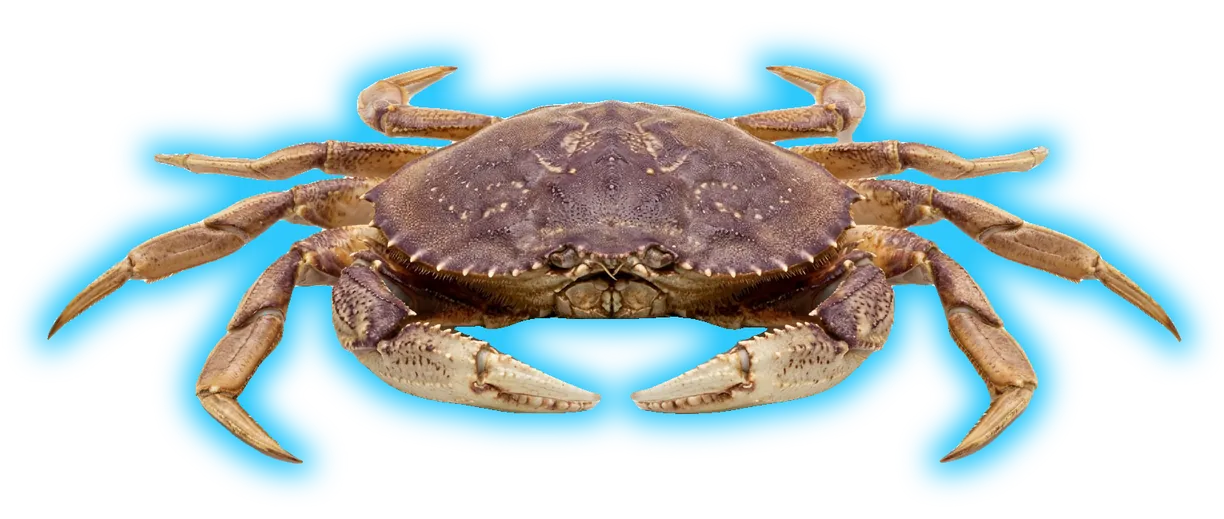
Dungeness Crab
Metacarcinus magister
Also known as
null
About the Dungeness Crab
The Dungeness Crab is a robust crustacean, easily identified by its broad, oval-shaped carapace, which can reach up to 20 cm (7.9 in) in width. Its coloration typically ranges from a purplish-brown to olive-brown on top, often with lighter undersides. They possess ten legs, including five pairs, with the foremost pair being strong pincers used for defense and feeding. The distinctive saw-toothed edges along the front of their shell are a key identification feature.
Source: FishBase & iNaturalist
Habitat
These crabs prefer sandy or muddy bottoms, often found in estuaries, bays, and offshore waters along the continental shelf. They thrive in eelgrass beds and other soft-bottom environments, ranging from the intertidal zone down to depths of several hundred feet.
Distribution
The Dungeness Crab is endemic to the west coast of North America, with its range extending from the Aleutian Islands in Alaska south to Santa Barbara, California. They are particularly abundant in coastal waters from British Columbia to central California.
Behaviour
Dungeness Crabs are primarily nocturnal scavengers and opportunistic predators, feeding on a varied diet of clams, worms, small crustaceans, and fish. They are active movers, scuttling along the seafloor in search of food. During molting periods, they become more reclusive, hiding until their new shell hardens. Their seasonal movements can be influenced by water temperature, food availability, and reproductive cycles, often moving into shallower bays during spring and summer.
Edibility
★★★★★
Highly prized for its delicate, sweet, and tender white meat, the Dungeness Crab is considered one of the finest edible crabs. The succulent meat is found in both the body and the legs, making it a popular choice for a variety of culinary preparations.
Lure suggestion
Anglers target Dungeness Crabs primarily using baited crab pots, traps, or snares. Effective baits include raw chicken, fish carcasses (especially oily ones like salmon or mackerel), clams, and squid, placed inside a secured bait holder within the trap. When setting pots, consider areas with sandy or muddy bottoms near eelgrass beds in depths ranging from 10 to 100 feet. Ensure your gear is properly weighted and marked according to local regulations.
Dungeness Crab Regulations
Select a state to see size limits, bag limits, and seasons for Dungeness Crab.
Select a state
Always confirm with the official state agency before keeping a fish.
Biggest Dungeness Crab
No catches logged yet for Dungeness Crab.
Be the first, download CatchVault and log your catch!
Tips & Tactics
Summer Flounder from the New Jersey Surf: A Complete Guide
How to catch summer flounder (fluke) from the New Jersey beach — when and where to go, the best rigs, baits, and retrieves, and the gear that gets it done.
My Review of the Hobie Fleet: What's Best for Saltwater Kayak Fishing
A hands-on review of every Hobie MirageDrive fishing kayak and which model makes the most sense for inshore and open-water saltwater fishing.
How to Jig Giant Plastic Eels for 40"+ Striped Bass
The complete guide to fishing oversized soft plastic eels for trophy striped bass — gear, technique, locations, and timing.
Related Species
Where to Catch Dungeness Crab
States where Dungeness Crab is found, based on CatchVault's waterbody commonality data.
Think You Can Top the Leaderboard?
CatchVault is available on iOS. Download the app, log your Dungeness Crab catch, and see where you rank.