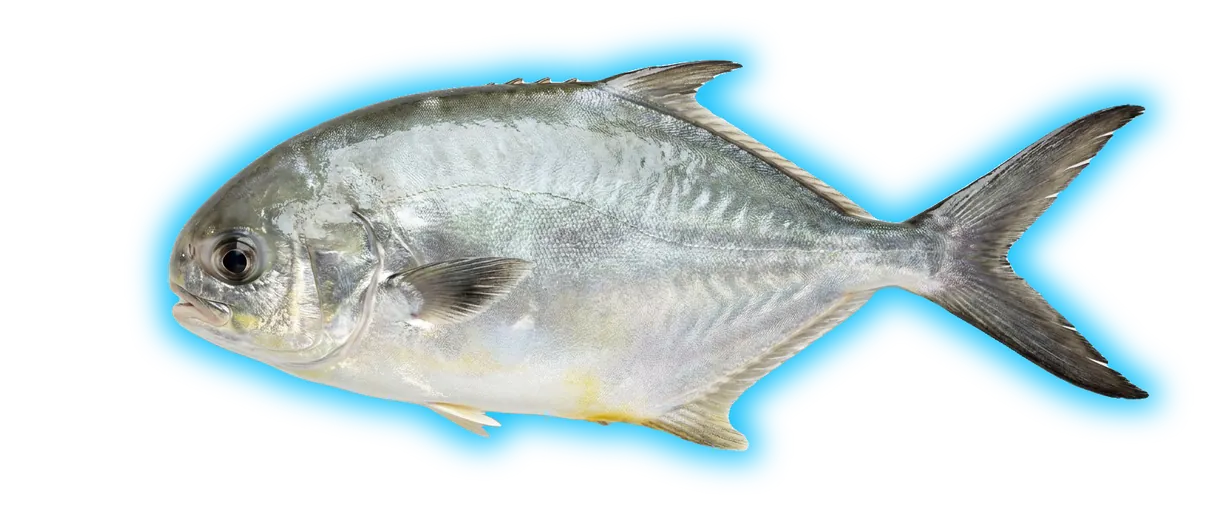
Florida Pompano
Trachinotus carolinus
Water Type
Saltwater
Also known as
Carolina Pompano
IUCN status
Least ConcernAbout the Florida Pompano
The Florida Pompano boasts a distinctive, highly compressed, and deep body with a small, short snout. Its coloration is typically a striking blue-greenish silver on its back, fading to brilliant silver along its flanks and belly, often with a subtle yellow or golden wash on the lower fins, especially the anal fin. This sleek, scaleless appearance and small, deeply forked tail are key identification features, setting it apart from similar species.
Source: FishBase & iNaturalist
Habitat
Florida Pompano primarily inhabit shallow coastal waters, often preferring surf zones, sandy beaches, tidal flats, and estuaries. They are frequently found congregating over sandy or sandy-mud bottoms where they can easily forage for food. They show a preference for warmer waters and are rarely found in cold water temperatures.
Distribution
This species ranges along the western coast of the Atlantic Ocean, from Virginia southwards through Florida, and throughout the Gulf of Mexico. Their distribution is seasonal, as they undertake migrations, moving northward during warmer months and retreating to more southern waters in the cooler parts of the year.
Behaviour
Florida Pompano are opportunistic bottom feeders, using their short snouts to root out prey from the sand. Their diet consists mainly of mole crabs (sand fleas), coquina clams, small shrimp, and marine worms. They are typically found in schools and are known for their strong, fast runs once hooked, providing an exciting fight on light tackle. They actively feed during strong tidal movements, especially around inlets and passes.
Edibility
★★★★★
Widely regarded as one of the finest eating fish, Florida Pompano offers exquisite white, flaky meat with a delicate, sweet flavor. It's incredibly versatile for cooking, excellent whether baked, broiled, grilled, or pan-fried, making it a highly sought-after delicacy.
Lure suggestion
For anglers targeting Pompano, the most effective bait is a live or fresh mole crab (sand flea), followed by small pieces of shrimp, clam, or Fishbites. These baits are typically fished on a two or three-hook Pompano rig, often enhanced with small floats or brightly colored beads above the hooks, presented on the bottom in the surf zone. Small, brightly colored Pompano jigs (like Doc's Jigs or pompano flies) tipped with a small piece of shrimp can also be highly effective when worked slowly along the bottom.
Florida Pompano Regulations
Select a state to see size limits, bag limits, and seasons for Florida Pompano.
Select a state
Always confirm with the official state agency before keeping a fish.
Biggest Florida Pompano
No catches logged yet for Florida Pompano.
Be the first, download CatchVault and log your catch!
Tips & Tactics
Summer Flounder from the New Jersey Surf: A Complete Guide
How to catch summer flounder (fluke) from the New Jersey beach — when and where to go, the best rigs, baits, and retrieves, and the gear that gets it done.
My Review of the Hobie Fleet: What's Best for Saltwater Kayak Fishing
A hands-on review of every Hobie MirageDrive fishing kayak and which model makes the most sense for inshore and open-water saltwater fishing.
How to Jig Giant Plastic Eels for 40"+ Striped Bass
The complete guide to fishing oversized soft plastic eels for trophy striped bass — gear, technique, locations, and timing.
Related Species
Where to Catch Florida Pompano
States where Florida Pompano is found, based on CatchVault's waterbody commonality data.
Think You Can Top the Leaderboard?
CatchVault is available on iOS. Download the app, log your Florida Pompano catch, and see where you rank.