Gar
Lepisosteus/Atractosteus spp.
Water Type
Saltwater, Brackish
Also known as
Gator Gar, Billy Gar, Needlenose Gar, Pike Gar
About the Gar
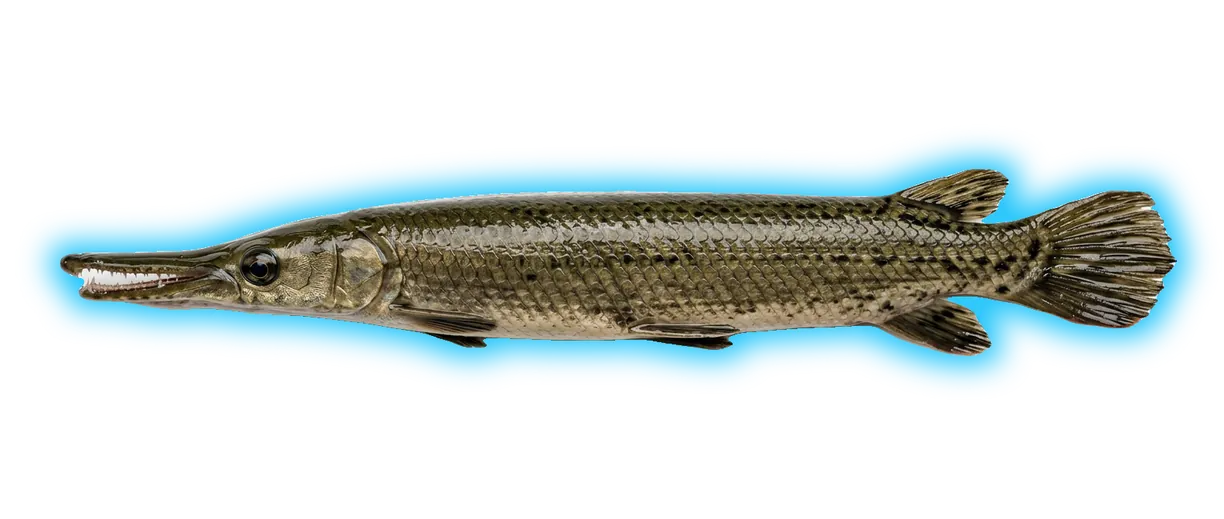
Gars are ancient, torpedo-shaped predators instantly recognizable by their long, tooth-filled snouts and hard, diamond-shaped ganoid scales. Their elongated bodies are typically olive to brown on top, fading to lighter undersides, often adorned with spots depending on the species. These freshwater giants possess a primitive, almost reptilian appearance, making them unique and formidable adversaries for anglers.
Source: FishBase & iNaturalist
Habitat
These adaptable fish primarily inhabit freshwater environments such as slow-moving rivers, lakes, bayous, and swamps. They often prefer shallow, weedy areas and can tolerate low oxygen conditions due to their ability to breathe atmospheric air.
Distribution
Gars are predominantly found across eastern and central North America, ranging from the Great Lakes region south through the Mississippi River basin and into Mexico and Central America.
Behaviour
Gars are ambush predators, often lying in wait among submerged vegetation or near the surface, striking swiftly at unsuspecting prey. They are opportunistic feeders, consuming fish, crustaceans, and even small waterfowl. While generally slow-moving, they can exhibit surprising bursts of speed, and their ability to gulp air allows them to thrive in oxygen-depleted waters, often seen basking just below the surface.
Edibility
★★★★★
Many gar species offer excellent table fare, with firm, white, flaky meat often compared to crab or lobster. However, their tough, armored scales make them challenging to clean; specialized cleaning methods are often required, but the effort is well worth it for the delicious results. Note: Gar eggs are toxic and should not be consumed.
Lure suggestion
Anglers targeting gar often find success with live bait such as shiners, sunfish, or cut bait presented on a strong circle hook. Due to their bony mouths, a common and effective technique involves using frayed nylon rope lures, which entangle their teeth without needing a hookset. Heavy-duty tackle is essential to handle their size and power, and steel leaders are often recommended to prevent bite-offs.
Gar Regulations
Select a state to see size limits, bag limits, and seasons for Gar.
Select a state
Always confirm with the official state agency before keeping a fish.
Biggest Gar
No catches logged yet for Gar.
Be the first, download CatchVault and log your catch!
Tips & Tactics
Summer Flounder from the New Jersey Surf: A Complete Guide
How to catch summer flounder (fluke) from the New Jersey beach — when and where to go, the best rigs, baits, and retrieves, and the gear that gets it done.
My Review of the Hobie Fleet: What's Best for Saltwater Kayak Fishing
A hands-on review of every Hobie MirageDrive fishing kayak and which model makes the most sense for inshore and open-water saltwater fishing.
How to Jig Giant Plastic Eels for 40"+ Striped Bass
The complete guide to fishing oversized soft plastic eels for trophy striped bass — gear, technique, locations, and timing.
Related Species
Where to Catch Gar
States where Gar is found, based on CatchVault's waterbody commonality data.
Think You Can Top the Leaderboard?
CatchVault is available on iOS. Download the app, log your Gar catch, and see where you rank.