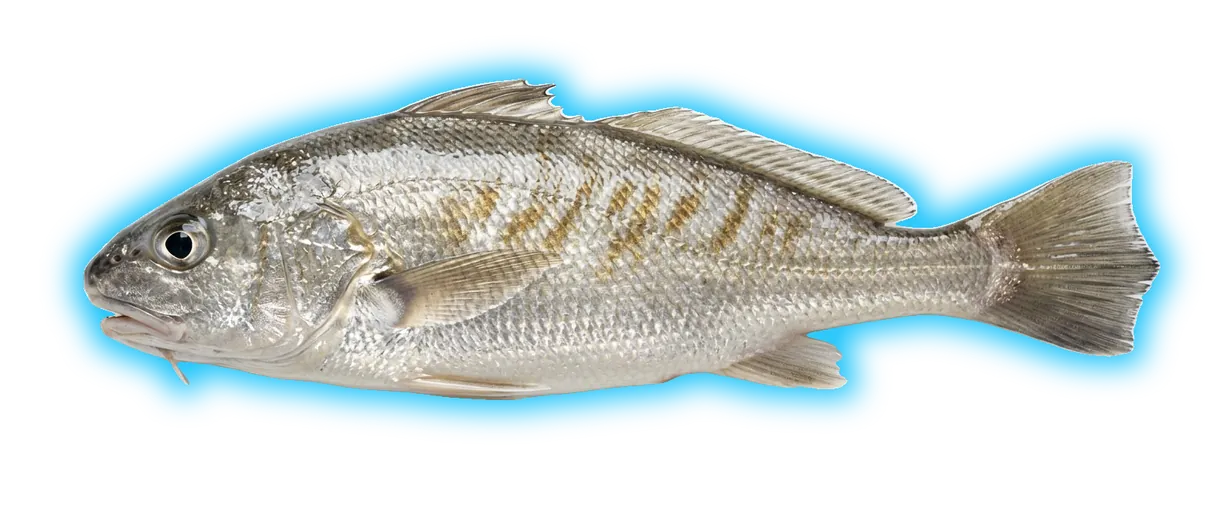
Gulf Croaker
Size & bag limits by stateAlso known as
null
About the Gulf Croaker
The Gulf Croaker, like other members of the croaker family, likely possesses a moderately elongated body, often with a silvery or bronze coloration that helps it blend into its estuarine and coastal environments. It would feature a prominent dorsal fin, typically divided, and a small, often inferior mouth suited for bottom feeding. A defining characteristic of many croakers is the presence of one or more small barbels on the chin, used for sensing prey in murky waters. Its overall appearance would be typical of a bottom-dwelling coastal fish.
Source: FishBase & iNaturalist
Gulf Croaker Size & Bag Limits by State
Gulf Croaker rules in 1 state.
| State | Size limit | Daily bag | Season |
|---|---|---|---|
| CaliforniaSalton SeaYear-round | None | 6 | Year-round |
Statewide rules, or each area where a state sets limits by region. Many lakes and rivers have their own limits; pick a state or open its regulations page for water-specific rules. Always confirm with the state wildlife agency before keeping a fish.
Rules for a specific state
Pick a state to see its Gulf Croaker rules, including lakes and rivers with their own limits.
Select a state
Always confirm with the official state agency before keeping a fish.
Best bait and lures for Gulf Croaker
Anglers can effectively target Gulf Croakers using small natural baits presented on simple bottom rigs. Shrimp, cut squid, bloodworms, or small pieces of fish are excellent choices, fished on a size 4 to 1/0 hook with a high-low or Carolina rig to keep the bait near the seafloor. Light spinning tackle or a surf rod is ideal for detecting their subtle bites.
Is Gulf Croaker good to eat?
★★★★★
While typically not large, Gulf Croakers offer a respectable meal. Their flesh is generally white, flaky, and mild, making them suitable for pan-frying, baking, or grilling.
Gulf Croaker habitat
This species is primarily found in the shallow, nearshore waters of the Gulf of Mexico, favoring sandy or muddy bottoms where it can root for food. It frequently inhabits estuaries, bays, and coastal surf zones, often seeking out areas with some structure or depressions that offer cover and foraging opportunities.
Where Gulf Croaker are found
As its name suggests, the Gulf Croaker's distribution is centered within the Gulf of Mexico, extending along coastal areas from Florida's western panhandle through the Texan coastline and potentially into Mexican waters.
Gulf Croaker behavior
Gulf Croakers are social fish, often forming schools as they forage along the seabed for small invertebrates, crustaceans, and minute fish. They are renowned for their unique 'croaking' or 'drumming' sounds, produced by vibrating their swim bladder, which plays a role in communication, especially during spawning. These croakers are generally sedentary, undertaking localized movements within their preferred coastal and estuarine habitats.
Biggest Gulf Croaker
No catches logged yet for Gulf Croaker.
Be the first, download CatchVault and log your catch!
Tips & Tactics
Steelhead vs Rainbow Trout: Same Fish, Different Legal Rules
Steelhead and rainbow trout are the same species. How state laws define steelhead by length and water, the adipose fin rule, and how to tell them apart.
Channel vs Blue vs White vs Flathead Catfish: ID Guide
Tell channel, blue, white and flathead catfish apart by anal fin, tail and jaw, plus hardhead vs gafftop. Why the ID matters for limits and invasives.
Alewife vs Blueback Herring: River Herring & Shad ID Guide
How to tell alewife from blueback herring, and both from American, hickory and gizzard shad, plus why river herring harvest is closed in many states.
Related Species
Think You Can Top the Leaderboard?
CatchVault is available on iPhone and Android. Download the app, log your Gulf Croaker catch, and see where you rank.