Largetooth Sawfish
Pristis pectinata
Also known as
Smalltooth Sawfish, Common Sawfish, Northern Sawfish
IUCN status
Critically EndangeredAbout the Largetooth Sawfish
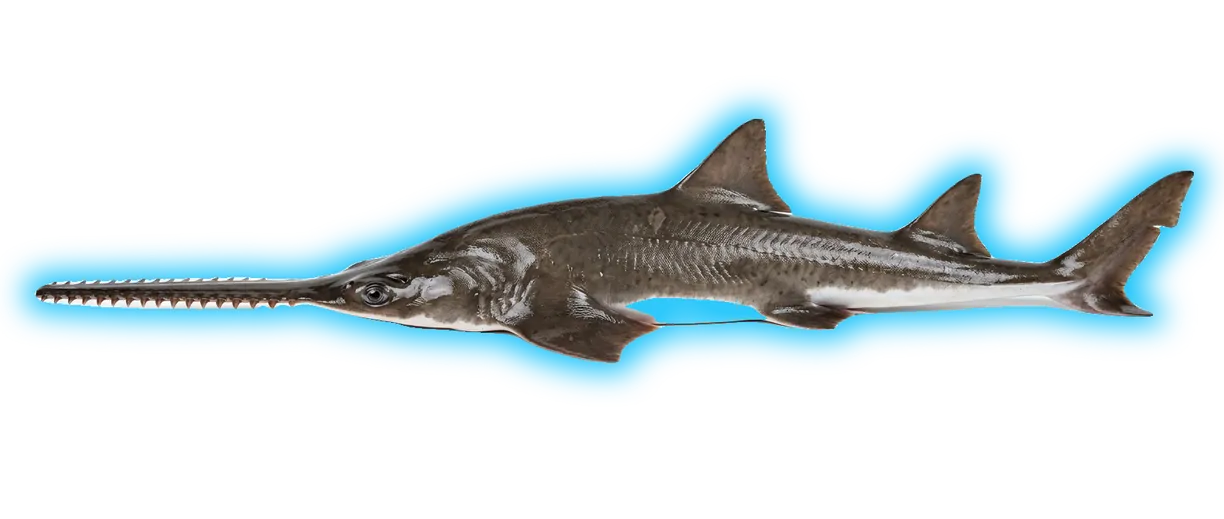
The Largetooth Sawfish is easily recognized by its distinctive, elongated, flattened snout (rostrum) lined with uniform, sharp 'teeth' on both sides, resembling a formidable saw. Its body is shark-like but flattened ventrally, characteristic of a ray, and it can grow to impressive lengths, often over 15 feet. Its back is typically greyish-brown, fading to a lighter underside, allowing it to blend into its shallow water habitats. The pectoral fins are large and triangular, aiding its movement along the seafloor.
Source: FishBase & iNaturalist
Habitat
This species inhabits shallow tropical and subtropical waters, primarily in coastal and estuarine environments of the Atlantic. They are typically found over soft, muddy, or sandy bottoms in estuaries, bays, and even freshwater rivers, especially as juveniles. They prefer areas with abundant prey and calmer conditions.
Distribution
Historically, the Largetooth Sawfish ranged widely across the tropical and subtropical Atlantic. However, due to severe population declines, its current distribution is fragmented and significantly reduced from its historical range, with concentrated efforts ongoing for its protection.
Behaviour
Largetooth Sawfish are primarily nocturnal bottom feeders, using their distinctive saw-like rostrum to detect, stun, and pin down prey such as small fish, crabs, and other crustaceans. They are generally slow-moving and solitary, often resting on the seafloor or cruising slowly through shallow waters. While usually docile, their saw can be a formidable defense mechanism.
Edibility
The Largetooth Sawfish is a critically endangered and federally protected species. It is illegal to harvest or possess any part of this animal, making it unsuitable for consumption.
Lure suggestion
Targeting Largetooth Sawfish is strictly prohibited due to their critically endangered status and protected legal status. If accidentally caught, it is imperative to release them immediately and unharmed. Avoid lifting them by the saw or tail, and cut the line as close to the mouth as possible without handling the animal. Never attempt to remove the hook unless it can be done safely without further injury to the fish or risk to yourself, and always minimize handling time.
Largetooth Sawfish Regulations
Select a state to see size limits, bag limits, and seasons for Largetooth Sawfish.
Select a state
Always confirm with the official state agency before keeping a fish.
Biggest Largetooth Sawfish
No catches logged yet for Largetooth Sawfish.
Be the first, download CatchVault and log your catch!
Tips & Tactics
Summer Flounder from the New Jersey Surf: A Complete Guide
How to catch summer flounder (fluke) from the New Jersey beach — when and where to go, the best rigs, baits, and retrieves, and the gear that gets it done.
My Review of the Hobie Fleet: What's Best for Saltwater Kayak Fishing
A hands-on review of every Hobie MirageDrive fishing kayak and which model makes the most sense for inshore and open-water saltwater fishing.
How to Jig Giant Plastic Eels for 40"+ Striped Bass
The complete guide to fishing oversized soft plastic eels for trophy striped bass — gear, technique, locations, and timing.
Related Species
Think You Can Top the Leaderboard?
CatchVault is available on iOS. Download the app, log your Largetooth Sawfish catch, and see where you rank.