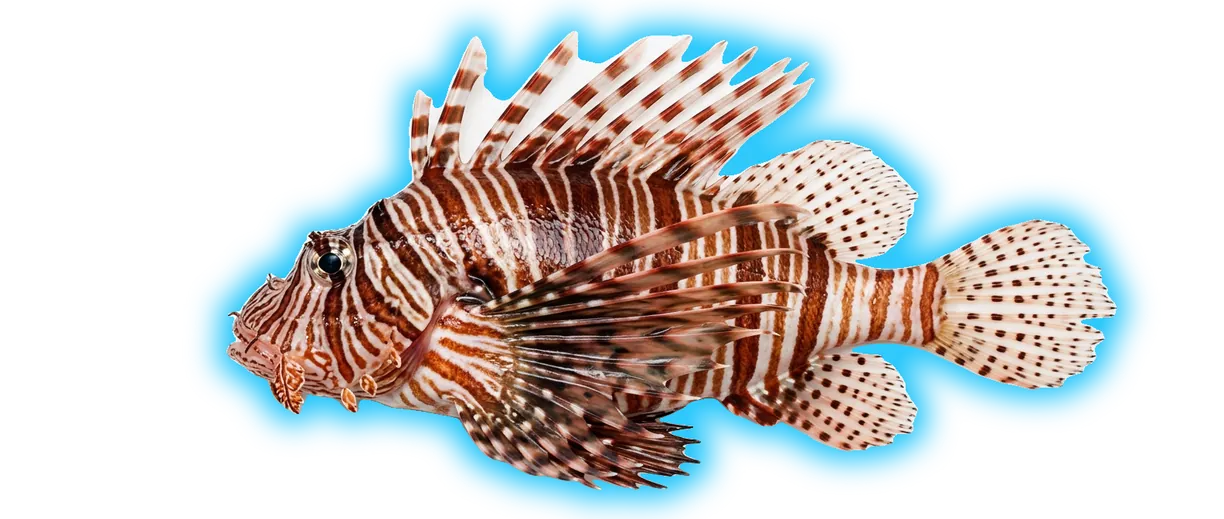
Lionfish
Pterois volitans
Water Type
Saltwater
Also known as
Red Lionfish, Turkey Fish, Scorpionfish
About the Lionfish
The Red Lionfish is an unmistakable and strikingly beautiful, yet venomous, coral reef inhabitant. It boasts an elaborate display of long, fan-like pectoral fins and tall dorsal spines, all adorned with alternating white and vivid red, maroon, or brown stripes. These distinctive patterns and finnage make it a mesmerizing sight underwater, but also serve as a warning of its potent venom. Adults can reach impressive sizes, making them a significant catch.
Source: FishBase & iNaturalist
Lionfish Size & Bag Limits by State
Select a state to see size limits, bag limits, and seasons for Lionfish.
Select a state
Always confirm with the official state agency before keeping a fish.
Best bait and lures for Lionfish
Lionfish are not typically target species for conventional angling but can be caught opportunistically. Small jigs, shrimp imitation lures, or small pieces of cut bait fished close to the bottom on light tackle can be effective. Spearfishing is a popular and effective method for removal in invasive regions. Always exercise extreme caution due to their venomous spines.
Is Lionfish good to eat?
★★★★★
Despite their venomous spines, Lionfish are highly regarded as excellent table fare once properly prepared. The white, flaky meat has a delicate, mild flavor that is delicious whether fried, grilled, or baked.
Lionfish habitat
Primarily found in coral reefs, this species also thrives in rocky areas, wrecks, and mangroves. Its adaptability has allowed it to colonize diverse marine environments, from shallow waters to depths exceeding several hundred feet, particularly in its invasive ranges.
Where Lionfish are found
Native to the warm waters of the Indo-Pacific region, the Lionfish has become a significant invasive species across the Caribbean Sea and along the entire East Coast of the United States, extending from Florida up through the Mid-Atlantic.
Lionfish behavior
Lionfish are ambush predators, using their elaborate fins to herd prey before quickly engulfing it. They primarily feed on small fish and crustaceans, exhibiting slow, deliberate movements until striking with surprising speed. Anglers should be aware that they are not particularly skittish and can be approached with caution, but their venomous spines demand extreme care during handling.
Biggest Lionfish
No catches logged yet for Lionfish.
Be the first, download CatchVault and log your catch!
Tips & Tactics
Steelhead vs Rainbow Trout: Same Fish, Different Legal Rules
Steelhead and rainbow trout are the same species. How state laws define steelhead by length and water, the adipose fin rule, and how to tell them apart.
Almaco Jack vs Amberjack: Greater, Lesser & Rudderfish ID
Almaco jack vs greater amberjack vs lesser amberjack vs banded rudderfish: eye stripe, fin lobes, spine counts, and why a wrong ID can break size limits.
Channel vs Blue vs White vs Flathead Catfish: ID Guide
Tell channel, blue, white and flathead catfish apart by anal fin, tail and jaw, plus hardhead vs gafftop. Why the ID matters for limits and invasives.
Related Species
Think You Can Top the Leaderboard?
CatchVault is available on iPhone and Android. Download the app, log your Lionfish catch, and see where you rank.