Also known as
angelshark
IUCN status
Critically EndangeredAbout the Monkfish
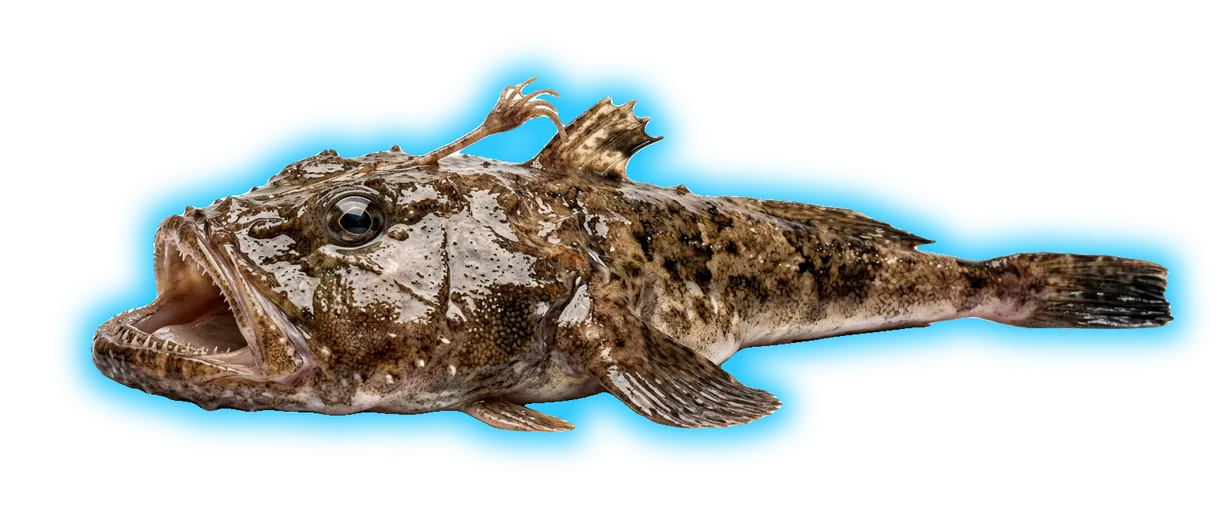
Don't let its flat, ray-like appearance fool you; the Monkfish is indeed a shark, perfectly evolved for life on the seafloor. Its broad, stout body, coupled with enlarged pectoral and pelvic fins, allows it to blend seamlessly into sandy or muddy bottoms. Look for its distinctive conical barbels near the mouth and smooth, thornless skin as key identification features. This master of disguise lies in wait, often partially buried, making it an exciting surprise catch for bottom fishermen.
Source: FishBase & iNaturalist
Monkfish Size & Bag Limits by State
Monkfish rules in 3 states.
| State | Size limit | Daily bag | Season |
|---|---|---|---|
| MaineStatewide saltwaterYear-round | 17" min | No limit | Year-round |
| MassachusettsStatewide saltwaterYear-round | None | No limit | Year-round |
| Rhode IslandStatewide saltwaterYear-round | 17" min | — | Year-round |
— means the state sets no daily bag number for this species.
Statewide rules, or each area where a state sets limits by region. Many lakes and rivers have their own limits; pick a state or open its regulations page for water-specific rules. Always confirm with the state wildlife agency before keeping a fish.
Rules for a specific state
Pick a state to see its Monkfish rules, including lakes and rivers with their own limits.
Select a state
Always confirm with the official state agency before keeping a fish.
Best bait and lures for Monkfish
As a bottom-dwelling ambush predator, the Monkfish is best targeted with natural baits presented directly on the seabed. Fresh cut baits like mackerel, squid, or sardine are highly effective, as are small live fish. Use a sturdy bottom rig with a strong leader and a circle hook to ensure good hooksets and minimize harm, as these sharks are often protected. Patience is key, as they will often lie in wait before striking.
Monkfish habitat
This demersal shark prefers shallow, coastal waters, often found lurking on sandy or muddy bottoms. It masterfully uses its flat body to camouflage itself, lying in wait for unsuspecting prey near reefs, wrecks, and rocky outcrops. Anglers will typically encounter it close to shore, in depths ranging from a few meters down to 150 meters.
Where Monkfish are found
Historically, the Monkfish was widespread across the northeastern Atlantic Ocean, stretching from Scandinavia down to West Africa, including the Mediterranean Sea. However, its populations have significantly declined in many parts of this range.
Monkfish behavior
The Monkfish is a classic ambush predator, lying motionless and camouflaged on the seabed, waiting for prey to swim within striking distance. When an unsuspecting fish or crustacean passes by, it launches a lightning-fast attack, engulfing its meal with powerful jaws. It is primarily nocturnal, but opportunistic feeding can occur at any time, especially during tidal movements. They are generally solitary and sedentary, preferring to stay in preferred hunting grounds.
Biggest Monkfish
No catches logged yet for Monkfish.
Be the first, download CatchVault and log your catch!
Tips & Tactics
Steelhead vs Rainbow Trout: Same Fish, Different Legal Rules
Steelhead and rainbow trout are the same species. How state laws define steelhead by length and water, the adipose fin rule, and how to tell them apart.
Channel vs Blue vs White vs Flathead Catfish: ID Guide
Tell channel, blue, white and flathead catfish apart by anal fin, tail and jaw, plus hardhead vs gafftop. Why the ID matters for limits and invasives.
Alewife vs Blueback Herring: River Herring & Shad ID Guide
How to tell alewife from blueback herring, and both from American, hickory and gizzard shad, plus why river herring harvest is closed in many states.
Related Species
Think You Can Top the Leaderboard?
CatchVault is available on iPhone and Android. Download the app, log your Monkfish catch, and see where you rank.