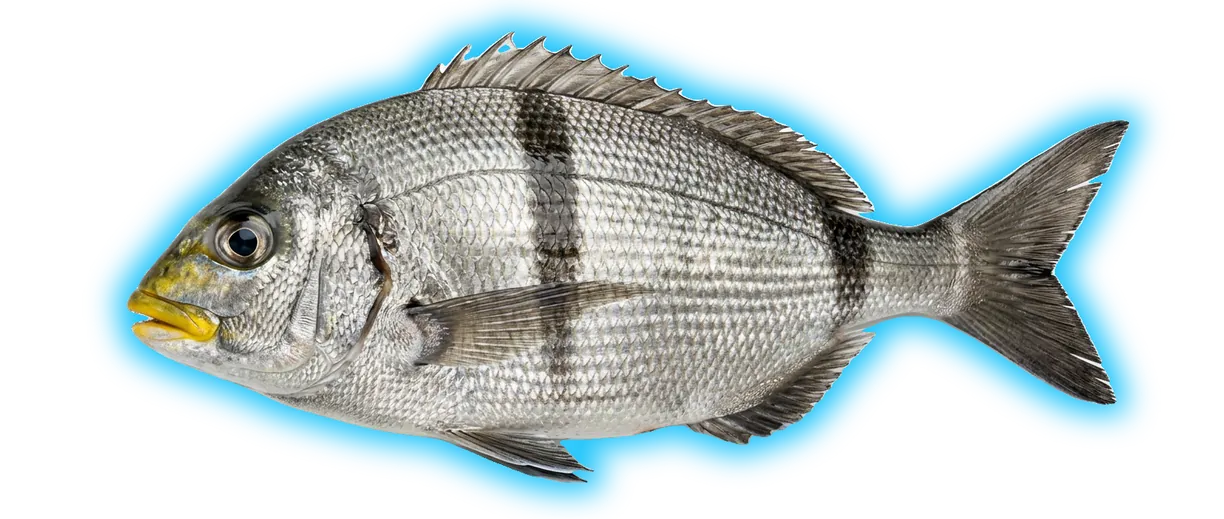
Also known as
White Sea Bream, Sargo Bream, Banded Seabream
IUCN status
Least ConcernAbout the Sargo
Sargo are distinguished by their oval, compressed body and silvery coloration, often marked with several dark vertical bars that fade with age. They possess a relatively small mouth, strong lips, and a single, robust dorsal fin. Their large scales and pointed pectoral fins contribute to their streamlined, powerful appearance.
Source: FishBase & iNaturalist
Sargo Size & Bag Limits by State
Sargo rules in 1 state.
| State | Size limit | Daily bag | Season |
|---|---|---|---|
| CaliforniaSalton SeaYear-round | None | 6 | Year-round |
Statewide rules, or each area where a state sets limits by region. Many lakes and rivers have their own limits; pick a state or open its regulations page for water-specific rules. Always confirm with the state wildlife agency before keeping a fish.
Rules for a specific state
Pick a state to see its Sargo rules, including lakes and rivers with their own limits.
Select a state
Always confirm with the official state agency before keeping a fish.
Best bait and lures for Sargo
For Sargo, natural baits are typically most effective. Try small pieces of shrimp, squid, clams, or marine worms fished on a small, strong hook (size 4-8) with a light Carolina rig or paternoster rig near rocky structure or pilings. Light to medium-light tackle is recommended to feel their often subtle bites.
Is Sargo good to eat?
★★★★★
Sargo offer firm, white, flaky meat with a mild, delicate flavor, making them excellent table fare. They are versatile and can be baked, grilled, fried, or steamed.
Sargo habitat
These adaptable fish prefer rocky reefs, jetties, piers, and other inshore structures in clear, shallow coastal waters. They are often found foraging over sand, gravel, or rocky bottoms, particularly where food sources are abundant.
Where Sargo are found
Sargo species are found in warmer temperate and subtropical waters across various regions, including the eastern Atlantic Ocean, the Mediterranean Sea, and along the Pacific coast of North America. They typically inhabit nearshore environments.
Sargo behavior
Sargo are primarily bottom-dwelling omnivores, feeding on a diverse diet of small crustaceans, mollusks, worms, and sometimes algae. They often move in schools, especially when juvenile, actively foraging during the day, though larger individuals can be more solitary. They are known for their strong biting power.
Biggest Sargo
No catches logged yet for Sargo.
Be the first, download CatchVault and log your catch!
Tips & Tactics
Steelhead vs Rainbow Trout: Same Fish, Different Legal Rules
Steelhead and rainbow trout are the same species. How state laws define steelhead by length and water, the adipose fin rule, and how to tell them apart.
Channel vs Blue vs White vs Flathead Catfish: ID Guide
Tell channel, blue, white and flathead catfish apart by anal fin, tail and jaw, plus hardhead vs gafftop. Why the ID matters for limits and invasives.
Alewife vs Blueback Herring: River Herring & Shad ID Guide
How to tell alewife from blueback herring, and both from American, hickory and gizzard shad, plus why river herring harvest is closed in many states.
Related Species
Think You Can Top the Leaderboard?
CatchVault is available on iPhone and Android. Download the app, log your Sargo catch, and see where you rank.