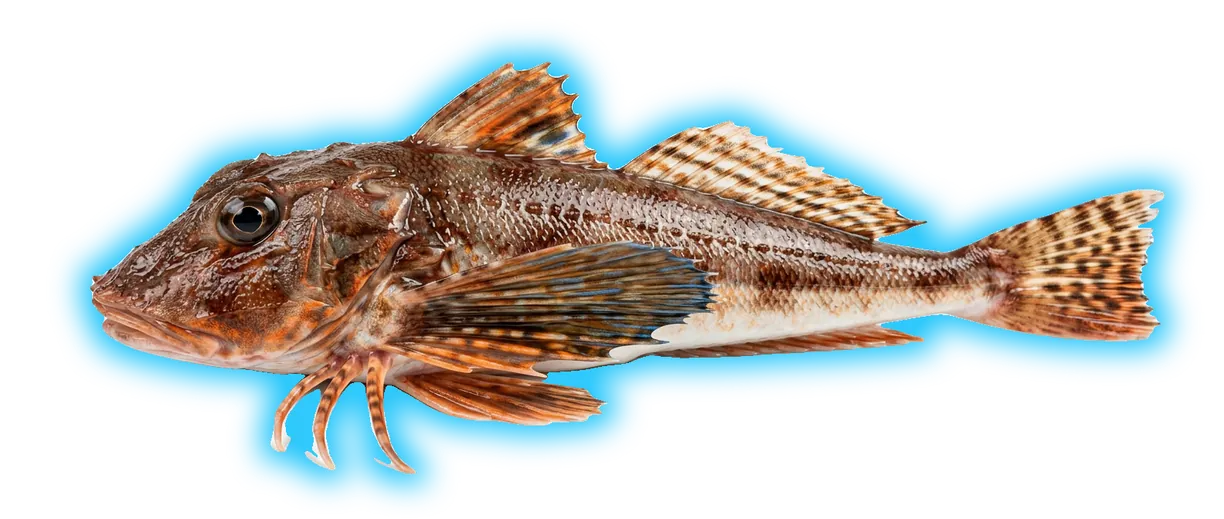
Sea Robin
Prionotus carolinus
Also known as
Northern Sea Robin, Common Sea Robin, Gurnard, Carolina Sea Robin
About the Sea Robin
The Sea Robin is a distinctive bottom-dweller, easily identified by its large, bony, flattened head and prominent, wing-like pectoral fins. Its body is generally mottled with shades of brown, gray, and sometimes reddish hues, helping it blend seamlessly with the seafloor. What truly sets it apart are the three lower rays on each pectoral fin, which are separate and thickened, functioning like 'fingers' to feel for food on the bottom. These unique fins allow it to 'walk' along the substrate.
Source: FishBase & iNaturalist
Sea Robin Size & Bag Limits by State
Select a state to see size limits, bag limits, and seasons for Sea Robin.
Select a state
Always confirm with the official state agency before keeping a fish.
How big do Sea Robin get?
The biggest Sea Robin logged on CatchVault measured 12.5".
Best bait and lures for Sea Robin
Sea Robins are not usually targeted but are frequently caught as bycatch. Effective baits include squid strips, clam, cut bait, or shrimp presented on a simple bottom rig or a high-low rig with small hooks. They will also readily strike small jigs or bucktails bounced along the bottom.
Is Sea Robin good to eat?
★★★★★
Despite their unusual appearance, Sea Robins offer surprisingly delicious, firm, white, and flaky meat, often compared to scallops or lobster in taste. They are excellent in chowders, fried, or baked, though cleaning can be a bit challenging due to their bony structure.
Sea Robin habitat
This species prefers shallow coastal waters, often found over sandy or muddy bottoms, in estuaries, and along the nearshore Atlantic coast. They are adept at camouflaging themselves against the seafloor, patiently waiting for prey.
Where Sea Robin are found
The Sea Robin is primarily found along the east coast of the United States, ranging from Maine down to Florida in the Western Atlantic.
Sea Robin behavior
Sea Robins are opportunistic bottom feeders, using their specialized pectoral fin rays to probe the sand and mud for crustaceans, worms, and small fish. They are not particularly fast swimmers, instead preferring to scuttle along the bottom or lie in wait. While often seen as a nuisance bycatch, they are active predators and can be found in a variety of coastal environments.
Recent Catches
Biggest Sea Robin
Tips & Tactics
Steelhead vs Rainbow Trout: Same Fish, Different Legal Rules
Steelhead and rainbow trout are the same species. How state laws define steelhead by length and water, the adipose fin rule, and how to tell them apart.
Channel vs Blue vs White vs Flathead Catfish: ID Guide
Tell channel, blue, white and flathead catfish apart by anal fin, tail and jaw, plus hardhead vs gafftop. Why the ID matters for limits and invasives.
Alewife vs Blueback Herring: River Herring & Shad ID Guide
How to tell alewife from blueback herring, and both from American, hickory and gizzard shad, plus why river herring harvest is closed in many states.
Related Species
Think You Can Top the Leaderboard?
CatchVault is available on iPhone and Android. Download the app, log your Sea Robin catch, and see where you rank.