Alewife vs Blueback Herring: River Herring & Shad ID Guide
How to tell alewife from blueback herring, and both from American, hickory and gizzard shad, plus why river herring harvest is closed in many states.
Five Silver Fish, One Spring Run
Every spring, Atlantic coast rivers fill with silver fish pushing upstream to spawn. Stand below a dam in April or May and you'll see anglers with shad darts, small jigs and dip nets catching fish that look alike at a glance: silvery sides, a forked tail, a dark spot behind the gill cover.
Five of them get mixed up constantly: the alewife, the blueback herring, the American shad, the hickory shad and the gizzard shad. The first two together are called river herring, and in many states you can't keep them at all.
Why It Matters
River herring are depleted. The Atlantic States Marine Fisheries Commission's 2024 benchmark assessment found coastwide populations of both alewife and blueback herring depleted relative to historic levels. Since 2012, ASMFC has required states to close river herring harvest unless they have an approved sustainable fishery plan. ASMFC lists approved plans for only a handful of states: Maine, New Hampshire, Massachusetts (three named runs), New York and South Carolina. Those plans usually cover limited waters. Everywhere else, states are required to prohibit harvest.
Some examples of how that plays out:
- •Delaware closes river herring to commercial and recreational harvest statewide, while American and hickory shad can be kept in most waters.
- •Massachusetts makes it unlawful to harvest, possess or sell river herring except from specific open runs, which require a permit and a daily harvest receipt.
- •Virginia prohibits catching and keeping river herring from tidal waters, and Virginia DWR describes a statewide moratorium on American shad as well.
- •North Carolina lists river herring as unlawful to possess in coastal and joint waters.
Rules change and often differ by river, so check current rules on our regulations page and with your state agency before you keep anything. The practical point: a hickory shad or gizzard shad may be legal to keep or use as bait where an alewife or blueback is not. Calling a river herring a "shad" doesn't make it legal.
Quick Reference: River Herring vs Shad
| Feature | Alewife | Blueback Herring | American Shad | Hickory Shad | Gizzard Shad |
|---|---|---|---|---|---|
| Typical size | Commonly 9 to 11 in, up to about 14 | Up to about 13 in | Commonly 15 to 24 in | Commonly 12 to 20 in | Commonly 9 to 14 in |
| Lower jaw | Rises steeply inside the mouth | Rises steeply inside the mouth | Fits into a V-notch in the upper jaw | Sticks out past the upper jaw | Small mouth under a blunt snout |
| Eye vs snout | Eye usually wider than snout | Eye equal to or smaller than snout | Not a key mark | Not a key mark | Not a key mark |
| Spots | One shoulder spot | One shoulder spot | Shoulder spot plus a row of distinct round spots | Shoulder spot plus faint, smudgy spots | One spot, fades in big adults |
| Back color | Grayish-green | Bluish | Bluish-green | Grayish-green | Bluish-gray to dark |
| Body cavity lining | Pale, pinkish to silvery or dusky | Black | Not a key mark | Not a key mark | Not a key mark |
| Last dorsal ray | Normal | Normal | Normal | Normal | Long, whip-like filament |
| Harvest | Closed in many states | Closed in many states | Varies; closed in some states | Varies | Usually open |
Alewife vs Blueback Herring
This is the hard one. The two are nearly identical, about the same size, and run up the same rivers. Virginia Institute of Marine Science biologists note they probably can't always be told apart. Three checks help.
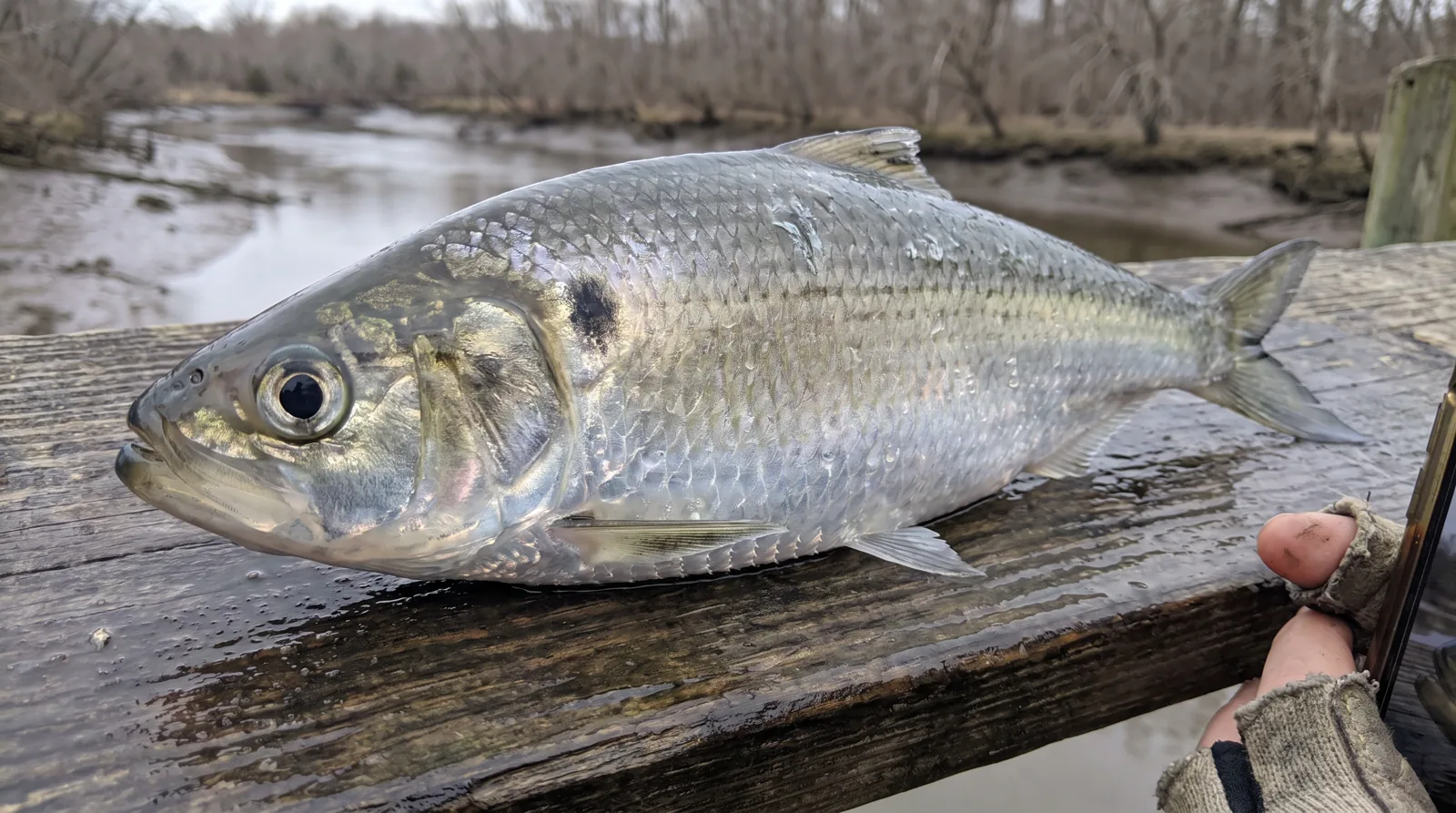
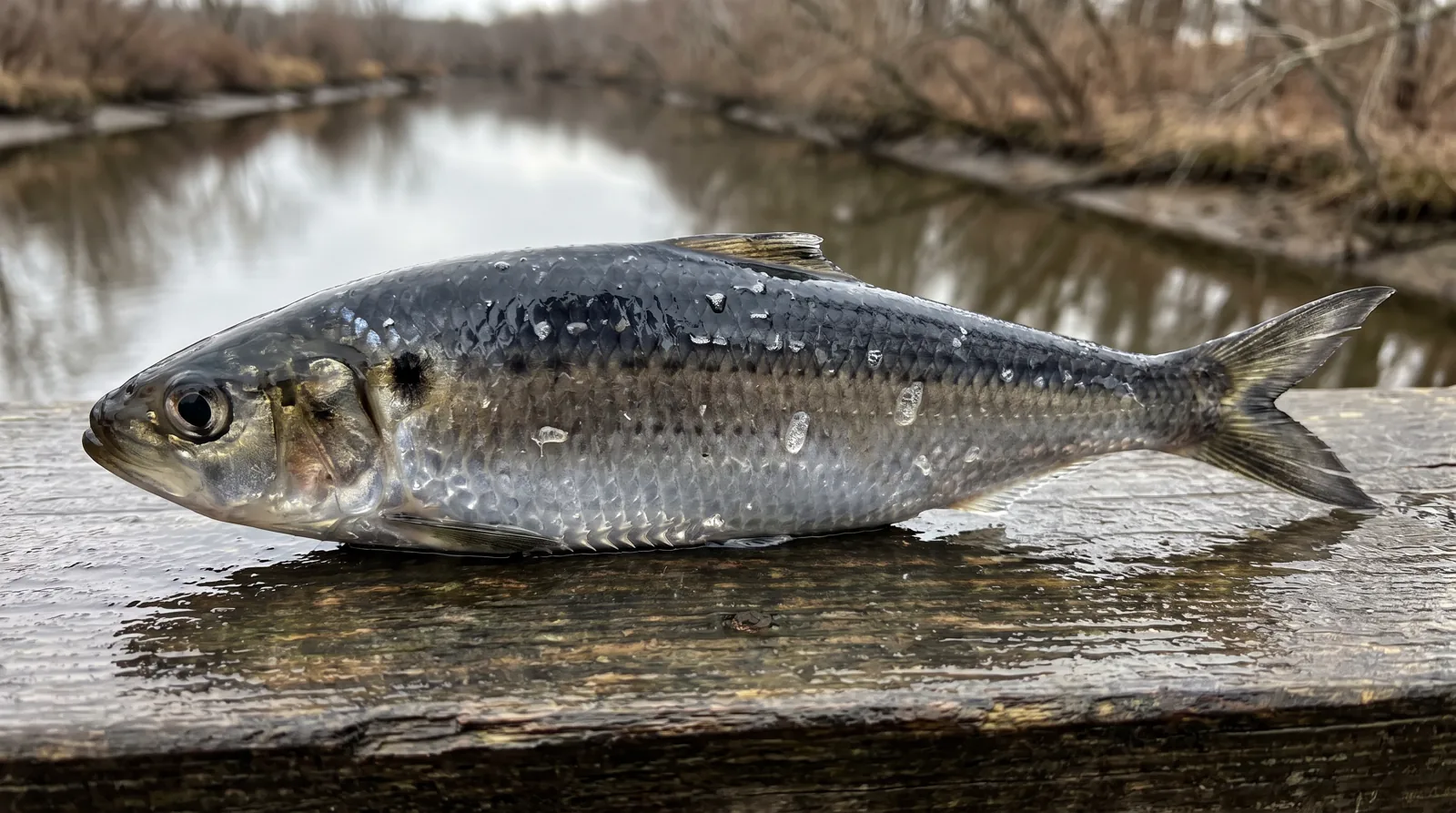
Eye size. Compare the width of the eye to the length of the snout, measured from the front of the eye to the snout tip. On an alewife, the eye is usually wider than the snout is long. On a blueback herring, the eye is about equal to or smaller than the snout. It's subtle, so compare several fish if you can.
Back color. Fresh alewife tend to have a grayish-green back; bluebacks are bluer. Color is the least reliable check because it shifts with light and fades fast after death.
Body cavity lining. This is the most dependable field mark, but it only works on a dead fish. Open the belly and look at the peritoneum, the thin lining of the gut cavity. In a blueback herring it's black. In an alewife it's pale, pinkish to silvery, sometimes with small dark speckles. Researchers have found even this isn't perfect for every fish and use genetics to confirm in studies, but it's the best check you have streamside.
Behavior can hint, too. Connecticut DEEP notes that bluebacks tend to spawn in faster current and travel farther upstream than alewife. Alewife favor slower water, ponds and lakes. Landlocked alewife populations also live in the Great Lakes and in lakes in several Atlantic coast states, where adults are often only 3 to 6 inches long.
If harvest is closed for river herring in your state, it's closed for both species. You don't need to split alewife from blueback to know it goes back. You do need to split river herring from shad.
American Shad vs Hickory Shad
Close the fish's mouth and look at the jaw.
American shad have a lower jaw with a pointed tip that fits neatly into a V-shaped notch in the upper jaw, so the jaws meet evenly. Behind the gill cover is a dark spot, usually followed by a row of smaller, distinct round spots along the upper side. American shad are the biggest of the group; Delaware anglers commonly catch them at 20 to 24 inches.
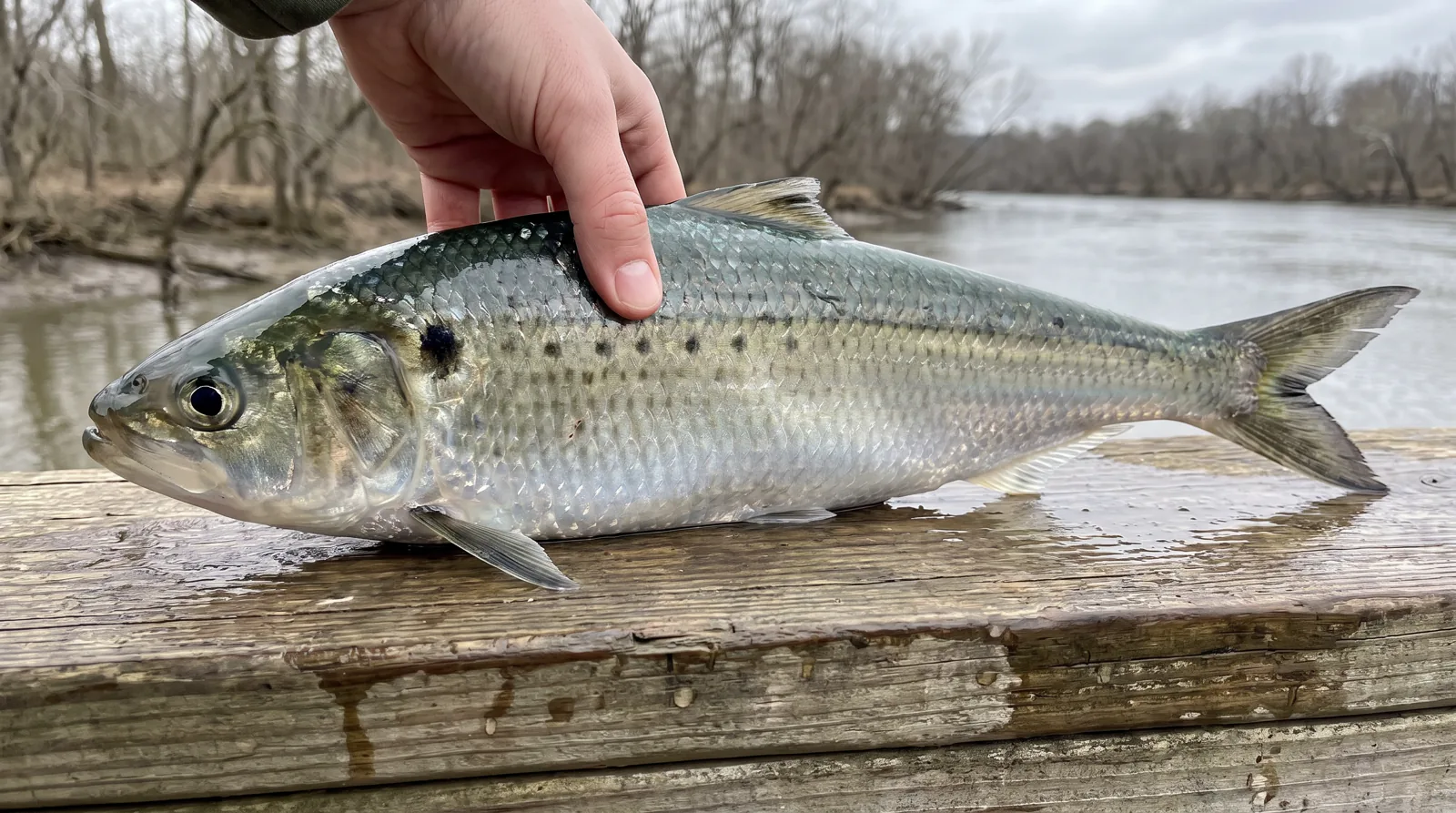
Hickory shad have a lower jaw that juts out well past the upper jaw, and it can be dark in color. That projecting jaw is the key feature. The spots behind the gill cover are faint smudges, like thumbprints, rather than crisp dots. Hickory shad are slimmer and smaller, commonly 12 to 20 inches, and they feed on small fish.
Both shad have a cheek patch deeper than it is wide. River herring have a cheek patch wider than it is deep, and their lower jaw rises steeply inside the mouth. Size usually separates an adult shad from a river herring, but young shad overlap in size, so check the jaw and cheek.
Gizzard Shad vs American Shad and Hickory Shad
Gizzard shad live year-round in lakes, ponds and rivers instead of running in from the ocean, but they turn up in tidal rivers alongside the others. Two features settle it:
- •Long last dorsal ray. The last ray of the dorsal fin stretches into a long, thin, whip-like filament. It's often worn or broken off, so a missing filament doesn't rule out a gizzard shad.
- •Mouth. The mouth is small and tucked under a blunt, rounded snout, and the lower jaw doesn't reach past the snout tip. That's the opposite of a hickory shad.
Gizzard shad are also deep-bodied, very slimy and usually less silvery than the others.
What to Do If You Catch One
Alewife or blueback herring: Assume it goes back unless you've confirmed your state and river allow harvest. Release it quickly and keep it in the water as much as possible.
American shad: Check your rules. Some states allow a limited harvest, while Virginia has a statewide moratorium and North Carolina prohibits taking American shad from the Atlantic Ocean.
Hickory shad or gizzard shad: More often legal to keep, but check bag limits and local rules.
When in doubt, release it unharmed. That's straight from Delaware's shad and river herring ID guide. A clear photo of the head, jaw and side spots helps you confirm later, and the CatchVault app can identify the species from a photo and log the catch so you have a record of what you caught and where.
Using Herring and Shad as Bait
River herring are classic live bait for striped bass, which is exactly why the rules get strict. Some states restrict possessing river herring even if you didn't catch them:
- •Massachusetts bans possession in general, with narrow exceptions for permitted open runs and for bait batches caught in federal waters that contain no more than 5% river herring.
- •North Carolina makes it unlawful to take or possess river herring from its coastal fishing waters. Herring from other sources can't be longer than 6 inches while you're on a boat or fishing, so keep proof of where bait herring came from.
- •Virginia DWR says herring are unrestricted in the Roanoke, New and Tennessee drainages, but possession is unlawful in coastal rivers of the Chesapeake Bay and several other listed rivers.
Gizzard shad are a different story. They're widely used as live and cut bait, and Virginia lets anglers collect gizzard and threadfin shad and use them in any state waters. If you net your own bait, make sure what's in the bucket is a gizzard shad and not a blueback or alewife, and check whether your state limits moving live bait between waters.
Frequently Asked Questions
What is the difference between an alewife and a blueback herring?
Alewife usually have a larger eye (wider than the snout is long), a grayish-green back and a pale body cavity lining. Blueback herring have a smaller eye, a bluer back and a black body cavity lining.
Are river herring the same as shad?
No. River herring means two species, alewife and blueback herring. American, hickory and gizzard shad are relatives in the same family, but they're separate species with separate rules.
How do you tell a hickory shad from an American shad?
Close the mouth. A hickory shad's lower jaw sticks out past the upper jaw. An American shad's lower jaw fits into a notch in the upper jaw.
How do you tell a gizzard shad from an American shad?
Gizzard shad have a long, whip-like last dorsal ray and a small mouth under a blunt snout. American shad have no filament and a row of spots behind the gill cover.
Can I keep river herring?
In many Atlantic coast states, no. Harvest is closed except on specific rivers in a few states. Check your state's current rules first.
Is it legal to use blueback herring as bait?
It depends on the state and where the bait came from. Some states ban possession, and others allow purchased bait with a receipt or bait from certain inland waters.
Is a "blue herring" the same as a blueback herring?
"Blue herring" isn't an official name. On Atlantic coast rivers it most often refers to the blueback herring, which is named for its bluish back.
Ready to Fish Smarter?
Download CatchVault free on iPhone and Android. Log catches, identify species with AI, and measure your fish.