Steelhead vs Rainbow Trout: Same Fish, Different Legal Rules
Steelhead and rainbow trout are the same species. How state laws define steelhead by length and water, the adipose fin rule, and how to tell them apart.
Same Fish, Different Lives
Here's the short answer: a steelhead is a rainbow trout. Both are Oncorhynchus mykiss. The difference is life history. A resident rainbow spends its whole life in fresh water. A steelhead hatches in a river, migrates out to the Pacific or a Great Lake to feed and grow, then comes back upstream to spawn.
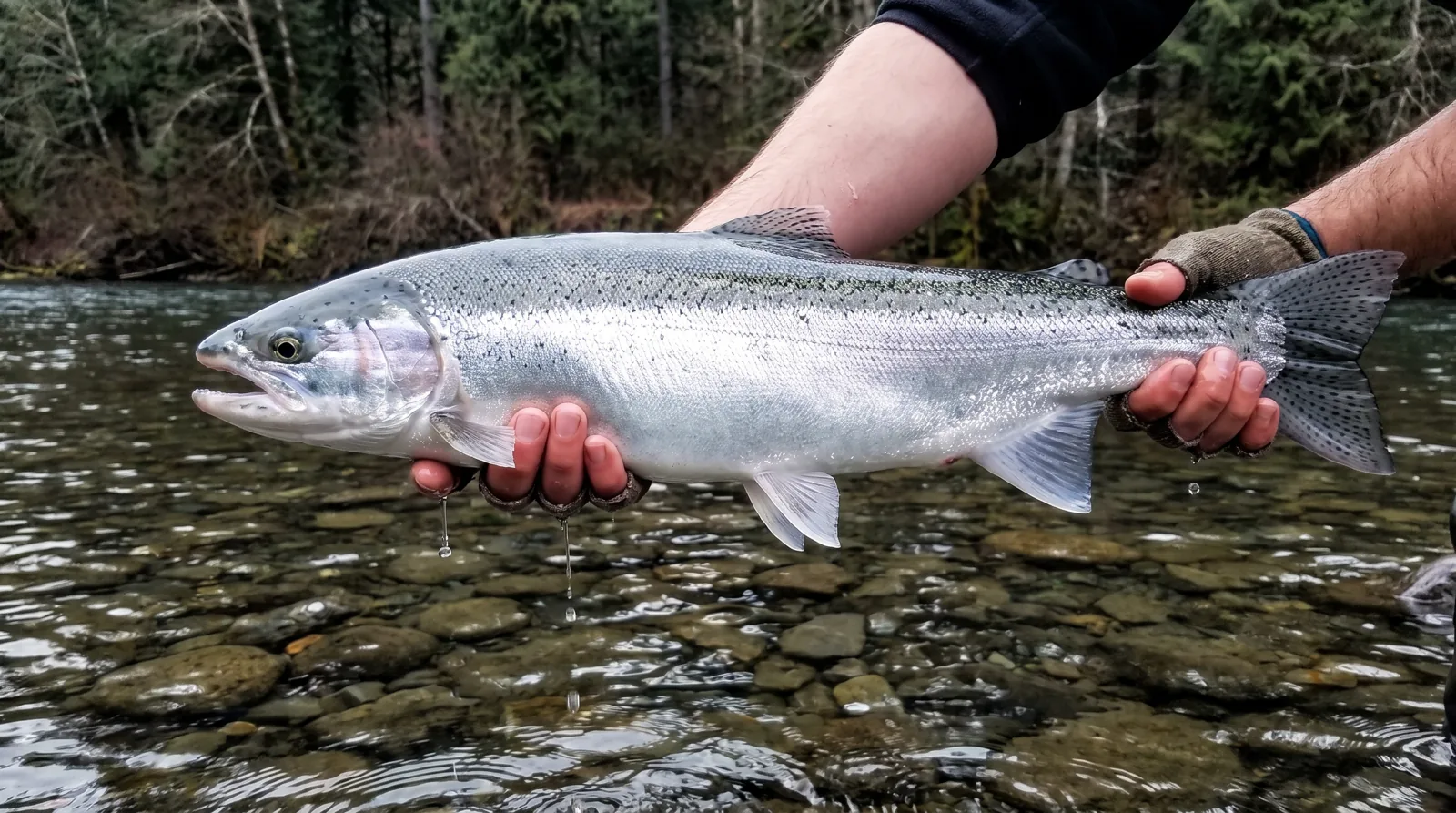
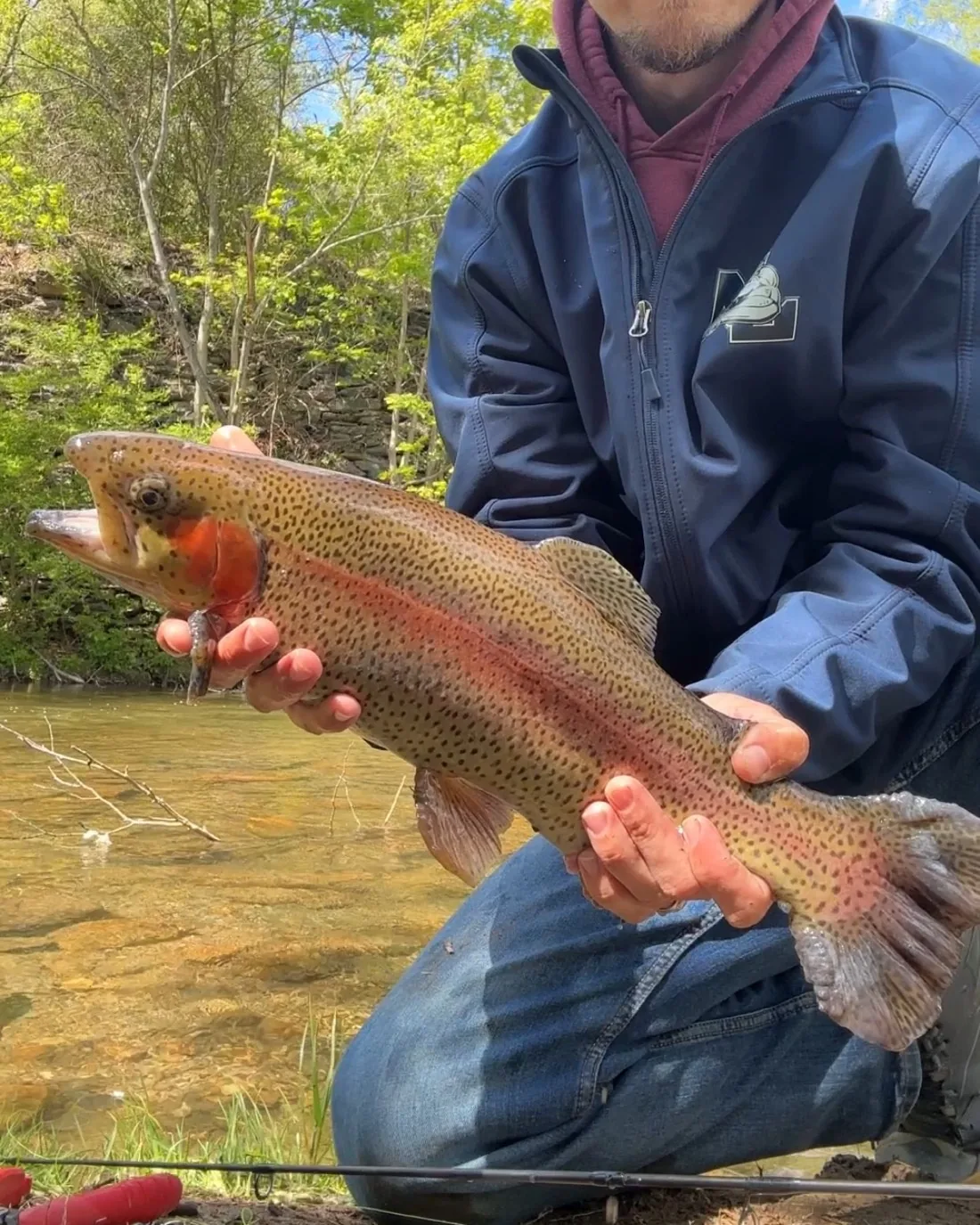
The two forms can live in the same river and interbreed, and Idaho Fish and Game notes that their offspring can go either way, staying home as rainbows or heading downstream as steelhead.
The part most anglers actually need is different: your fishing license doesn't care about biology. Each state writes its own legal definition of "steelhead," and it decides whether you need an extra permit or card, which limits apply, and whether you can keep the fish. A 22-inch rainbow can be a trout in one river and a steelhead in the next.
For species details, see our steelhead and rainbow trout pages.
Quick Reference: Steelhead vs Rainbow Trout
| Feature | Steelhead | Resident Rainbow Trout |
|---|---|---|
| Species | Oncorhynchus mykiss | Oncorhynchus mykiss |
| Life history | Migrates to the ocean or a Great Lake, returns to rivers to spawn | Stays in streams or lakes its whole life |
| Typical size | Usually much larger; WDFW puts the average at 8 to 11 pounds | WDFW says stream rainbows average 11 to 18 inches |
| Body shape | Generally slender and streamlined | Often thicker in streams, but varies widely |
| Fresh-run color | Bright, silvery "chrome" | Bluish-green back, silver sides, often a reddish side stripe |
| Spawning color | Darkens, stripe and cheek color intensify | Darker and more colorful, much like a spawning steelhead |
| Spots | Small dark spots over the body and onto a square tail | Same pattern |
| Legal status | Often defined by length plus water; may need a permit or card | Regular trout rules |
When Is a Rainbow Trout Legally a Steelhead?
Since you can't check a fish's travel history on the riverbank, western states use a simple test: length plus location. A rainbow over a set size, in water sea-run fish can reach, is legally a steelhead. Rules change, so confirm in the current booklet for your water. Our state regulations hub is a good starting point.
Idaho. The 2025–2027 Idaho Fishing Seasons & Rules (2nd edition, 2026) defines steelhead as rainbow trout longer than 20 inches in the Snake River drainage below Hells Canyon Dam, the Salmon River drainage (excluding lakes and the Lemhi and Pahsimeroi rivers), and the Clearwater drainage (excluding the portion above Dworshak Dam, and lakes). Between Hells Canyon Dam and Oxbow Dam, and in the Boise River from its mouth up to Barber Dam, only rainbows over 20 inches with a clipped adipose fin count as steelhead. Fishing for steelhead requires a steelhead permit, and a steelhead with an unclipped adipose fin must be released. Details are on our Idaho regulations page.
Washington. WAC 220-300-160 defines steelhead as "sea-run rainbow trout over twenty inches in length," and the state's definition of "trout" covers rainbow trout except steelhead. WDFW requires a catch record card when fishing for steelhead, and you must record a retained fish immediately, before you keep fishing. Many waters carry "wild steelhead release" rules, which make it unlawful to keep any steelhead without a clipped adipose or ventral fin and a healed scar. See our Washington regulations page.
Oregon. The 2026 Oregon regulations define a steelhead as "a sea-run rainbow trout," then set the length line by zone. In the Northwest and Southwest zones, rainbow trout over 16 inches are considered steelhead in streams. In the Central Zone the line is 20 inches. Exceptions are listed, such as waters above some dams with no steelhead present. Oregon also defines hatchery and wild fish by fin clips. Check our Oregon regulations page and the zone rules for your stream.
California. CDFW defines steelhead as any rainbow trout greater than 16 inches found in anadromous waters. Anyone fishing for steelhead needs a Steelhead Report and Restoration Card, including anglers who release everything, and the card must be returned by January 31 of the following year. CDFW also states that all wild steelhead must be released unharmed, and that hatchery steelhead may be kept only in selected waters. See our California regulations page.
Notice the pattern: the same 18-inch rainbow is "just a trout" under Idaho's and Washington's 20-inch lines, but a steelhead in a California anadromous stream or a Northwest Oregon river. That's the reason to check before you set the hook, not after.
Hatchery vs Wild: The Adipose Fin
The adipose fin is the small fleshy fin on the back between the dorsal fin and the tail. Hatcheries clip it off to mark their fish. A healed scar where that fin should be usually means a hatchery fish; an intact fin usually means wild.
This matters because many West Coast steelhead runs are protected under the Endangered Species Act. NOAA Fisheries lists one distinct population segment, Southern California, as endangered and ten as threatened, including Puget Sound, the Snake River Basin, the Lower Columbia, the Upper Willamette, and several California runs. That's why many seasons on these rivers let you keep clipped hatchery fish while wild fish must go back.
One caveat: an intact adipose fin doesn't guarantee a wild fish. Oregon's regulations note that its "wild" label can include unclipped hatchery fish. For the rules, that doesn't change anything. If the fin is there, treat it as wild.
Great Lakes Steelhead Never See Salt
Steelhead are not native to the Great Lakes. Michigan DNR traces its rainbows to eggs imported from California in 1876, and today large rainbows that live in the Great Lakes and run up streams to spawn are called steelhead. New York DEC describes the same thing on Lake Ontario: migratory rainbow trout called steelhead, stocked into the lake. A lake stands in for the ocean.
Around the Great Lakes, steelhead are generally regulated as rainbow trout, not as a separately defined fish. New York's Great Lakes regulations list "Rainbow Trout (including Steelhead)," with a 21-inch minimum in Lake Ontario and 25 inches in its tributaries. In Pennsylvania, the 2026 Fishing Summary requires a Lake Erie permit or a combination trout/Lake Erie permit for all fishing in Lake Erie, Presque Isle Bay, and their tributaries, whatever species you're after, and its Lake Erie limits group rainbow trout with salmon. See our New York, Pennsylvania, and Michigan regulation pages for current limits.
Where Redband Trout Fit
You'll also hear "redband." WDFW lists redband as a common name for rainbow trout and recognizes the Columbia Basin redband as one of the state's two native subspecies, alongside coastal rainbow trout. WDFW notes that both subspecies can be anadromous, so some redbands are steelhead. Oregon's regulations lump "rainbow/redband (except steelhead)" under trout. In practice, a redband is regulated as a rainbow until it meets your state's steelhead definition.
What You'll Actually See
The Alaska Department of Fish and Game says there are no major physical differences between the two. Still, a few things lean one way or the other.
- •Size. Steelhead are usually much larger, because ocean or lake feeding grows fish fast. NOAA lists steelhead up to about 40 inches and 30 pounds.
- •Body shape. ADF&G describes steelhead as generally more slender and streamlined than stream-resident rainbows, even though they're bigger.
- •Color on a fresh fish. A steelhead fresh from salt or a big lake is bright and much more silver than a resident rainbow. CDFW calls it silver-blue "chrome." Anglers call those fish chromers.
- •Color over time. New York DEC notes that the longer a steelhead stays in the river, the darker it gets. Idaho describes a pink or red side stripe and cheek patch whose colors intensify at spawning.
- •Spawning fish converge. By the time a steelhead is dark and blushed red, ADF&G says it becomes difficult to tell apart from a mature resident rainbow.
Spots won't help either; both forms carry small dark spots onto a square tail. ADF&G says juvenile steelhead are indistinguishable from juvenile rainbows for their first few years. You can't tell on the riverbank whether a fish has been to sea, which is exactly why states use length and location instead.
What to Do When You Hook One
- •Know the definition before you fish. Look up whether your water counts as steelhead water and what length triggers the steelhead rules. If it does, carry the permit, card, or catch record your state requires, even if you only plan to release fish.
- •Measure it. Length is the legal line, so measure accurately. A fish right at 20 or 16 inches is where mistakes happen.
- •Check the adipose fin. Look for a healed scar where the small back fin should be. No scar means wild in most rule books, and wild fish often must be released.
- •Handle wild fish gently. Idaho's release tips are a good checklist: use proper-sized gear and keep the fight short, net or tail the fish instead of dragging it onto rocks or sand, minimize time out of water, keep your hands off the gills, and revive it in the water if needed. Some waters go further and bar removing wild steelhead from the water, so read the special rules.
- •Record kept fish right away. Idaho, Washington, and California all tie harvest to a permit or card, and Idaho and Washington require you to record a kept fish immediately.
The CatchVault app can identify the species from a photo, measure the fish, and log the catch with its location, which helps you remember where steelhead water starts.
Frequently Asked Questions
Is a steelhead a rainbow trout?
Yes. Both are the same species, Oncorhynchus mykiss. A steelhead is a rainbow that migrates to the ocean or a Great Lake and returns to rivers to spawn.
Is a 20-inch rainbow trout a steelhead?
It depends on the state and the water. In Idaho's steelhead drainages, and for sea-run fish in Washington, the line is over 20 inches, so a fish of exactly 20 inches doesn't qualify. In California's anadromous waters and in streams of Oregon's Northwest and Southwest zones, a rainbow over 16 inches counts.
Do I need a steelhead permit to catch and release?
In California, yes; you need the Steelhead Report and Restoration Card to fish for steelhead even if you release them. In Washington, you need a catch record card when fishing for steelhead. Check your state's rules.
Can I keep a steelhead with its adipose fin?
Often not on the West Coast. Idaho requires release of steelhead with an unclipped adipose fin, and California requires all wild steelhead to be released.
Are Great Lakes steelhead real steelhead?
Biologically they follow the same migratory pattern with a lake in place of the ocean. Legally, states like New York regulate them as rainbow trout.
What is a redband trout?
Redband is another common name for rainbow trout, used especially for native inland fish like the Columbia Basin redband. Sea-run redbands are steelhead, and the same legal definitions apply.
Ready to Fish Smarter?
Download CatchVault free on iPhone and Android. Log catches, identify species with AI, and measure your fish.