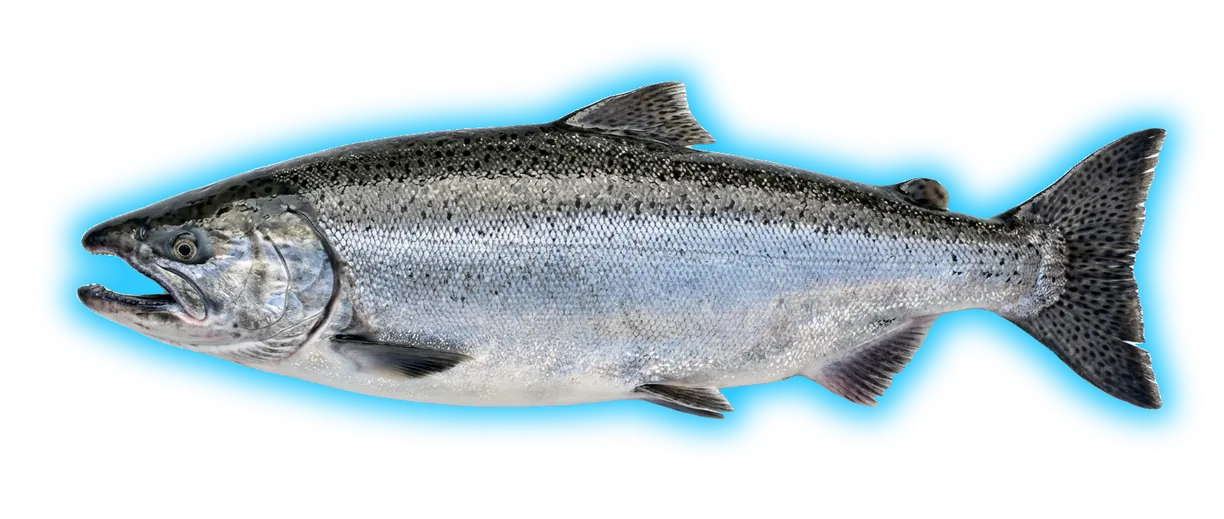
Chinook Salmon
Oncorhynchus tshawytscha
Also known as
king salmon, spring salmon, Tyee salmon
About the Chinook Salmon
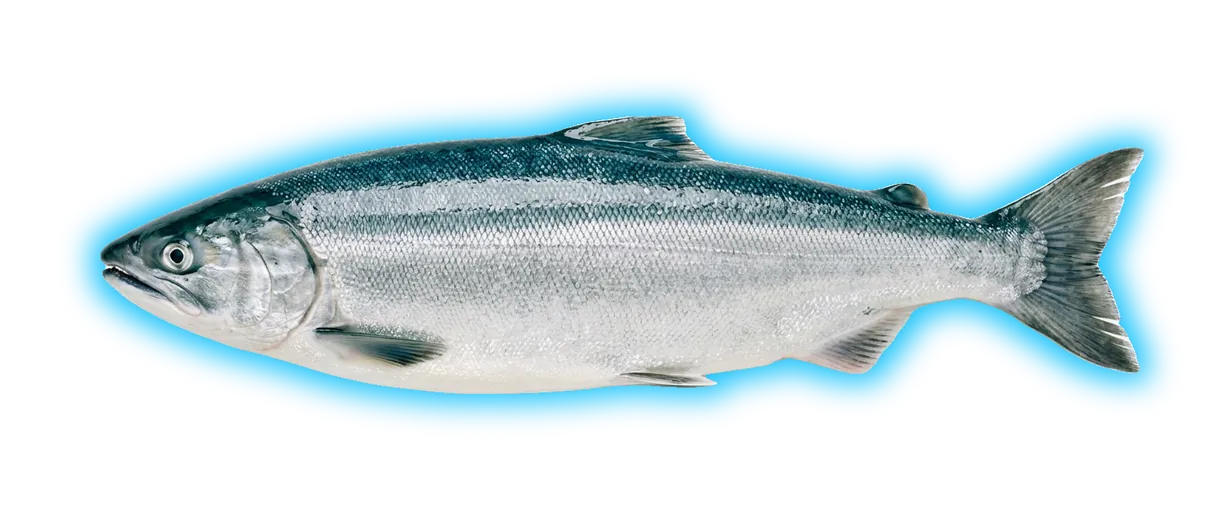
The magnificent Chinook Salmon, often called the 'King' for good reason, is the largest of the Pacific salmon species. Anglers can identify these powerful fish by their dark back, often with a blue-green hue, fading to silvery sides and a white belly. A key identification feature is the presence of small, irregular spots on both the back and both lobes of the caudal (tail) fin, along with a black mouth and black gums, distinguishing them from other salmon species.
Source: FishBase & iNaturalist
Habitat
Chinook Salmon spend most of their lives in the cold, nutrient-rich waters of the Pacific Ocean, often feeding in coastal areas and offshore banks. They are anadromous, returning to freshwater rivers and streams to spawn, often traveling hundreds or even thousands of miles upstream. Preferred spawning grounds typically feature gravel bottoms and cold, clear, well-oxygenated water.
Distribution
Their native range spans the North Pacific Ocean, from Alaska down the west coast of North America to California, and across to Russia and Japan. Significant populations have also been successfully introduced into the Great Lakes system, providing a thriving sport fishery.
Behaviour
As opportunistic and voracious predators, Chinook Salmon primarily feed on smaller fish such as herring, anchovies, and squid, along with crustaceans and krill in the marine environment. They undertake epic migrations, often traveling vast distances from their ocean feeding grounds to their natal spawning rivers. When hooked, these powerful fish are renowned for their explosive runs, deep dives, and head shakes, offering an exhilarating fight that tests an angler's skill and tackle.
Edibility
★★★★★
Widely considered the pinnacle of table fare among salmon, Chinook boasts a rich, buttery flavor and firm, flaky flesh. Its high oil content makes it incredibly moist and flavorful, excellent for grilling, baking, smoking, or pan-searing.
Lure suggestion
Anglers targeting Chinook Salmon effectively use a variety of methods depending on the location. In the ocean, trolling with cut plug herring, anchovies, or large spoons and hootchies behind flashers and dodgers is highly productive. In rivers, drift fishing with roe, cured shrimp, or artificial eggs, as well as casting or back-trolling with large diving plugs and spinnerbaits, can entice strikes from migrating fish.
Chinook Salmon Regulations
Select a state to see size limits, bag limits, and seasons for Chinook Salmon.
Select a state
Always confirm with the official state agency before keeping a fish.
Recent Catches
Biggest Chinook Salmon
Tips & Tactics
Summer Flounder from the New Jersey Surf: A Complete Guide
How to catch summer flounder (fluke) from the New Jersey beach — when and where to go, the best rigs, baits, and retrieves, and the gear that gets it done.
My Review of the Hobie Fleet: What's Best for Saltwater Kayak Fishing
A hands-on review of every Hobie MirageDrive fishing kayak and which model makes the most sense for inshore and open-water saltwater fishing.
How to Jig Giant Plastic Eels for 40"+ Striped Bass
The complete guide to fishing oversized soft plastic eels for trophy striped bass — gear, technique, locations, and timing.
Related Species
Where to Catch Chinook Salmon
States where Chinook Salmon is found, based on CatchVault's waterbody commonality data.
Think You Can Top the Leaderboard?
CatchVault is available on iOS. Download the app, log your Chinook Salmon catch, and see where you rank.