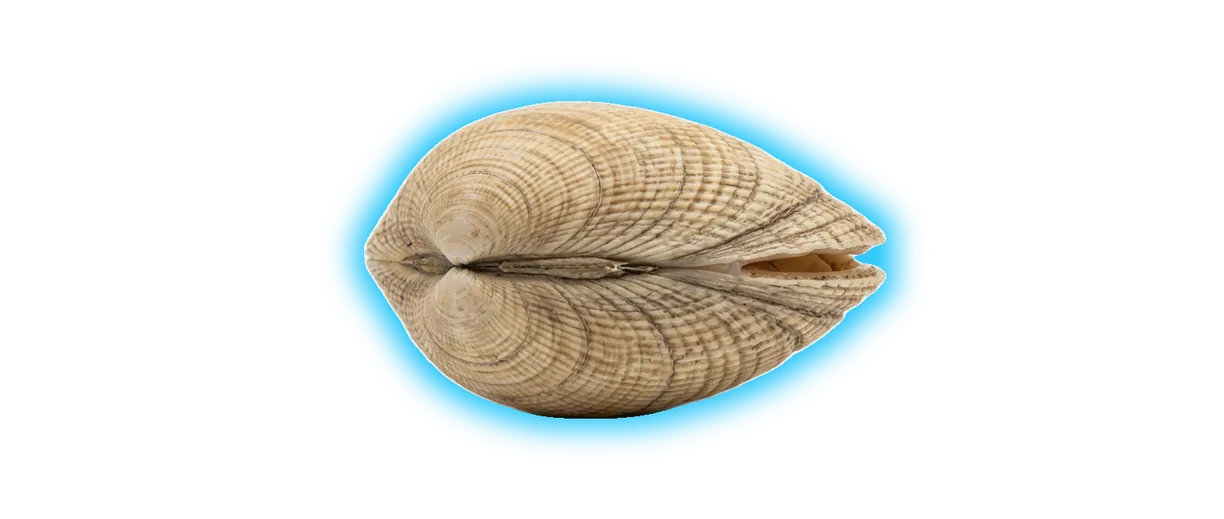
Littleneck Clam
Mercenaria mercenaria
Also known as
hard clam, quahog, round clam, hard-shell clam
About the Littleneck Clam
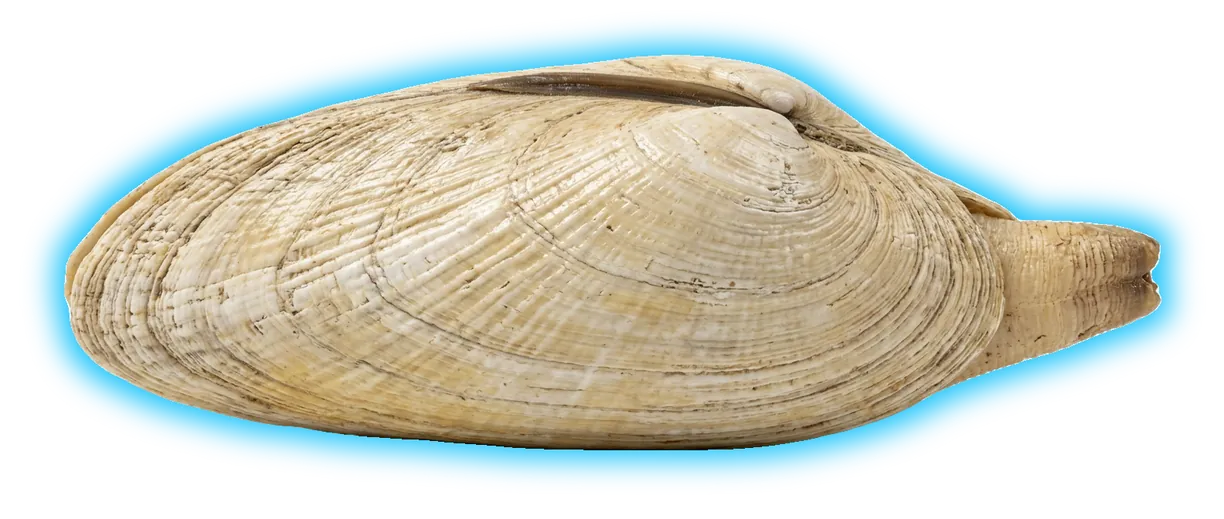
The Littleneck Clam, a type of hard clam, is a robust marine bivalve mollusc recognized by its thick, hard, and typically roundish shell. Its exterior is often a dull gray or off-white, sometimes with concentric growth rings or grooves. The interior of the shell is usually smooth and porcelain-white, sometimes with purple markings near the hinge. As its name suggests, the 'littleneck' designation refers to a smaller, more tender size class, highly prized for culinary use. It can grow larger, where it might be called a cherrystone or quahog.
Source: FishBase & iNaturalist
Habitat
These clams are typically found burrowed in sandy or muddy bottoms, inhabiting estuaries, bays, and protected coastal waters. They thrive in the intertidal zone down to depths of about 50 feet, preferring areas with moderate currents that bring in their food source.
Distribution
Its native range extends along the eastern shores of North America and Central America, from Prince Edward Island in Canada down to the Yucatán Peninsula.
Behaviour
Littleneck clams are filter feeders, using siphons to draw in water and extract microscopic plankton and organic matter. They remain largely stationary once they settle into the substrate, burying themselves a few inches deep with their siphons extending upwards to the water. They are known for their resilience, capable of surviving a wide range of salinity and temperature conditions.
Edibility
★★★★★
Considered excellent table fare, Littleneck Clams are highly valued for their sweet, briny flavor and tender texture. They are superb when eaten raw on the half-shell, steamed, or incorporated into pasta dishes and chowders.
Lure suggestion
Catching Littleneck Clams requires digging rather than traditional angling. Look for clam beds at low tide, often identifiable by small 'keyhole' or figure-eight shaped holes in the sand or mud. Use a clam rake or shovel to carefully dig 4-6 inches deep in these areas, sifting through the substrate to locate the clams. Be mindful of local regulations regarding size limits and daily catch quotas.
Littleneck Clam Regulations
Select a state to see size limits, bag limits, and seasons for Littleneck Clam.
Select a state
Always confirm with the official state agency before keeping a fish.
Biggest Littleneck Clam
No catches logged yet for Littleneck Clam.
Be the first, download CatchVault and log your catch!
Tips & Tactics
Summer Flounder from the New Jersey Surf: A Complete Guide
How to catch summer flounder (fluke) from the New Jersey beach — when and where to go, the best rigs, baits, and retrieves, and the gear that gets it done.
My Review of the Hobie Fleet: What's Best for Saltwater Kayak Fishing
A hands-on review of every Hobie MirageDrive fishing kayak and which model makes the most sense for inshore and open-water saltwater fishing.
How to Jig Giant Plastic Eels for 40"+ Striped Bass
The complete guide to fishing oversized soft plastic eels for trophy striped bass — gear, technique, locations, and timing.
Related Species
Think You Can Top the Leaderboard?
CatchVault is available on iOS. Download the app, log your Littleneck Clam catch, and see where you rank.