Also known as
null
IUCN status
Near ThreatenedAbout the Pacific Halibut
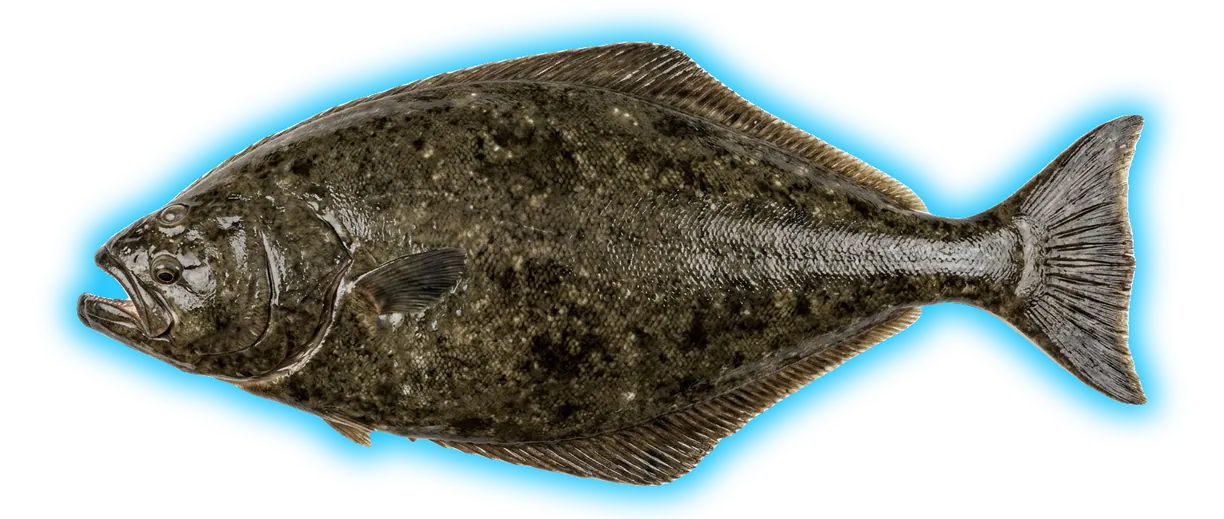
The Pacific Halibut is a true giant of the deep, a large righteye flounder known for its distinctive diamond shape and flattened body. Its eyed side is typically dark brown to olive, providing excellent camouflage against the seafloor, while its blind underside is stark white. Both eyes are positioned on the upper, pigmented side, giving it a keen predatory gaze. These formidable fish possess a large mouth equipped with powerful jaws, capable of engulfing substantial prey.
Source: FishBase & iNaturalist
Pacific Halibut Size & Bag Limits by State
Pacific Halibut rules in 3 states.
| State | Size limit | Daily bag | Season |
|---|---|---|---|
| CaliforniaStatewide saltwaterApr 1 – Dec 31 · Apr 1 – Dec 31 (south of Point Arena); Jan 1 – Mar 31: Closed | None | 1 | Apr 1 – Dec 31 · Apr 1 – Dec 31 (south of Point Arena); Jan 1 – Mar 31: Closed |
| OregonYear-round | None | 1 | Year-round |
| Washington | Varies by area (16 zones). See Washington rules | ||
Statewide rules, or each area where a state sets limits by region. Many lakes and rivers have their own limits; pick a state or open its regulations page for water-specific rules. Always confirm with the state wildlife agency before keeping a fish.
Rules for a specific state
Pick a state to see its Pacific Halibut rules, including lakes and rivers with their own limits.
Select a state
Always confirm with the official state agency before keeping a fish.
Best bait and lures for Pacific Halibut
For effective angling, heavy jigging with large metal jigs, lead-head jigs tipped with soft plastics (like grub tails or swimbaits), or large cut baits (such as herring, cod, or mackerel) fished on a spreader bar rig are highly successful. Live baits like herring or small bottom fish can also be incredibly effective. Anglers often drift-fish or anchor over known halibut grounds, ensuring the bait or lure is presented directly on or very near the bottom.
Is Pacific Halibut good to eat?
★★★★★
Widely considered among the finest eating fish, Pacific Halibut boasts firm, flaky, and brilliantly white flesh with a mild, sweet flavor. Its versatility makes it excellent for grilling, baking, frying, or poaching, holding up well to various cooking methods.
Pacific Halibut habitat
As a quintessential bottom-dweller, Pacific Halibut prefer expansive areas of sandy, gravelly, or muddy substrates. They are commonly found across a wide range of depths, from relatively shallow continental shelves to hundreds of meters deep. Anglers often locate them near underwater structures, drop-offs, and channel edges where prey congregates.
Where Pacific Halibut are found
This impressive flatfish is native to the cold, productive waters of the North Pacific Ocean. Its range extends from the coasts of California northward along North America to Alaska, then westward across to the waters of Russia and Japan.
Pacific Halibut behavior
Pacific Halibut are stealthy ambush predators, typically lying camouflaged on the seafloor, waiting for an unsuspecting meal. Their diet consists primarily of other bottom-dwelling fish such as cod, sole, and rockfish, but they will also opportunistically consume octopus, crab, and squid. They undertake significant seasonal migrations, moving into shallower waters during summer for feeding and retreating to deeper, warmer waters in winter for spawning. Despite their flattened appearance, they are surprisingly powerful swimmers.
Biggest Pacific Halibut
No catches logged yet for Pacific Halibut.
Be the first, download CatchVault and log your catch!
Tips & Tactics
Steelhead vs Rainbow Trout: Same Fish, Different Legal Rules
Steelhead and rainbow trout are the same species. How state laws define steelhead by length and water, the adipose fin rule, and how to tell them apart.
Channel vs Blue vs White vs Flathead Catfish: ID Guide
Tell channel, blue, white and flathead catfish apart by anal fin, tail and jaw, plus hardhead vs gafftop. Why the ID matters for limits and invasives.
Alewife vs Blueback Herring: River Herring & Shad ID Guide
How to tell alewife from blueback herring, and both from American, hickory and gizzard shad, plus why river herring harvest is closed in many states.
Related Species
Where to Catch Pacific Halibut
States where Pacific Halibut is found, based on CatchVault's waterbody commonality data.
Think You Can Top the Leaderboard?
CatchVault is available on iPhone and Android. Download the app, log your Pacific Halibut catch, and see where you rank.