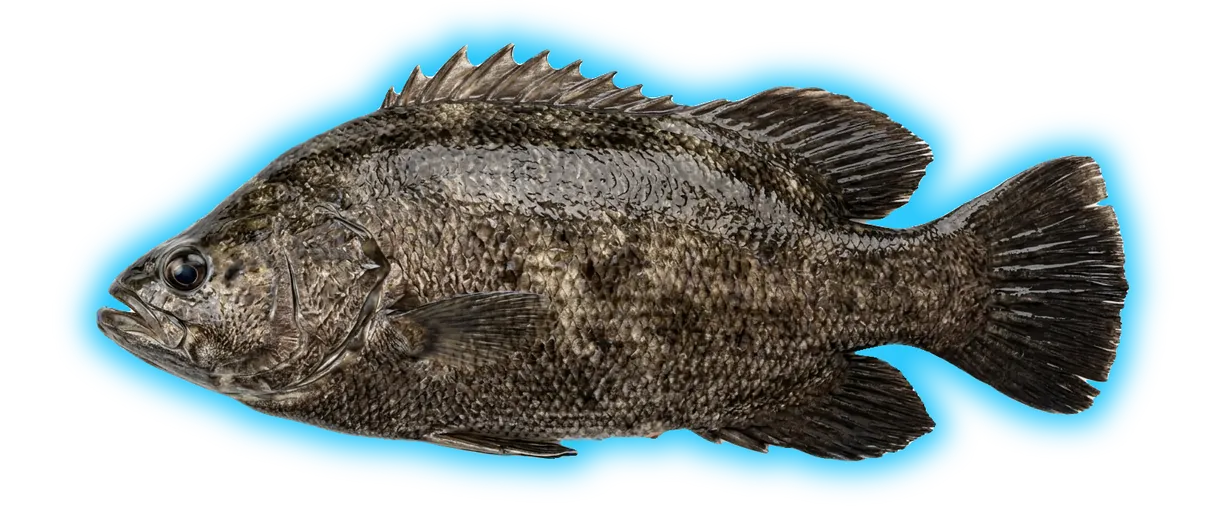
Also known as
Atlantic Tripletail, Flasher, Steamboat
About the Tripletail
The Tripletail earns its distinctive name from its rounded dorsal and anal fins, which extend far back and are nearly symmetrical to the caudal (tail) fin, giving the appearance of three distinct tails. These robust fish can grow quite large, often reaching up to 90 cm (35 inches) in length and weighing over 18 kg (40 pounds). Young Tripletail master the art of camouflage, drifting on their sides near debris to mimic a floating leaf. Adults typically exhibit a somewhat flattened, mottled brown or black coloration, allowing them to blend seamlessly with pilings, buoys, or other underwater structures. Their thick body and large, dark eyes complete their unique profile.
Source: FishBase & iNaturalist
Tripletail Size & Bag Limits by State
Tripletail rules in 7 states.
| State | Size limit | Daily bag | Season |
|---|---|---|---|
| AlabamaStatewide saltwaterYear-round | 18" min | 3 | Year-round |
| FloridaAtlantic Ocean and Tidal TributariesYear-round | 18" min | 2 | Year-round |
| Florida Keys (Monroe County)Year-round | 18" min | 2 | Year-round |
| Gulf of Mexico and Tidal TributariesYear-round | 18" min | 2 | Year-round |
| GeorgiaStatewide saltwaterYear-round | 18" min | 2 | Year-round |
| LouisianaStatewide saltwaterYear-round | 18" min | 5 | Year-round |
| MississippiStatewide saltwaterYear-round | 18" min | 3 | Year-round |
| South CarolinaStatewide saltwaterYear-round | 18" min | 3 | Year-round |
| TexasStatewide saltwaterYear-round | 17" min | 3 | Year-round |
Statewide rules, or each area where a state sets limits by region. Many lakes and rivers have their own limits; pick a state or open its regulations page for water-specific rules. Always confirm with the state wildlife agency before keeping a fish.
Rules for a specific state
Pick a state to see its Tripletail rules, including lakes and rivers with their own limits.
Select a state
Always confirm with the official state agency before keeping a fish.
Best bait and lures for Tripletail
Successfully targeting Tripletail requires a stealthy approach, as these fish are notoriously skittish and easily spooked. Live shrimp or small finfish, presented freelined or suspended under a popping cork, are exceptionally effective. Artificial lures such as small jigs tipped with scent, soft plastics mimicking shrimp or baitfish, and even accurately cast topwater plugs can entice a strike if presented directly to a fish holding near structure. A medium spinning outfit spooled with 15-20 lb braided line and a fluorocarbon leader is ideal for their often delicate bites.
Is Tripletail good to eat?
★★★★★
Tripletail is universally hailed as an excellent food fish, celebrated for its firm, flaky white meat and mild, sweet flavor. It's often considered a delicacy by anglers and chefs alike, suitable for a wide array of cooking methods including grilling, frying, baking, or pan-searing.
Tripletail habitat
Tripletail are warm-water marine fish found across tropical and subtropical oceans, often migrating into temperate waters during warmer months. They are masters of disguise and are almost always associated with floating debris, buoys, channel markers, pilings, and other offshore or nearshore structures, using these objects for cover. Anglers frequently spot them lurking motionless around docks, jetties, or even within estuaries.
Where Tripletail are found
These fish boast a wide global distribution, inhabiting tropical and subtropical oceans worldwide. In the Atlantic, their range extends from Massachusetts south to Argentina, including the entire Gulf of Mexico and Caribbean Sea.
Tripletail behavior
Tripletail are opportunistic ambush predators, known for their solitary nature and tendency to lurk motionless, often on their side, near structure. They primarily feed on small fish, crustaceans such as shrimp and crabs, and other invertebrates that venture too close to their hiding spots. Their unique behavior of mimicking a dead leaf or piece of debris, especially when young, is a clever camouflage tactic. While not known for extensive migrations, they will follow food sources and preferred water temperatures, making them a seasonal target in some areas.
Biggest Tripletail
No catches logged yet for Tripletail.
Be the first, download CatchVault and log your catch!
Tips & Tactics
Steelhead vs Rainbow Trout: Same Fish, Different Legal Rules
Steelhead and rainbow trout are the same species. How state laws define steelhead by length and water, the adipose fin rule, and how to tell them apart.
Channel vs Blue vs White vs Flathead Catfish: ID Guide
Tell channel, blue, white and flathead catfish apart by anal fin, tail and jaw, plus hardhead vs gafftop. Why the ID matters for limits and invasives.
Alewife vs Blueback Herring: River Herring & Shad ID Guide
How to tell alewife from blueback herring, and both from American, hickory and gizzard shad, plus why river herring harvest is closed in many states.
Related Species
Where to Catch Tripletail
States where Tripletail is found, based on CatchVault's waterbody commonality data.
Think You Can Top the Leaderboard?
CatchVault is available on iPhone and Android. Download the app, log your Tripletail catch, and see where you rank.