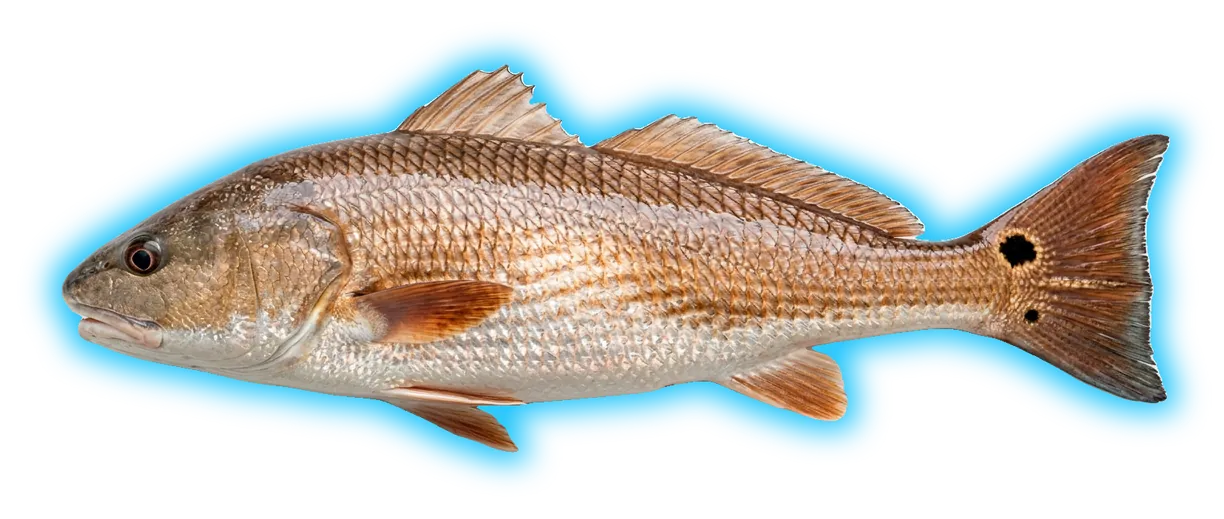
Red Drum
Sciaenops ocellatus
World Record
54" · 94 lbs 2 oz
Also known as
channel bass, redfish, spottail bass, red
IUCN status
Least ConcernAbout the Red Drum
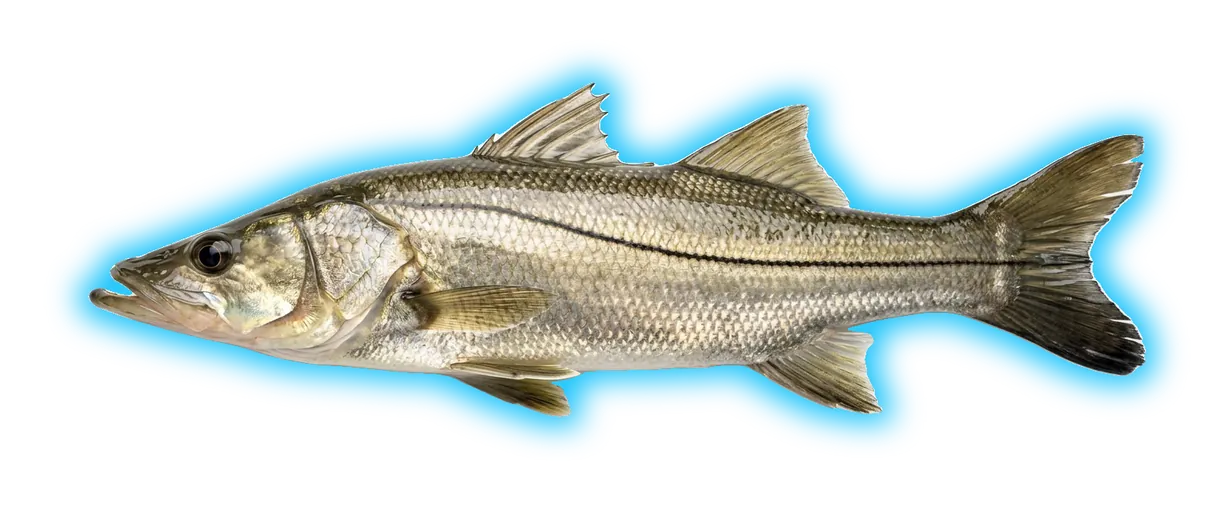
The red drum is a strikingly handsome fish, easily identified by its coppery-bronze back fading to a white belly. Its most distinctive feature is a prominent black spot, or sometimes several, located at the base of the tail fin. This elongated, powerful fish has a slightly humped back and a downturned mouth, indicative of its bottom-feeding habits. They range in size from small "puppy drum" in estuaries to massive "bull reds" offshore.
Source: FishBase & iNaturalist
Habitat
This sought-after game fish thrives in coastal waters, particularly in estuaries, bays, and shallow flats with seagrass beds, oyster reefs, and sandy bottoms. Juveniles inhabit protected estuarine environments, while larger adults often move to deeper coastal waters and nearshore structures. They exhibit a remarkable tolerance for a wide range of salinities.
Distribution
Red drum are found along the Atlantic coast of the United States from Massachusetts to Florida, and extend throughout the Gulf of Mexico from Florida's panhandle down to northern Mexico. This extensive geographic range offers ample opportunities for anglers seeking them.
Behaviour
Red drum are opportunistic feeders, primarily preying on crabs, shrimp, and small fish, which they forage for along the bottom. They are often found in schools, especially juveniles, and can be observed "tailing" in very shallow water as they feed with their heads down. Seasonal movements are influenced by water temperature and spawning aggregations, with large "bull reds" often migrating to offshore areas during breeding season.
Edibility
★★★★★
The flesh of red drum is firm, white, and flaky with a mild, sweet flavor, making it excellent table fare. Smaller fish, often referred to as "slot reds" (typically 18-27 inches), are generally preferred for eating as larger, older fish can sometimes have a coarser texture. It lends itself well to grilling, baking, or frying.
Lure suggestion
Anglers effectively target red drum with a variety of methods. Live or cut bait such as shrimp, crabs, and mullet, fished on the bottom or suspended under a popping cork, are highly effective. Artificial lures like weedless spoons, soft plastic jigs (paddletails, jerkbaits), and topwater plugs also produce great results, especially when sight casting to actively feeding fish in shallow water.
Red Drum Regulations
Select a state to see size limits, bag limits, and seasons for Red Drum.
Select a state
Always confirm with the official state agency before keeping a fish.
Biggest Red Drum
No catches logged yet for Red Drum.
Be the first, download CatchVault and log your catch!
Tips & Tactics
Fishing with Soft Plastics: Rigs, Baits, and Strategies
How to fish soft plastics effectively — worms, creature baits, swimbaits, and the best rigs for each.
Live Bait Fishing: The Ultimate Guide
Everything about live bait fishing — minnows, worms, shrimp, crickets, and how to rig them for different species.
Spoon Fishing: Casting, Trolling, and Jigging with Spoons
How to fish spoons for pike, trout, redfish, and more. Covers casting spoons, trolling spoons, and jigging spoons.
Related Species
Where to Catch Red Drum
States where Red Drum is found, based on CatchVault's waterbody commonality data.
Think You Can Top the Leaderboard?
CatchVault is available on iOS. Download the app, log your Red Drum catch, and see where you rank.