Water Type
Saltwater
Also known as
Drum, Drummer, Oyster Cracker
IUCN status
Least ConcernAbout the Black Drum
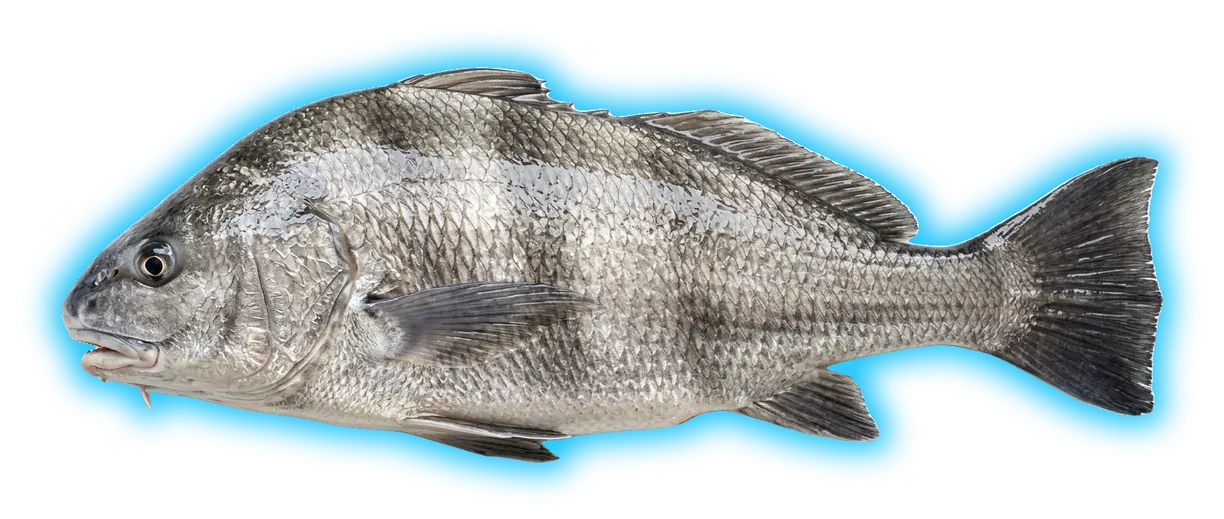
The Black Drum is easily recognized by its high, arched back and silvery-grey to dark bronze body, often appearing darker on top. Younger fish display 4-5 distinct vertical black bars that fade with age. A key identifying feature is the presence of several whisker-like barbels under its chin, used to locate food on the seafloor. While commonly caught in the 5-30 lb range, these powerful bottom dwellers are the largest members of the drum family, with some giants exceeding 90 pounds and even reaching a world record over 113 pounds.
Source: FishBase & iNaturalist
Black Drum Size & Bag Limits by State
Black Drum rules in 11 states.
| State | Size limit | Daily bag | Season |
|---|---|---|---|
| DelawareAtlantic Ocean and Coastal BaysYear-round | 16" min | 3 | Year-round |
| Delaware Bay, River and Tidal TributariesYear-round | 16" min | 3 | Year-round |
| FloridaAtlantic Ocean and Tidal TributariesYear-round | 14–24" slot | 514"-24" Only 1 over 24″. Snatching prohibited. | Year-round |
| Florida Keys (Monroe County)Year-round | 14–24" slot | 514"-24" Only 1 over 24″. Snatching prohibited. | Year-round |
| Gulf of Mexico and Tidal TributariesYear-round | 14–24" slot | 514"-24" Only 1 over 24″. Snatching prohibited. | Year-round |
| GeorgiaStatewide saltwaterYear-round | 14" min | 15 | Year-round |
| LouisianaStatewide saltwaterYear-round | 16" min | 5 | Year-round |
| MarylandAtlantic Ocean, Coastal Bays and tributariesYear-round | 16" min | 1 | Year-round |
| Chesapeake Bay and Tidal TributariesYear-round | 16" min | 1 | Year-round |
| MississippiStatewide saltwaterYear-round | None | No limit | Year-round |
| New JerseyStatewide saltwaterYear-round | 16" min | 3 | Year-round |
| North CarolinaStatewide freshwaterYear-round | 14" min | 10 | Year-round |
| Statewide saltwaterYear-round | 14" min | 10 | Year-round |
| South CarolinaStatewide saltwaterYear-round | 14–27" slot | 5 | Year-round |
| TexasStatewide saltwaterYear-round | 14–30" slot | 5 | Year-round |
| VirginiaAtlantic Ocean and Coastal Bays (Virginia)Year-round | 16" min | 1 | Year-round |
| Chesapeake Bay (Virginia)Year-round | 16" min | 1 | Year-round |
Statewide rules, or each area where a state sets limits by region. Many lakes and rivers have their own limits; pick a state or open its regulations page for water-specific rules. Always confirm with the state wildlife agency before keeping a fish.
Rules for a specific state
Pick a state to see its Black Drum rules, including lakes and rivers with their own limits.
Select a state
Always confirm with the official state agency before keeping a fish.
Best bait and lures for Black Drum
For bait, fresh or cut shrimp, blue crab, clams, and even pieces of squid are highly effective, especially fished on the bottom. A standard Carolina rig or a simple bottom rig with a heavy sinker and a stout hook (e.g., a circle hook) is ideal for presenting bait. Fish around structure or oyster beds, and be prepared for a strong, head-shaking fight.
Is Black Drum good to eat?
★★★★★
Smaller Black Drum (under 10-15 lbs) offer flaky, white meat with a mild flavor, making them good table fare. Larger, older fish can have coarser meat and are often released by anglers.
Black Drum habitat
Black Drum prefer shallow, muddy, and sandy bottoms in bays, estuaries, and coastal waters. They are frequently found around oyster beds, jetties, pilings, and bridge structures, often congregating in schools. These areas provide both food and shelter.
Where Black Drum are found
Found along the Atlantic coast of North America from Nova Scotia to Florida, and throughout the Gulf of Mexico. Their range extends south to Argentina.
Black Drum behavior
As opportunistic bottom feeders, Black Drum use their powerful jaws and pharyngeal teeth to crush shellfish like oysters, clams, and mussels, as well as crabs and small fish. They often forage by rooting around the substrate, creating muddy water. While generally slow-moving, they can put up a strong, stubborn fight when hooked, often staying deep. They tend to school, particularly larger fish, and migrate seasonally into warmer waters during colder months.
Biggest Black Drum
No catches logged yet for Black Drum.
Be the first, download CatchVault and log your catch!
Tips & Tactics
Steelhead vs Rainbow Trout: Same Fish, Different Legal Rules
Steelhead and rainbow trout are the same species. How state laws define steelhead by length and water, the adipose fin rule, and how to tell them apart.
Almaco Jack vs Amberjack: Greater, Lesser & Rudderfish ID
Almaco jack vs greater amberjack vs lesser amberjack vs banded rudderfish: eye stripe, fin lobes, spine counts, and why a wrong ID can break size limits.
Channel vs Blue vs White vs Flathead Catfish: ID Guide
Tell channel, blue, white and flathead catfish apart by anal fin, tail and jaw, plus hardhead vs gafftop. Why the ID matters for limits and invasives.
Related Species

Where to Catch Black Drum
States where Black Drum is found, based on CatchVault's waterbody commonality data.
Think You Can Top the Leaderboard?
CatchVault is available on iPhone and Android. Download the app, log your Black Drum catch, and see where you rank.