Also known as
Silver King, Silver Sides, Grande Écaille
IUCN status
VulnerableAbout the Tarpon
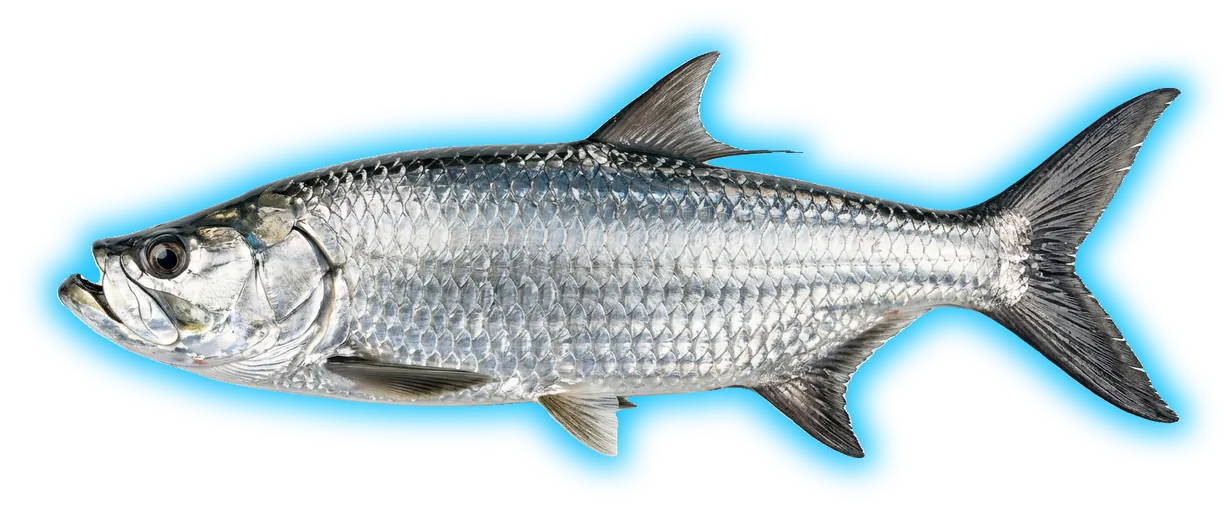
The Tarpon is an iconic sport fish, easily identified by its massive, shimmering silver scales and large, upturned mouth. Its powerful, torpedo-shaped body can reach impressive lengths over 8 feet and weights exceeding 350 pounds. A unique characteristic is its ability to gulp air at the surface, allowing it to thrive in oxygen-depleted waters, often seen 'rolling' as it breathes.
Source: FishBase & iNaturalist
Tarpon Size & Bag Limits by State
Tarpon rules in 7 states.
| State | Size limit | Daily bag | Season |
|---|---|---|---|
| AlabamaMarine WatersYear-round | 60" min | — | Year-round |
| FloridaAtlantic Ocean and Tidal TributariesYear-round | None | Catch & release | Year-round |
| Gulf of Mexico and Tidal TributariesYear-round | None | Catch & release | Year-round |
| GeorgiaState WatersYear-round | 68" min | 1 | Year-round |
| MississippiMarine WatersYear-round | 75" min | 1 | Year-round |
| North CarolinaCoastal and Joint Fishing WatersYear-round · Year-round catch-and-release | None | Catch & release | Year-round · Year-round catch-and-release |
| Inland WatersYear-round · Year-round closed | None | Catch & release | Year-round · Year-round closed |
| South CarolinaState WatersYear-round | 77" min | 1 | Year-round |
| TexasTexas Gulf Coast and BaysYear-round | 85" min | 1 | Year-round |
— means the state sets no daily bag number for this species.
Statewide rules, or each area where a state sets limits by region. Many lakes and rivers have their own limits; pick a state or open its regulations page for water-specific rules. Always confirm with the state wildlife agency before keeping a fish.
Rules for a specific state
Pick a state to see its Tarpon rules, including lakes and rivers with their own limits.
Select a state
Always confirm with the official state agency before keeping a fish.
How big do Tarpon get?
The biggest Tarpon logged on CatchVault measured 68".
Best bait and lures for Tarpon
Successful Tarpon fishing often involves live bait like mullet, pilchards, or crabs free-lined or under a float. Large plugs, soft plastic swimbaits, and fly fishing with dark, streamer patterns are also highly effective. Use heavy tackle, strong leaders, and circle hooks to ensure a quick and safe release for these magnificent fish.
Is Tarpon good to eat?
While not generally considered good table fare due to their bony, strong-tasting flesh, Tarpon are highly prized as a catch-and-release sport fish.
Tarpon habitat
This formidable fish inhabits a variety of environments including coastal waters, estuaries, lagoons, and rivers, frequently found in brackish or even freshwater areas.
Where Tarpon are found
Its primary range extends across the Western Atlantic Ocean, from Virginia south to Brazil, encompassing the Gulf of Mexico, the Caribbean Sea, and the West Indies.
Tarpon behavior
Tarpon are opportunistic predators, feeding almost exclusively on schooling baitfish such as mullet and sardines, and occasionally crabs. They are renowned for their spectacular aerial acrobatics and powerful runs when hooked, offering an unparalleled challenge to anglers. Their air-breathing capability gives them an advantage in low-oxygen conditions, influencing where and when they can be found.
Recent Catches
Biggest Tarpon
Tips & Tactics
Summer Flounder from the New Jersey Surf: A Complete Guide
How to catch summer flounder (fluke) from the New Jersey beach — when and where to go, the best rigs, baits, and retrieves, and the gear that gets it done.
How to Jig Giant Plastic Eels for 40"+ Striped Bass
The complete guide to fishing oversized soft plastic eels for trophy striped bass — gear, technique, locations, and timing.
My Review of the Hobie Fleet: What's Best for Saltwater Kayak Fishing
A hands-on review of every Hobie MirageDrive fishing kayak and which model makes the most sense for inshore and open-water saltwater fishing.
Related Species
Where to Catch Tarpon
States where Tarpon is found, based on CatchVault's waterbody commonality data.
Think You Can Top the Leaderboard?
CatchVault is available on iPhone and Android. Download the app, log your Tarpon catch, and see where you rank.