Water Type
Freshwater
Also known as
Goldring, Silver Perch, Papermouth, Slab
IUCN status
Least ConcernAbout the White Crappie
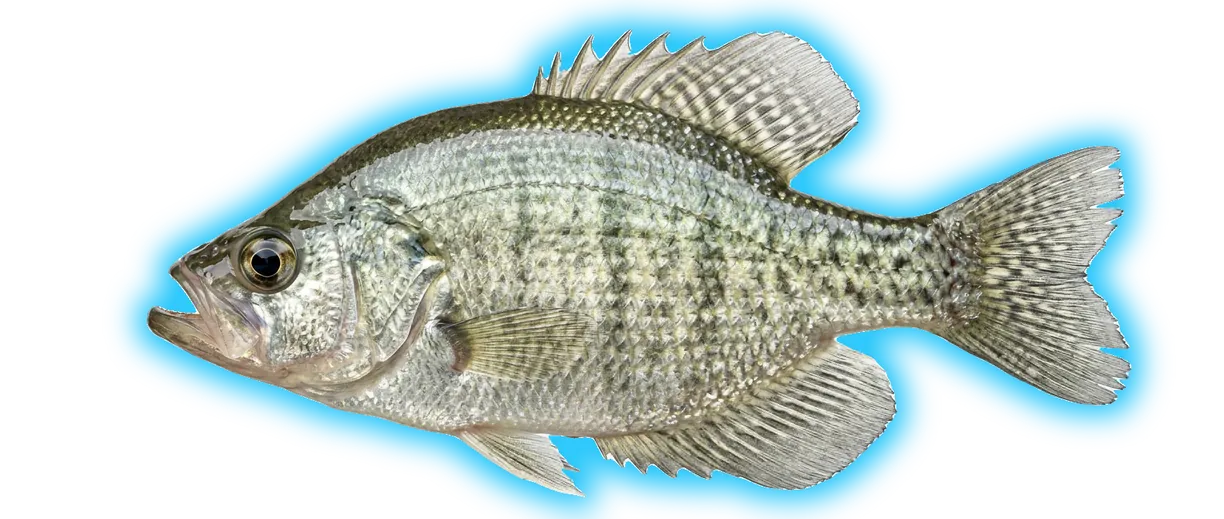
The White Crappie is a distinctly deep-bodied and laterally compressed fish, shimmering in silver with typically 5 to 10 faint, dusky vertical bars on its sides. A key identifier is its dorsal fin, usually sporting six sharp spines, differentiating it from its black crappie cousin. Its large mouth and prominent eyes are perfectly adapted for ambushing prey in murky waters. Anglers often refer to larger specimens as "slabs" due to their impressive size and flattened profile.
Source: FishBase & iNaturalist
White Crappie Size & Bag Limits by State
White Crappie rules in 43 states.
| State | Size limit | Daily bag | Season |
|---|---|---|---|
| AlabamaYear-round | 9" min | 30 | Year-round |
| ArizonaYear-round | None | No limit | Year-round |
| ArkansasYear-round | None | 30 | Year-round |
| CaliforniaYear-round | None | 25 | Year-round |
| ColoradoYear-round | None | 20 | Year-round |
| DelawareYear-round | None | 25 | Year-round |
| FloridaYear-round | None | 25 | Year-round |
| GeorgiaYear-round | None | 30 | Year-round |
| IdahoHayden LakeYear-round | 10" min | 6 | Year-round |
| IllinoisYear-round | None | No limit | Year-round |
| IndianaYear-round | None | 25 | Year-round |
| IowaYear-round | None | 25 | Year-round |
| KansasYear-round | None | 50 | Year-round |
| KentuckyYear-round | None | 20 | Year-round |
| LouisianaYear-round | None | 50 | Year-round |
| MarylandYear-round | None | 15 | Year-round |
| MichiganYear-round | None | 25 | Year-round |
| MinnesotaYear-round | None | 10 | Year-round |
| MississippiYear-round | None | 30 | Year-round |
| MissouriYear-round | None | 30 | Year-round |
| MontanaCentral Fishing DistrictYear-round | None | 15 | Year-round |
| Eastern Fishing DistrictYear-round | None | 15 | Year-round |
| Tongue River ReservoirYear-round | None | 5 | Year-round |
| Western Fishing DistrictYear-round | None | No limit | Year-round |
| NebraskaYear-round | None | 15 | Year-round |
| NevadaLake MeadYear-round | None | 15 | Year-round |
| Lake MohaveYear-round | None | 15 | Year-round |
| Eastern RegionYear-round | None | 15 | Year-round |
| Southern RegionYear-round | None | 15 | Year-round |
| Western RegionYear-round | None | 15 | Year-round |
| Virgin River and Muddy (Moapa) River systemsYear-round | None | 15 | Year-round |
| New JerseyYear-round | 8" min | 10 | Year-round |
| New MexicoYear-round | None | 20 | Year-round |
| New YorkYear-round | 10" min | 25 | Year-round |
| North CarolinaYear-round | None | — | Year-round |
| North DakotaYear-round | None | 10 | Year-round |
| OhioYear-round | None | No limit | Year-round |
| OklahomaYear-round | None | 37 | Year-round |
| OregonYear-round | None | No limit | Year-round |
| PennsylvaniaYear-round | None | 50 | Year-round |
| South CarolinaYear-round | 8" min | 20 | Year-round |
| South DakotaYear-round | None | 15 | Year-round |
| TennesseeYear-round | 10" min | 15 | Year-round |
| TexasYear-round | 10" min | 25 | Year-round |
| UtahYear-round | None | 50 | Year-round |
| VermontYear-round | 8" min | 25 | Year-round |
| VirginiaYear-round | None | 25 | Year-round |
| WashingtonYear-round · Lakes, ponds & reservoirs: year-round | None | No limit | Year-round · Lakes, ponds & reservoirs: year-round |
| West VirginiaYear-round | None | 30 | Year-round |
| WisconsinYear-round | None | 25 | Year-round |
| WyomingYear-round | None | 50 | Year-round |
— means the state sets no daily bag number for this species.
Statewide rules, or each area where a state sets limits by region. Many lakes and rivers have their own limits; pick a state or open its regulations page for water-specific rules. Always confirm with the state wildlife agency before keeping a fish.
Rules for a specific state
Pick a state to see its White Crappie rules, including lakes and rivers with their own limits.
Select a state
Always confirm with the official state agency before keeping a fish.
Best bait and lures for White Crappie
For effective angling, target White Crappie with small jigs ranging from 1/32 to 1/8 ounce, tipped with soft plastic grubs, tubes, or live minnows, often fished under a sensitive bobber. Spider rigging with multiple rods presenting minnows or jigs at various depths around submerged cover is incredibly productive. Vertical jigging or casting small lures near brush piles and timber are also prime tactics.
Is White Crappie good to eat?
★★★★★
Renowned for their delicious, flaky white meat, White Crappie are among the most highly prized freshwater table fare. Their mild, sweet flavor makes them an angler favorite, especially when pan-fried.
White Crappie habitat
These popular game fish thrive in the clear, slow-moving waters of lakes, ponds, and larger rivers. They exhibit a strong preference for areas offering abundant submerged cover, such as brush piles, standing timber, dock pilings, and weed beds. White Crappie are often found suspending at various depths within these protective structures.
Where White Crappie are found
The White Crappie enjoys a wide distribution across freshwater systems throughout the central and eastern United States, extending into parts of southern Canada.
White Crappie behavior
White Crappie are classic ambush predators, feeding primarily on small baitfish, aquatic crustaceans, and insects. They are highly social, typically schooling in large groups around their preferred submerged structures. During the spring spawning season, they migrate into shallower waters, making them readily accessible targets for anglers, before retreating to deeper water in summer and winter.
Biggest White Crappie
No catches logged yet for White Crappie.
Be the first, download CatchVault and log your catch!
Tips & Tactics
Steelhead vs Rainbow Trout: Same Fish, Different Legal Rules
Steelhead and rainbow trout are the same species. How state laws define steelhead by length and water, the adipose fin rule, and how to tell them apart.
Channel vs Blue vs White vs Flathead Catfish: ID Guide
Tell channel, blue, white and flathead catfish apart by anal fin, tail and jaw, plus hardhead vs gafftop. Why the ID matters for limits and invasives.
Alewife vs Blueback Herring: River Herring & Shad ID Guide
How to tell alewife from blueback herring, and both from American, hickory and gizzard shad, plus why river herring harvest is closed in many states.
Related Species
Where to Catch White Crappie
States where White Crappie is found, based on CatchVault's waterbody commonality data.
Think You Can Top the Leaderboard?
CatchVault is available on iPhone and Android. Download the app, log your White Crappie catch, and see where you rank.