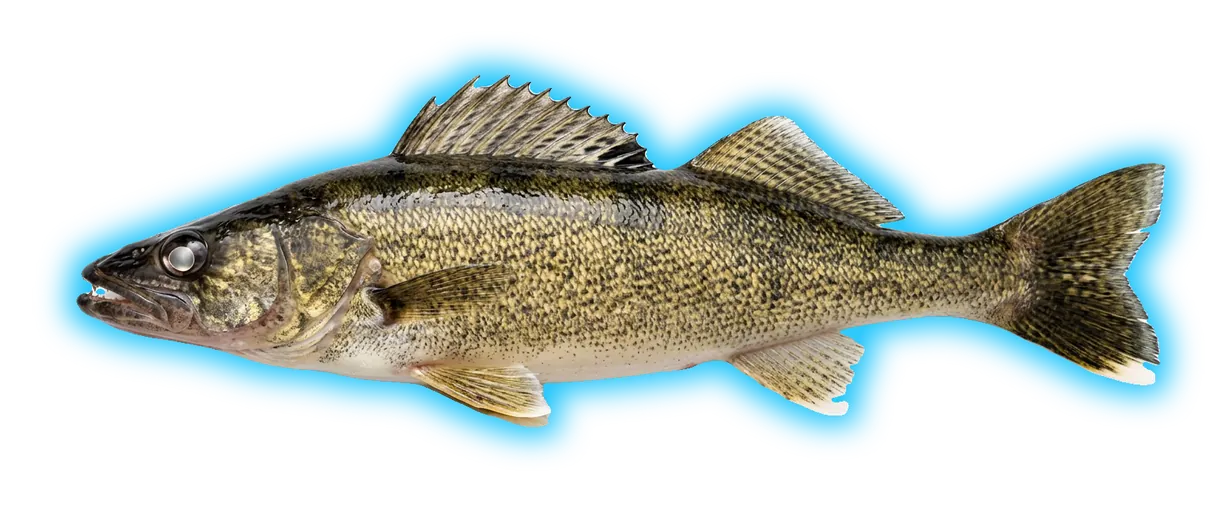
Walleye
Sander vitreus
Water Type
Freshwater
World Record
41" · 25 lbs
Also known as
Yellow Walleye, Wall-eyed Pike, Pickerel
About the Walleye
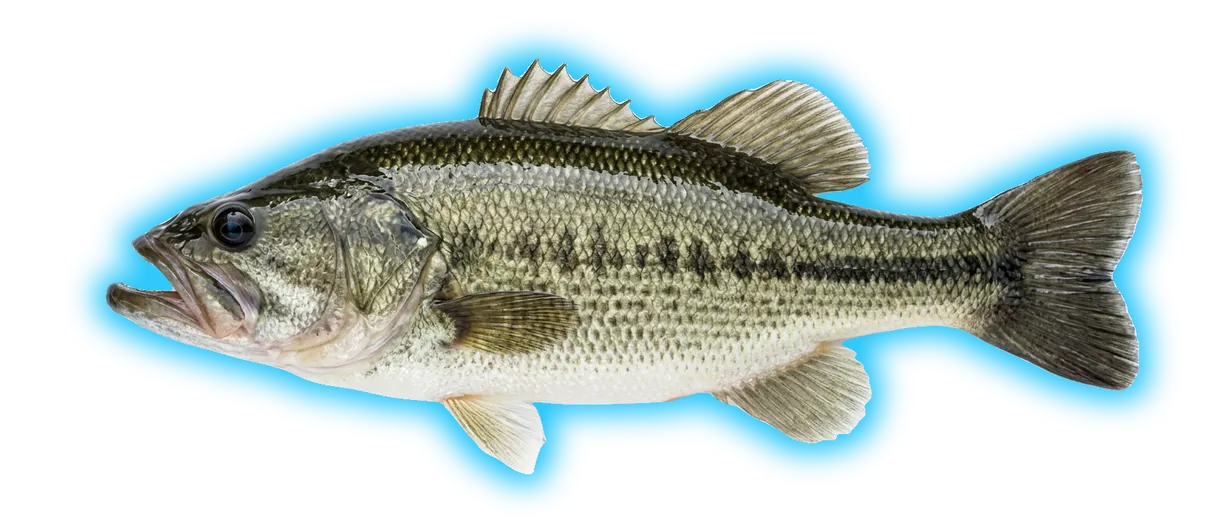
The Walleye is easily identified by its distinctive large, reflective eyes, which give it excellent vision in low-light conditions. Its sleek, torpedo-shaped body typically displays an olive to golden-brown coloration, often with darker mottling or bars, providing effective camouflage. Key features for identification also include a prominent spiny dorsal fin and a distinguishing white tip on the lower lobe of its caudal (tail) fin.
Source: FishBase & iNaturalist
Techniques
Habitat
Walleye thrive in cool, clear to somewhat turbid waters of large lakes, rivers, and reservoirs. They frequently inhabit areas with structure such as rock piles, gravel bars, submerged logs, weed lines, and sharp drop-offs. During the day, they often hug the bottom or deep cover, moving into shallower feeding grounds at dawn, dusk, and overnight.
Distribution
This popular game fish is native to most of Canada and extends throughout the northern United States.
Behaviour
Primarily crepuscular and nocturnal predators, Walleye are adept hunters that actively feed on smaller fish like minnows, shiners, and perch, as well as insects and crayfish. They often move in schools, especially when actively foraging. Their behavior is largely influenced by light levels, prompting them to seek deeper, darker waters during bright daylight and moving shallower during low-light periods to ambush prey.
Edibility
★★★★★
Walleye are highly esteemed for their exceptionally delicate, flaky white flesh and mild, non-fishy flavor. They are considered a premier freshwater table fish, excellent when pan-fried, baked, or broiled.
Lure suggestion
Anglers find great success targeting Walleye with jigs tipped with live minnows, leeches, or soft plastics, fished along bottom contours and structure. Trolling with crankbaits, spinner rigs (like Lindy Rigs or crawler harnesses) or bottom bouncers dressed with nightcrawlers or artificial baits is also highly effective. Focus on early morning, late evening, or overcast days, as Walleye are most active in low-light conditions.
Walleye Regulations
Select a state to see size limits, bag limits, and seasons for Walleye.
Select a state
Always confirm with the official state agency before keeping a fish.
Recent Catches
Biggest Walleye
Tips & Tactics
Crankbait Fishing: How to Choose and Fish Crankbaits
A complete guide to crankbait fishing — shallow, medium, and deep divers, color selection, and seasonal strategies.
Trolling: Techniques, Speed, and Gear Setup
How to troll effectively for walleye, striped bass, salmon, and more. Covers speed, depth, and lure selection.
Jigging: Vertical Jigging, Blade Baits, and Jigging Spoons
How to jig effectively for walleye, crappie, bass, and more. Covers vertical jigging, blade baits, and jigging spoons.
Related Species
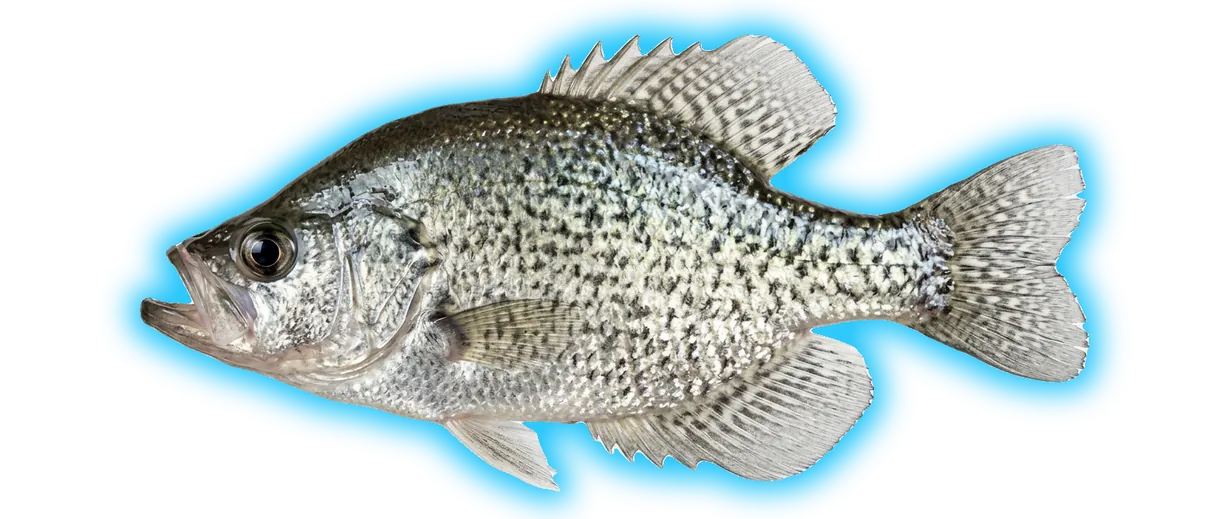
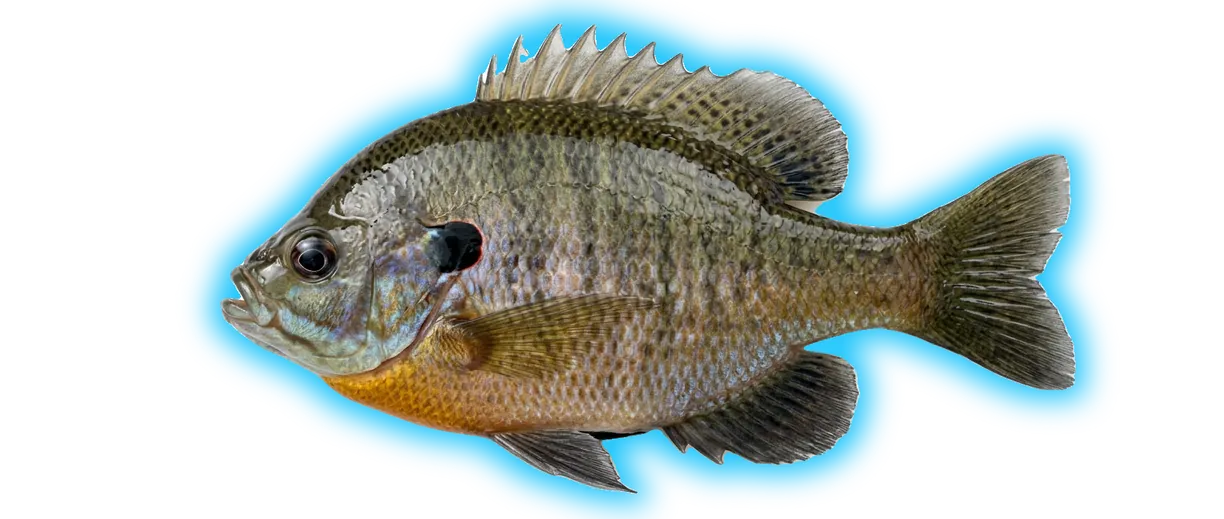
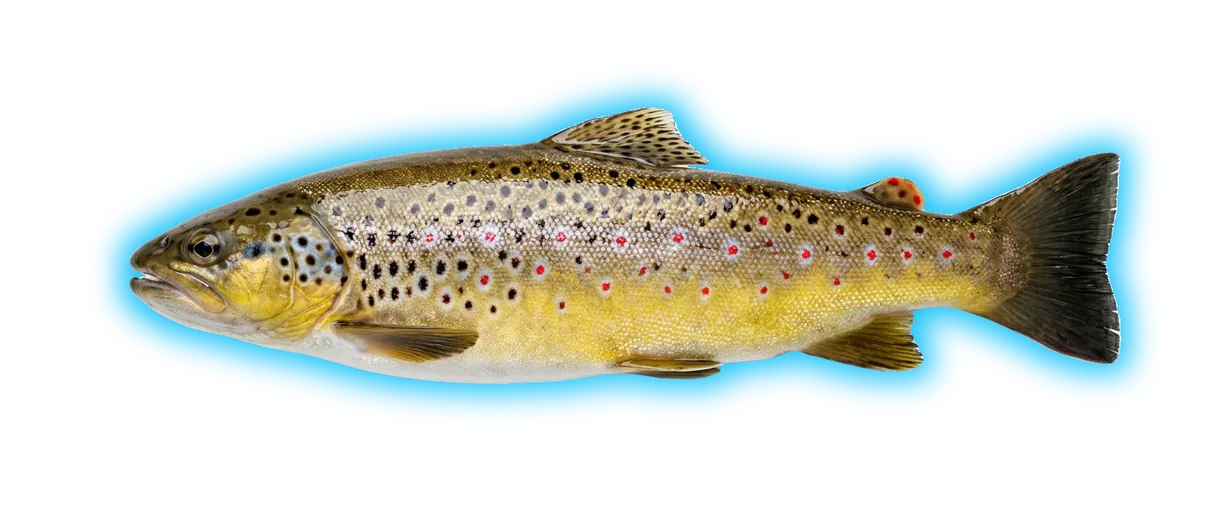
Where to Catch Walleye
States where Walleye is found, based on CatchVault's waterbody commonality data.
Think You Can Top the Leaderboard?
CatchVault is available on iOS. Download the app, log your Walleye catch, and see where you rank.